
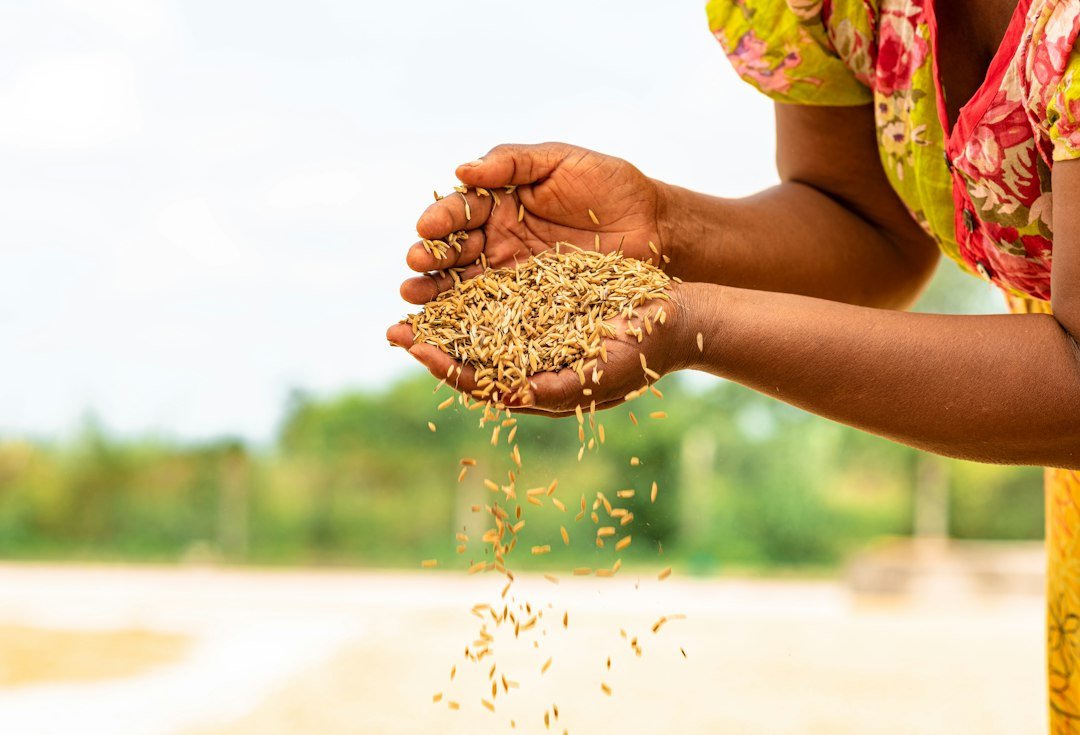
World Food Day falls on 16 October each year, marking the founding of the UN Food and Agriculture Organization in 1945, and this year’s theme, “Innovate today. Nourish tomorrow,” calls for pairing forward-looking technology with traditional and indigenous food knowledge rather than treating the two as opposites. FAO coordinates events in roughly 150 countries around the date, ranging from government seminars to community farming days.
In Bangladesh, a national seminar on innovation for sustainable agrifood systems convened in Dhaka on 15 October, bringing together researchers and policymakers to discuss how the country can raise yields without expanding the land under cultivation. South Africa marked the day with a Farmers’ Day at the University of Pretoria, built around an interactive programme for small-scale and emerging farmers, alongside students and government officials.
Vietnam’s Ho Chi Minh City hosted a conference on 14 October honouring ten women recognised for their contributions to the country’s agrifood systems, with particular attention to advances in sustainable rice production. In the UAE’s Al Dhafra region, the Takween Al Ghurair community event, run with the Goumbook environmental initiative and the Abdulla Al Ghurair Foundation, brought the observance to a Gulf audience focused on food security in a desert environment that imports the large majority of its food.

Tradition as innovation, not its opposite
FAO’s framing this year pushes back against the idea that innovation in food systems means abandoning older farming knowledge. Indigenous seed-saving practices, traditional water-harvesting techniques and community-based crop rotation have all featured in FAO’s own guidance material for 2026 as examples of practices that modern agrifood systems are rediscovering rather than replacing.
The theme lands at a moment when global food prices are drawing fresh attention, with the FAO’s own Food Price Index recently posting its highest reading since 2022 on the back of cereal and sugar price rises. That context gives this year’s “nourish tomorrow” framing a sharper edge than in calmer years, since the innovation FAO is calling for needs to address immediate affordability pressures as much as long-term resilience.
FAO’s guidance material for the day points to community seed banks, water-harvesting structures and farmer-to-farmer knowledge networks as the kind of low-cost, locally rooted innovation it wants governments to fund alongside higher-profile technology investment. The organisation argues that pairing both approaches, rather than favouring expensive new technology over proven traditional practice, offers better value for countries with constrained agricultural budgets.
A day with uneven reach
FAO’s published list of flagship events skews towards government and institutional programming, with comparatively little visible activity in India or Kerala specifically this year, despite the state’s dense network of community seed banks and farmer cooperatives that embody exactly the kind of tradition-meets-innovation approach the day’s theme promotes. Advocates have argued that World Food Day’s institutional framing sometimes overlooks the grassroots initiatives, from Kerala’s backwater fish-farming cooperatives to indigenous seed networks in Northeast India, that already do this work year-round without the benefit of a UN calendar date.
Whether the day’s events in Dhaka, Pretoria, Ho Chi Minh City and Al Dhafra translate into funding or policy follow-through remains, as in past years, the open question that advocacy groups will be watching once the observance itself has passed. Past editions of World Food Day have produced plenty of pledges but comparatively little independent tracking of whether those commitments were kept, a gap several agricultural policy researchers have flagged as the day’s most persistent weakness. FAO’s broader push for food-price resilience echoes concerns raised this week by emergency wheat-flour subsidies in Pakistan, where provincial governments are confronting exactly the affordability pressure the day’s theme addresses in the abstract.



