
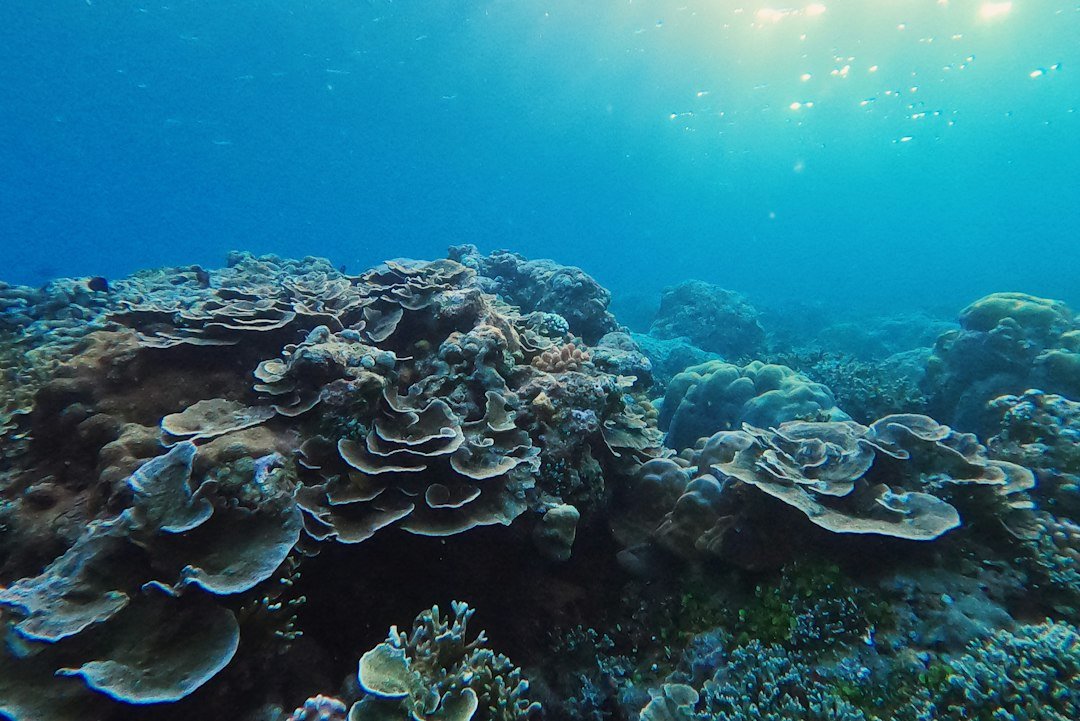
A study covering 3,650 hours of underwater recordings in Indonesia’s Spermonde Archipelago documented roughly 3,570 bomb-fishing incidents, researchers at Hasanuddin University reported in August, underscoring how far Coral Triangle bomb fishing is outpacing conservation efforts across the region. “Restoration efforts struggle to keep up with such rapid rates of destruction caused by bombing,” coral researcher Jamaluddin Jompa said of the findings.
The Coral Triangle, spanning waters around Indonesia, Malaysia, the Philippines, Timor-Leste, Papua New Guinea and the Solomon Islands, holds more than 600 reef-building coral species, about 76% of all species known worldwide, and 37% of the world’s reef-fish species. The region underpins food security and livelihoods for more than 130 million people, according to the Coral Triangle Initiative on Coral Reefs, Fisheries, and Food Security, the intergovernmental body the six nations launched in 2009 and which has run a permanent secretariat in Manado since 2015.
Heat stress compounds the damage
The reefs are already under sustained thermal pressure. The US National Oceanic and Atmospheric Administration reported in June that bleaching-level heat stress affected roughly 84% of the world’s coral reef area between early 2023 and mid-2025, a measure of heat exposure rather than confirmed mortality. Combined with physical destruction from blast fishing, scientists say the Coral Triangle’s reefs face pressure from multiple directions at once, leaving less capacity to recover between shocks.

Conservation groups are responding with closer community involvement. The Coral Triangle Center, based in Bali, hosted 25 community-surveillance representatives from five countries in February to study monitoring and reporting methods developed around Nusa Penida’s marine protected area, aiming to replicate locally led enforcement elsewhere in the region.
Protection plans widen beyond park boundaries
Research announced on manta rays in Raja Ampat has tracked more than 70 adult reef manta rays using over 30 acoustic receivers, finding that the animals’ habitat and movement extend well beyond existing protected zones. That finding has fed into trilateral planning between Indonesia, Malaysia and the Philippines for the Sulu-Sulawesi Seascape, where an August workshop identified a preliminary focus area of roughly 370,000 square kilometres, described by organisers as a collaborative planning exercise rather than a binding designation.
Marine conservationist Rili Djohani, speaking at the August workshop, said marine spatial planning in the region needs to centre on the people who depend on these waters, not only on maps and policy documents. Financing discussions held in July examined mechanisms including the Coral Triangle Conservation Fund and outcome-based financing models, as governments and donors look for ways to fund enforcement and restoration at a scale that matches the damage documented in surveys such as Hasanuddin University’s.
For now, the gap between documented destruction and on-the-water enforcement remains wide. Fisheries officials across the six-nation partnership say expanding community surveillance programmes modelled on Nusa Penida’s, alongside the wider marine spatial planning work, offers the clearest near-term path to narrowing it.
Blast fishing persists in parts of Indonesia despite decades of bans because enforcement across thousands of kilometres of coastline and scattered island communities remains difficult, and because homemade explosives remain cheap relative to the fish they can yield in a single blast. Conservationists say the practice is especially damaging because it destroys the physical reef structure itself as well as the fish stock, removing habitat that can take decades to regrow even where surrounding water quality recovers quickly.
The Coral Triangle Initiative’s six member governments have pledged to scale up joint patrols and community reporting networks, but officials acknowledge that funding for enforcement has consistently lagged behind funding for research and planning. Donors and regional governments are expected to revisit financing commitments, including the proposed Coral Triangle Conservation Fund, at follow-up meetings in the coming months, with enforcement capacity likely to be the central test of whether the region’s conservation ambitions translate into measurable change on the water.



