
Malawi has committed US$1m (about £750,000) in public funding to a new national seed investment plan, the smallest of three such pledges made since the African Union’s first Africa Seed Summit opened in Eswatini on 5 October, according to AGRA president Alice Ruhweza and Evelyn Lusenaka of AGRA’s Centre of Excellence for Seed Systems in Africa, writing in The New African. Nigeria has pledged roughly 50 billion naira (about $37.7m) for a seed fund, and Ethiopia has committed $5m alongside the Gates Foundation.
The Malawi seed investment plan follows an earlier Fourth Plate report on the Eswatini summit, where African Union officials pushed for more commercial capital and regulatory reform to fix a seed sector still dominated by smallholders. The new development is that individual governments, rather than the AU as a bloc, are now attaching specific budgets to seed-system plans, a shift AGRA describes as the more decisive test of whether the summit’s commitments translate into practice.
Policy is ahead of delivery, AGRA argues
AGRA’s central argument is that seed policy across Africa is, on paper, comparatively strong, but implementation lags badly. The organisation’s 2025 Seed Sector Performance Index scored 50 countries, finding a continental average of 4.63 out of 10, with average use of quality commercial seed even lower, at 3.06 out of 10. None of the 46 countries with sufficient data met seed needs for their four priority crops, and 14 countries released no new crop varieties at all between 2022 and 2024.

Malawi sits within the Southern African Development Community bloc, which the index scored 4.96 out of 10 for recognising farmer-managed seed systems alongside formal commercial ones, the highest score of any African regional bloc. Ruhweza and Lusenaka argue that donor-backed seed initiatives frequently stall once external funding ends, whereas plans that governments own and budget themselves, even at modest scale, are more likely to be implemented and sustained.
A small pledge with a bigger signal
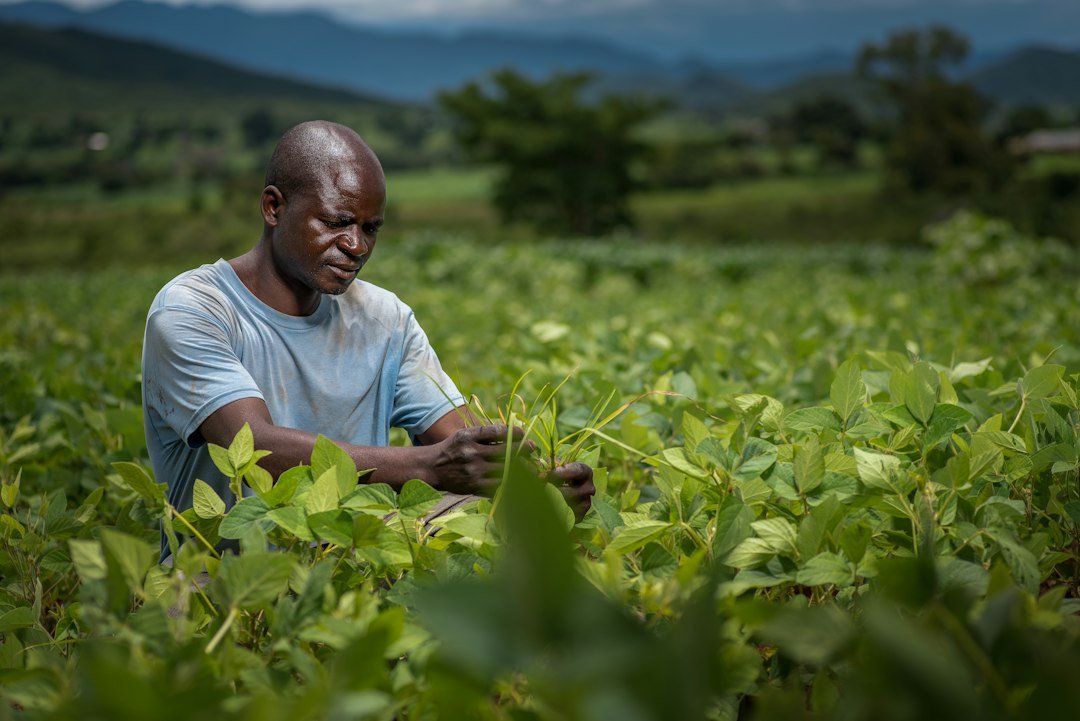
Malawi’s $1m commitment is modest next to Nigeria’s and Ethiopia’s, but AGRA frames it as evidence that the summit’s pressure for concrete, government-owned funding is being heard beyond the continent’s larger economies. Malawi’s smallholder farmers, who make up the large majority of the country’s agricultural workforce, depend heavily on access to affordable, locally adapted seed varieties, particularly for staple crops such as maize, groundnuts and beans.
Whether the plan closes any of the gaps identified in the Seed Sector Performance Index will depend on how the funding is spent and how quickly it reaches farmers, AGRA’s authors note. The organisation says it will track implementation across all three pledging countries as a test case for whether the Eswatini summit produces lasting change in Africa’s seed systems, rather than another round of commitments that fail to reach the field.
Fourth Plate’s earlier coverage of the Africa Seed Investment Summit, including the Seed Sector Performance Index findings in full, is available in our report on the Eswatini gathering.
Seed-system reform matters beyond the farm gate because access to affordable, locally adapted seed shapes nearly every other part of a country’s food economy, from yields and prices to how resilient smallholders are to drought or pest outbreaks. AGRA’s performance index has repeatedly found that countries with the weakest commercial seed uptake also tend to report the lowest yields for staple crops, a pattern researchers link partly to farmers replanting saved seed of declining quality rather than accessing improved varieties each season.
Malawi’s agriculture ministry has not yet published a detailed breakdown of how the $1m will be allocated between breeding programmes, distribution networks and subsidies for smallholders, officials told AGRA representatives at the summit. AGRA says it plans to publish a follow-up assessment of all three pledging countries’ seed plans within the next year, which would offer the first concrete test of whether government-owned funding, even at a modest scale, outperforms the donor-dependent programmes the index has found wanting elsewhere on the continent.



