
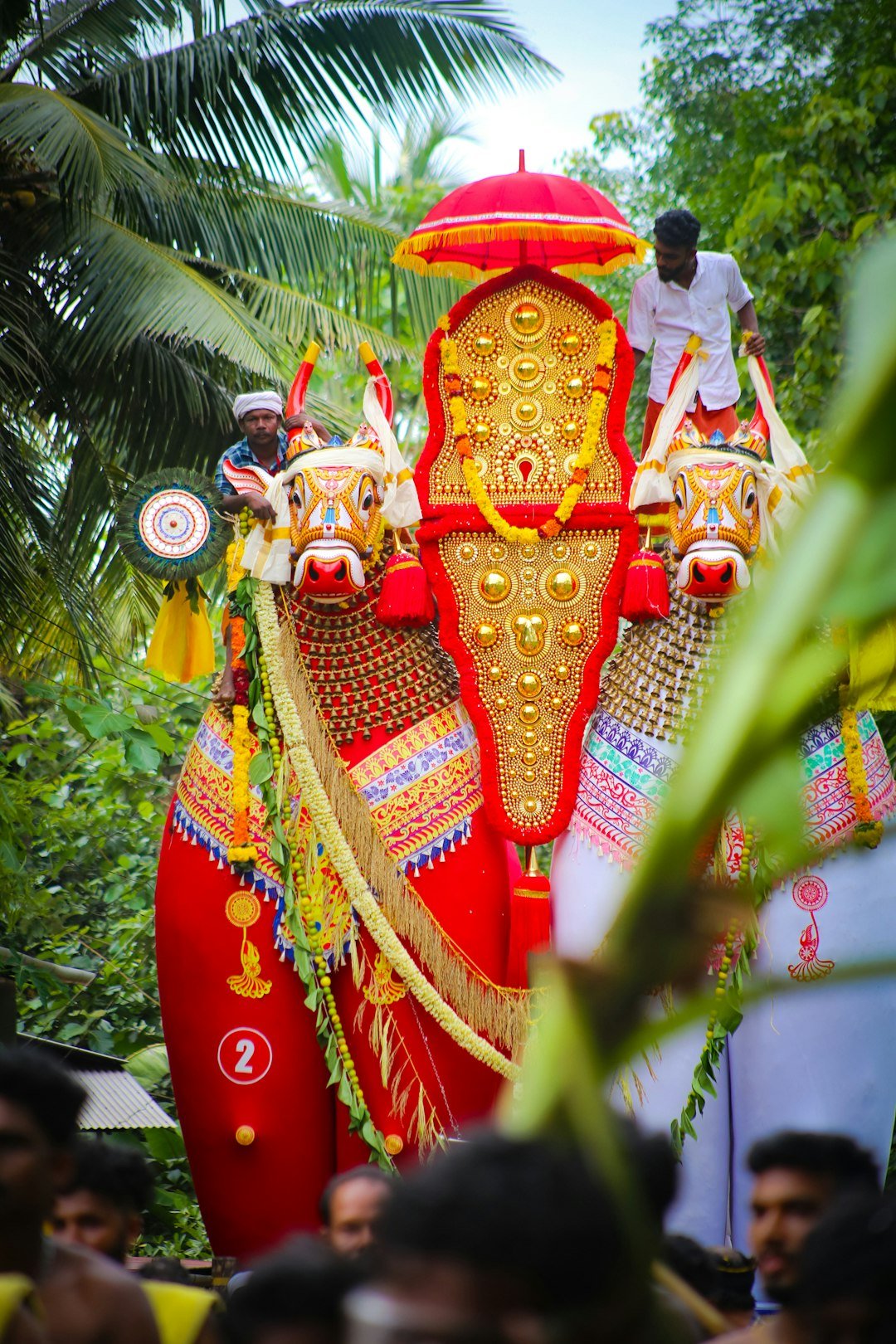
Kerala’s Navaratri traditions look markedly different from the festival celebrated across much of the rest of India this week. There are no Ravana effigies to burn and few of the pandals that dominate the nine nights elsewhere. Instead, households across the state centre their observance on Goddess Saraswati and on learning itself, a focus that shapes everything from the festival’s rituals to its food.
Navaratri runs from 11 to 20 October this year, with the state government declaring Monday 19 October a public holiday. On the evening of Durga Ashtami, families carry out Pooja Veppu, placing books, pens, musical instruments and tools before an image of Saraswati. Those objects stay untouched through Maha Navami and are retrieved only on Vijayadashami morning, when many households also perform Ayudha Puja, cleaning and decorating the vehicles, tools and machines that support their work through the rest of the year.
A festival built around first letters
The most distinctive ritual, Vidyarambham, takes place on Vijayadashami morning and is reserved for young children, usually between two and five years old. A priest, teacher or respected elder guides the child’s finger through a plate of raw rice to trace the syllables “Hari Sree” and the first letters of the Malayalam alphabet, then marks the same letters on the child’s tongue with a gold ring. Some temples hold the ceremony a day later, so families are advised to confirm timings locally.

Certain sites draw crowds specifically for this reason. The Panachikkad Dakshina Mookambika temple in Kottayam is especially popular for Vidyarambham, while Thunchan Parambu in Tirur, linked to the medieval scholar Thunchathu Ezhuthachan, carries particular weight for children taking their first steps in writing. In Thiruvananthapuram, a Navaratri tradition tied to the former Travancore royal family brings idols in procession from Padmanabhapuram palace, alongside a music festival built around compositions by the 19th-century composer-king Swathi Thirunal.
Dishes that mark the season
Food follows its own calendar through the nine nights. Kerala households commonly prepare neyyappam, a sweet rice fritter, alongside uzhunnu vada and a coconut and rice payasam. Soybean chundal, a lightly spiced legume dish, and a payasam combining jackfruit and banana also appear on many tables, recipes typically passed down through generations rather than written out formally. None of these dishes carries the scale or spectacle of a festival feast elsewhere in India; they are, by design, modest enough to prepare at home each evening. As the festive calendar moves from Navaratri into Diwali later this month, this publication has also been tracking how demand for Indian mithai is climbing among Gulf and European buyers.
The emphasis on learning over spectacle reflects a wider Malayali association between Navaratri and intellectual and artistic pursuit. Dance and music schools across the state time student recitals to the festival, and many children begin formal lessons on Vijayadashami specifically because of its symbolic link to knowledge. Families who observe Lalitha Sahasranamam recitations or simple lamp-lighting at home describe the nine nights less as a public spectacle to watch than as a private, cumulative ritual, one that ends not with a bonfire but with a child’s first written word.
Some Malayali families extend the observance beyond the state’s borders, travelling to the Mookambika temple in Kollur, across the border in Karnataka, a pilgrimage many undertake specifically during these nine nights. Within Kerala, smaller Tamil and Konkani communities add their own touches, including the stepped doll displays known as Bommakolu, a practice more commonly associated with Tamil Nadu but kept alive by families settled in the state for generations.
Taken together, these Kerala Navaratri traditions amount to a festival defined less by what happens in public squares than by what happens quietly inside individual homes and temples: a plate of rice marked with a child’s first letters, a row of tools set down and picked back up, a payasam that tastes the same every year because the recipe has barely changed. For a state that takes considerable pride in its literacy record, a festival organised around the act of learning to write makes a certain sense.



