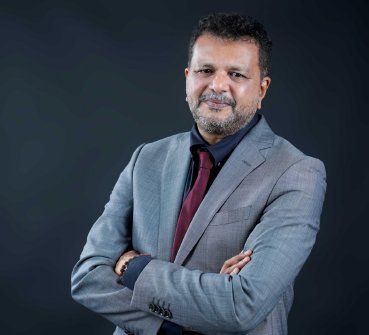
Not in recent times have I read non-fiction with the raciness of a thriller, as I did with Peasants – Makers of the Modern World by Maryam Aslany. William Dalrymple described it as “an out-and-out masterpiece”.
Aslany, who in this interview with The Indian Express talks of how Pune became her second home after she came to the city from Tehran for her undergraduate studies, never disappoints.
The work is many-layered. It is a sociological study, befitting her master’s at Oxford and a PhD in economic sociology at King’s College London. It is also pure, sublime history that points to the roots of colonisation in the least likely of places – the humble sugarcane.
It is a treatise on social malaise and the rise of militancy, going all the way to the Shining Path movement in Peru. It is aesthetic poetry on human life, as when she writes of the Cambodian rice fields: “Rain is approaching. Far away, a billowing downpour dulls the horizon; a chill wind blows off the water. October clouds churn, pregnant with monsoon. The lake darkens.”
It is also a peek into Hinduism – not the religious divide we talk of today, but how its icons, beliefs, myths and legends travelled far and wide, each gaining a new significance in new lands.
And it is deeply political. Aslany goes as far as to say that the “Cultivation System devised by the Dutch in Java” was reproduced in the heart of socialist India, with Sharad Pawar among its beneficiaries. “The beneficiaries this time were not foreigners, however, but village elites. Sharad Pawar might have played exactly the same games as all the sugar barons of history, but unlike those marauding bankers, those colonial aristocrats, he too was a peasant.”

But that is all a different story, and one that readers must savour for themselves.
For me, the book opened an entirely new bag of thoughts, especially with India in the midst of what are now called the Gen Z protests.
I read it, coincidentally, as Kerala, until recently the last Left bastion in India, was commemorating the 80th anniversary of the Punnapra-Vayalar uprising, when hundreds of coir workers and labourers were mercilessly killed on the orders of the Diwan of Travancore. Many of them were famine-hit peasants who had believed in the promise of the Leftist ideology, with all its innocence and idealism. The October 1946 uprising marked a milestone in the history of the Left movement in Kerala.
But only five months ago, the Left was routed in the Kerala election. It was practically decimated, and for the first time in 50 years, no Indian state has a communist government of its own.
Reading Peasants, watching the protests in Delhi and looking through the prism of the Left’s debacle, I found that Aslany’s narrative underlines the power of the peasants: their remarkable resilience and their sheer numbers.
By her own estimate, about two billion people live in peasant households, running most of the world’s 600 million farms and growing about a third of the world’s food, despite colonial and corporate atrocities and government apathy.

It also left me with some questions.
The first is about language, the term “peasant” itself. A farmer is kisan in Hindi and karshakan in Malayalam; both words cover every layer of the farming community, from the tenant to the smallholder to the large landowner.
The Indian media rarely use the word “peasant”. So when every grower is a farmer, where does the peasant fit in? Are peasants agricultural workers? How do you tell a large Punjab farmer selling to the state from a sugarcane farmer in Maharashtra who would prefer to sell freely, without the shackles of middlemen and the government?
Did we, then, misread the farmers’ protests that rocked India in 2020 (not to mention the Delhi Chalo of 2024–25, whose embers were lit five years earlier)? The farmers were protesting against three laws passed by the government: allowing private trade outside the traditional government-run wholesale markets (mandis), promoting contract farming, and deregulating stock limits on essential commodities.
When you read Aslany, you go deeper into what each of these meant for different “peasants” in India. Large farmers opposed all three. Smallholders like Deepak and his father Hari, quoted in the book, are caught in an existential loop precisely because the old controls remain.
So did the international and Indian media misread the protests? By supporting them, did they imply that peasants (to use Aslany’s term) cannot manage markets on their own? Or did they consider only the interests, often vested, of the richer farmers?
The second question is about the freedom struggle and the power dynamics that followed. Gandhi’s first satyagraha in India, at Champaran in 1917, was for indigo peasants. The ones that followed, in Kheda and Bardoli, were also for them.
But when the peasants organised on their own, forming the All India Kisan Sabha at the Congress session in Lucknow in 1936, relations with the Congress soured soon enough.
So even as the nation raised the slogan Jai Kisan and made agriculture a development priority, weren’t farmers, nay peasants, quietly pushed out of the corridors of power? The exceptions were the likes of Sharad Pawar, whose family had an unprecedented say over the sugarcane belt, as do many leaders who now sit in the Opposition or in government.
The third question is closer home: why is the Left facing an identity crisis? After all, it gave land to the peasants with the Agrarian Relations Bill in 1957 and abolished landlordism with the amended Land Reforms Act of 1969. The peasants became owners.
But unlike the collectives that Aslany describes in Soviet Russia (not that Stalin loved farmers so much that he would order the death of thousands if not millions) or in China (where Mao definitely understood how much peasants mattered in politics), Kerala divided its land into fragments, and the small plots soon stopped paying.
Paddy fields have shrunk and are even coveted by large homegrown but multinational retailers for malls (read the litigation story here). Plantation crops came with their own ups and downs, and then the great Gulf migration put the final nail in the coffin.
The real reason for the Left’s decimation in the state is not just the nepotism or corruption of its rulers (every government has been accused of both). It is that the base that built the party, the ethos of Punnapra-Vayalar, no longer resonates with a generation that is landless, uninterested in farming, or simply sees no reason to associate with a party that promises little but utopian egalitarianism?

Finally, the real question: is every Gen Z uprising a peasant uprising? Look at the Arab Spring. Mohamed Bouazizi, who set himself on fire in Sidi Bouzid in December 2010, came from a farming family. His uncle had borrowed to build an irrigated farm, fell into debt and lost the land to a bank. Bouazizi worked there before he became a cart vendor. In Syria, the protests erupted in Daraa, a rural town.
Look at Sri Lanka, which followed. In 2021, the government of President Gotabaya Rajapaksa imposed “a sudden, nationwide ban on the import of chemical fertilisers and pesticides to transition the country entirely to organic farming”. Boom! Harvests fell and farmers went hungry. The ban was eventually lifted, but the President was brought down. In Kenya, Nepal, Indonesia, Madagascar and Morocco, the Gen Z protests of the past two years are still classified as youth protests. That skips the more pertinent question: where did their parents come from?
Abhijeet Dipke, who led the protests in Delhi, says his father comes from a very humble background. “He grew up in extreme poverty. My grandfather was just a farmer.”
Sudan Gurung, the face of the Nepal protests in September 2025 and now home minister, was born in rural Gorkha and partly raised by his grandparents.
Anura Kumara Dissanayake, who rose to the presidency in 2024, is the son of an agricultural worker.
Of course, calling every Gen Z protest a peasant revolt is a stretch. But many of its leaders are one or two generations off the land, and they found no secure jobs waiting in the city – precisely the warning Aslany gives.
Perhaps that makes the words of a young farmer in Maharashtra, whom Aslany interviewed, prophetic: “If you design everything to punish farmers, we will all perish.”
ENDS