
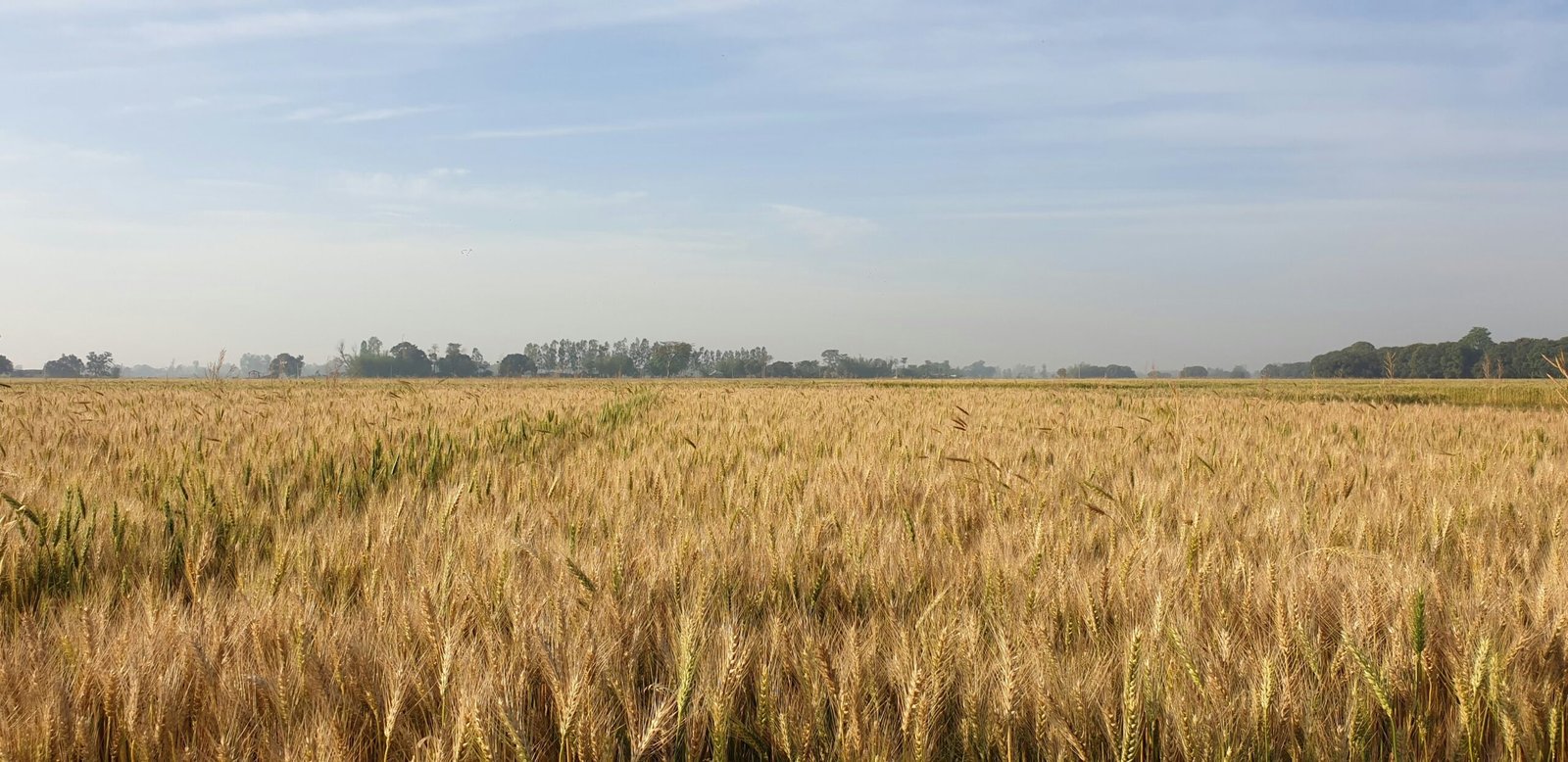
Prime Minister Narendra Modi released 109 new climate-resilient, biofortified crop varieties at the Indian Agricultural Research Institute (IARI) in New Delhi, in a launch timed to reach farmers ahead of the rabi sowing season, when wheat, mustard and several pulse crops are planted across northern India. The release was widely covered by Indian outlets including Deccan Herald, Outlook Business and Agriculture Post, reflecting its scale as one of the larger single releases of new crop varieties in recent years.
The varieties are drawn from research across India’s national agricultural institutes and combine two breeding priorities that have increasingly converged in recent seasons: tolerance to climate stresses such as heat, drought or waterlogging, and biofortification, meaning the crops are bred to carry higher levels of micronutrients such as iron, zinc or protein than standard varieties. Indian agricultural scientists have pursued both goals in tandem because the same climate pressures that threaten yields also threaten the nutritional quality of what farmers are able to harvest.
IARI and its partner institutes say field trials for the new varieties were conducted across multiple agro-climatic zones to ensure performance under a range of rainfall and temperature conditions, rather than being optimised for a single region. The release includes varieties intended for areas prone to late-season heat stress and others suited to regions with erratic winter rainfall, giving state agriculture departments flexibility in how they distribute seed stock this season.

Seed access, not just seed research, is the test
India’s seed distribution system relies heavily on state agricultural departments and cooperative networks to get newly released varieties into farmers’ hands quickly enough to matter for the current sowing window, and officials have acknowledged in past seasons that research breakthroughs do not always translate into timely farm-level adoption. The government says certified seed stock for a subset of the 109 varieties is already being distributed through state agencies, with wider availability expected to build over the coming two to three seasons as seed multiplication scales up.
Agricultural economists note that climate-resilient varieties tend to show their value most clearly in a difficult season, when conventional varieties underperform sharply and resilient ones hold yields closer to normal, rather than in an easy season where the difference is less visible. That makes adoption partly a matter of farmer trust built over repeated seasons rather than a single successful harvest.
Part of a longer breeding pipeline
Indian agricultural research bodies have released new crop varieties on a rolling basis for years, but officials describe this batch as notable for the number of varieties combining both resilience and nutrition traits in a single release, rather than treating them as separate research tracks. The emphasis on biofortification follows years of government nutrition programmes aimed at addressing micronutrient deficiencies, particularly among rural populations reliant on staple grains for most of their caloric intake. State agriculture departments are expected to finalise seed allocation plans for the rabi season over the coming weeks.
A pipeline years in the making
Officials involved in the release say the 109 varieties represent work carried out over several breeding cycles, since developing a stable, field-ready variety that combines resilience and nutrition traits typically takes years of crossing and trial seasons before it can be certified for wider distribution. The scale of this release, researchers say, reflects several years’ worth of breeding programmes reaching maturity in the same cycle rather than a single accelerated push. Agricultural scientists caution that the real measure of success will not be visible this season, or even next, but in how these varieties perform the first time a genuinely difficult year, a severe heatwave or a failed monsoon, tests them against the older varieties they are intended to replace.



