
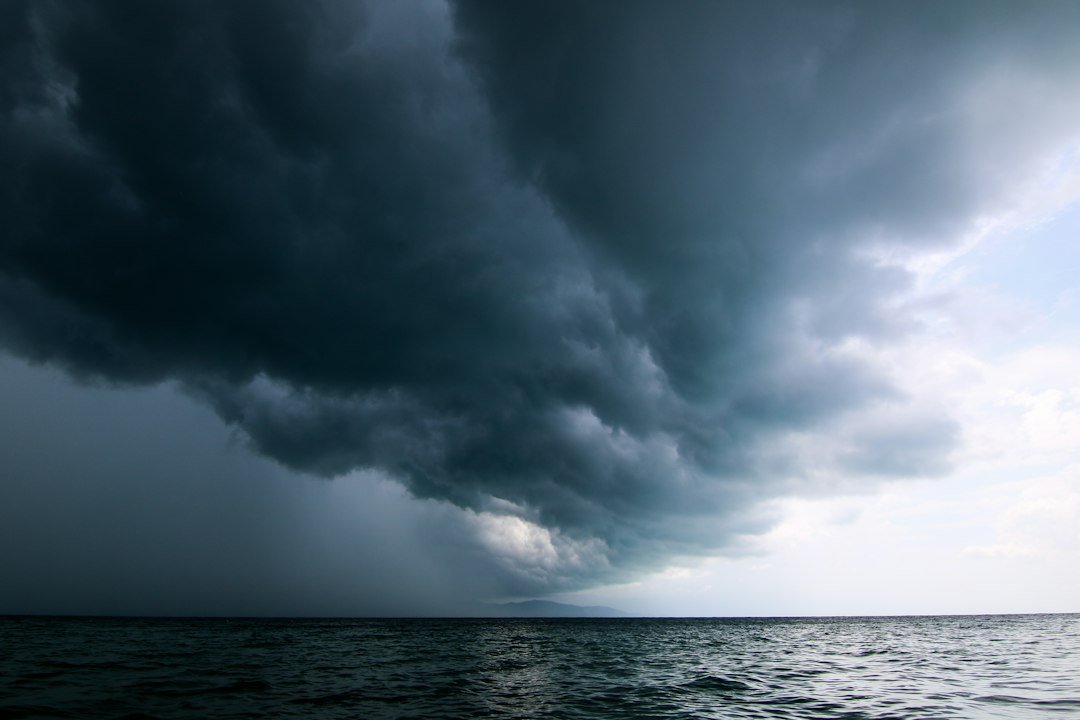
Early warning systems across Africa often fail to convert accurate forecasts into protective action. That is the central finding of a study led by the University of Bristol’s Cabot Institute for the Environment, published in the Bulletin of the American Meteorological Society on 2 November 2026.
The research found three recurring problems. Warnings frequently arrive too late to act on. Residents often doubt their content. And many people lack the means to evacuate even when they believe a warning is accurate. At least 13 million people were affected by climate-related events across Africa in 2025, according to the World Meteorological Organization, a toll the study’s authors say underlines how much is riding on getting alerts right.
The study’s household surveys in Madagascar, Malawi and Mozambique found that 90%, 80% and 77% of respondents, respectively, received cyclone warnings ahead of recent storms. Fewer than half of them evacuated after getting the alert. The gap between receiving a warning and acting on it is the study’s main concern, not the accuracy of the forecasts themselves. Tropical Cyclone Freddy caused widespread flooding and more than 1,500 deaths in February 2023. A separate drought in 2015-16 left 40 million people across southern Africa facing crop failure and food insecurity.

Gaps between forecasts and farms
Lizzie Kendon, professor of climate science at Bristol and the study’s lead author, said early warning systems need more than accurate forecasts to work. Her team found that national hydrometeorological services in several countries lack the staff and equipment to issue timely, localised alerts. Smallholder farmers in remote districts are often the last to receive word, and sometimes receive none at all.
Climate change is pushing some weather events “well outside the scope of the historical record,” Kendon said. That shift makes it harder for communities to judge how seriously to treat a new warning, since the storms and droughts arriving now often exceed anything in living memory. The study’s authors argue that this unfamiliarity partly explains why people who do receive alerts still delay their response, waiting to see how a situation develops before committing to leave.
The research was carried out partly under the REPRESA project, funded by the UK’s Foreign, Commonwealth and Development Office and Canada’s International Development Research Centre through the CLARE programme. It feeds into the UN’s Early Warnings for All initiative, which has set a 2027 deadline for universal coverage, a target the Bristol team’s findings suggest remains some distance away for several African countries.
Six fixes the study recommends
The authors set out six priorities. These are preparing for risks beyond historical precedent, stress-testing warning systems before disasters strike, strengthening national weather services, involving communities directly in resilience planning, combining local knowledge with scientific data, and improving coordination between the agencies that issue warnings and those expected to act on them.
For farming communities, the stakes are immediate. A warning that arrives after planting decisions are made offers little practical help. Nor does one that reaches a village chief but never travels on to outlying farms. Either gap can leave households exposed to drought or flooding with no time to protect seed stock, livestock or stored grain. The study’s authors say rural extension networks, which already reach farmers with agronomic advice through existing visits and radio programmes, could be adapted to carry weather alerts more reliably than broadcast media alone manages on its own.
The findings arrive as African governments weigh competing demands on tight budgets. ActionAid International has separately reported that climate-vulnerable countries often spend more on debt repayments than on adaptation measures, leaving little fiscal room for the kind of hydrometeorological investment the Bristol team recommends.
Kendon’s team says the fixes do not require new technology so much as better delivery. Governments and donors, they argue, should treat the “last mile” of a warning, from forecast centre to farming household, as seriously as the forecast itself. Without that last step, they say, even a perfectly accurate forecast changes nothing on the ground.



