
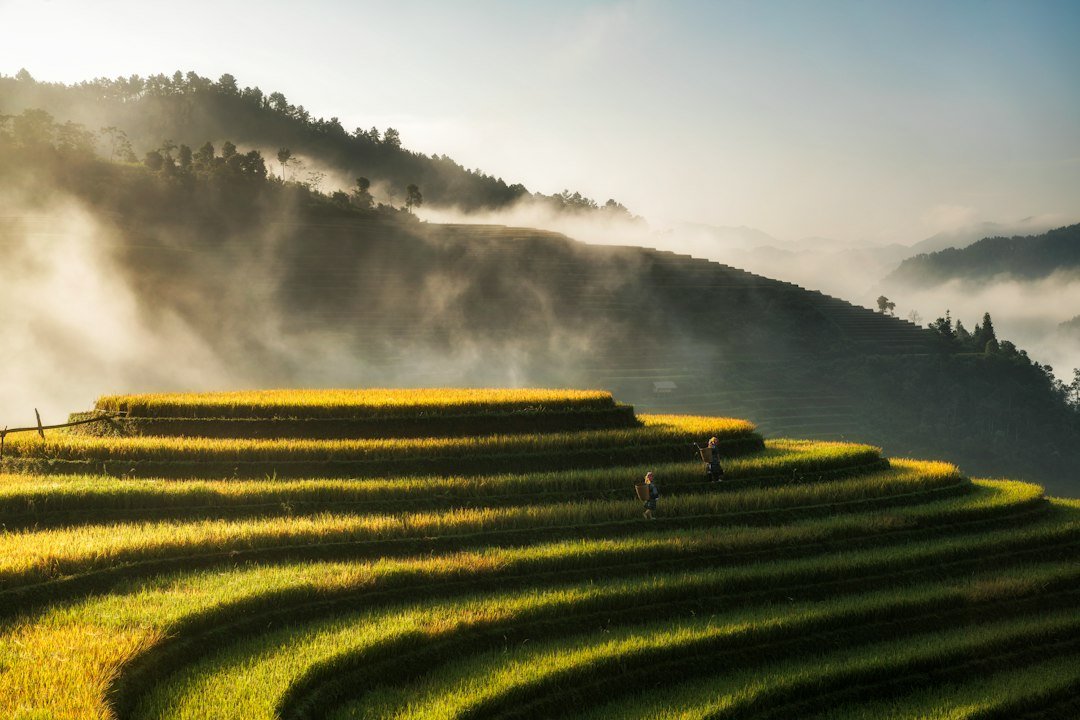
Upstream dams and dwindling sediment are letting salt water push further into Vietnam’s Mekong Delta. The shift is forcing farmers who once grew rice year-round to switch to mixed rotations instead. New research published on 20 October by the International Rice Research Institute puts a number on a problem farmers have described for years. Nutrient management and sowing timing together account for about two-thirds of the yield gap in these mixed systems.
The delta produces roughly half of Vietnam’s rice and a large share of its shrimp exports. That makes it one of Southeast Asia’s most important food-producing regions. Reduced freshwater flow from dams further up the Mekong is one driver of the problem. Rising sea levels along the coast are another. Together they let brackish water travel further inland during the dry season than it did a generation ago, according to LiCAS.news.
From monoculture to rotation
Rice-shrimp rotation works by flooding fields with saline water to raise shrimp during the dry season. Farmers then switch to fresh water for a single rice crop during the wet season. The system is less productive per hectare than continuous rice farming once was. But it lets farmers earn an income from land that pure rice cultivation can no longer support once salinity rises past a certain threshold.

IRRI’s research found that many farmers using the rotation are leaving yield on the table. The reason is simple: they apply fertiliser on a fixed calendar rather than adjusting it to each season’s salinity and rainfall pattern. The institute is now building digital tools to address that gap. These include salinity alerts and land-suitability maps, meant to help farmers time planting and fertiliser use more precisely.
A problem shared with other deltas
The Mekong’s saltwater intrusion mirrors pressures building in other Asian river deltas. In Bangladesh, farmers managing similar salinity are driving demand for the eco-friendly, traceable shrimp exports that officials there are now trying to professionalise. In parts of India and Bangladesh, agtech firms are separately breeding salt-tolerant wheat as an alternative staple for affected farmland. The common thread is sediment. Deltas built up over centuries are now receiving less of it, as dams upstream trap silt that once rebuilt riverbanks and kept salt water at bay.
Vietnamese authorities have promoted rice-shrimp rotation as a climate-adaptation success story for over a decade. But the latest research suggests its benefits have not been fully realised. The shortfall is a management problem, not a flaw in the underlying approach. IRRI said it would pilot its new digital tools with farmer cooperatives in several delta provinces over the coming planting season. It has not named a date for a wider rollout.
For now, the delta’s roughly 1.7 million rice-shrimp farming households are left balancing an old problem with new information. Getting salinity timing right can be the difference between a shrimp harvest that pays for the year and fields left too saline for either crop. Whether better data closes that two-thirds yield gap, as IRRI’s modelling suggests is possible, will depend on how fast the tools reach farmers beyond the pilot sites. Local extension services will also need to help farmers interpret the alerts once they arrive.
The dry season that follows each wet-season rice crop is when salinity typically peaks across the delta, as river flow drops and tidal water pushes furthest inland. That seasonal rhythm means any gap between IRRI’s pilot sites and a wider rollout carries a cost measured in missed planting windows, not simply months on a calendar. How many seasons pass before the salinity-alert tools reach most rice-shrimp households remains an open question the institute has not yet answered.



