
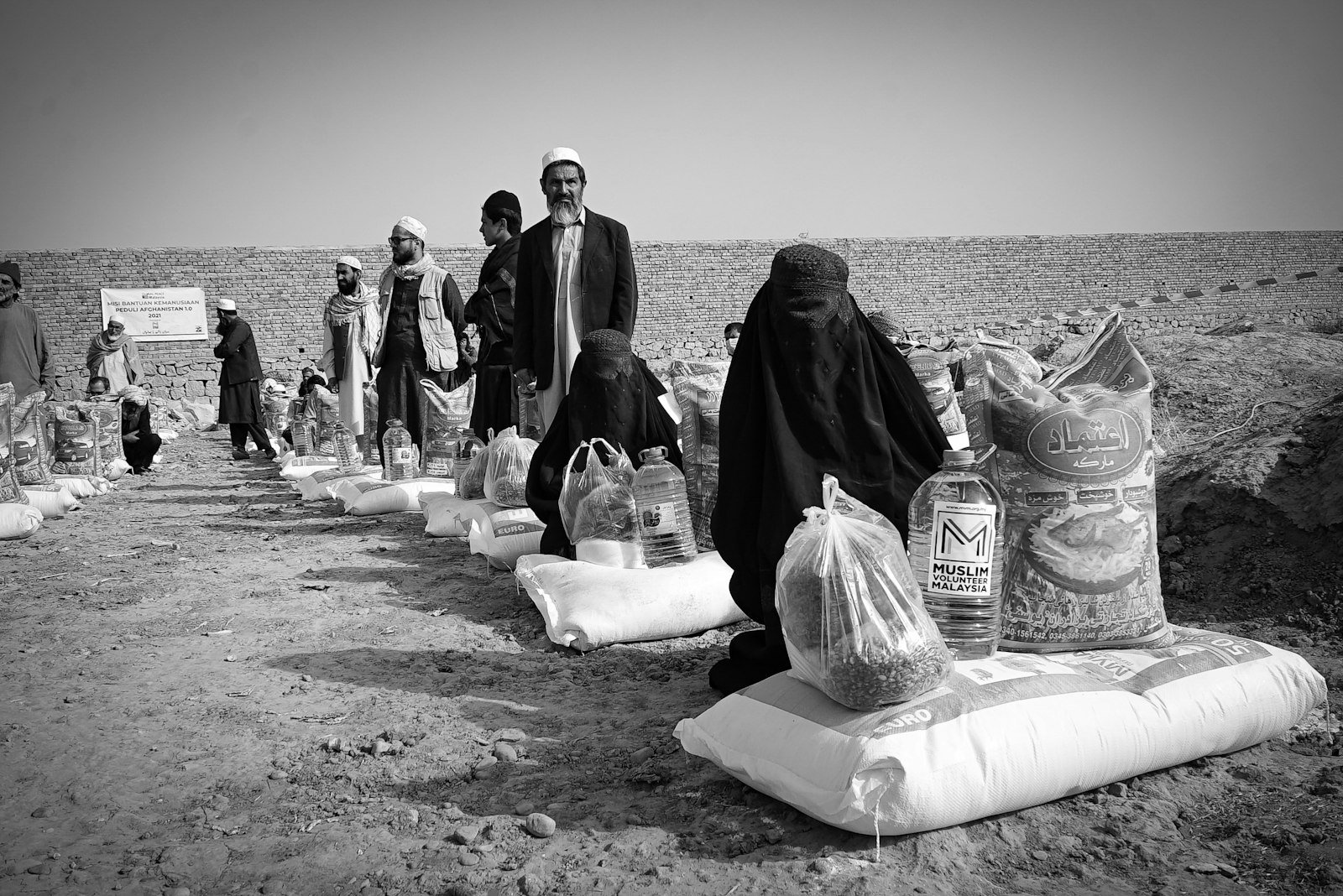
The IPC famine classification is the international scale that decides when hunger becomes a famine. An area is in famine only when three thresholds are crossed together. At least 20% of households face an extreme lack of food, at least 30% of children are acutely malnourished, and at least two people in every 10,000 die each day. In 2025, 265.7 million people in 47 countries and territories faced crisis-level hunger or worse on this scale, the Global Report on Food Crises 2026 says.
This guide explains how the Integrated Food Security Phase Classification (IPC) works and how a famine is confirmed. It gives the latest official figures for the worst crises as of November 2026. It also sets the IPC beside the hunger measures Indian readers meet in the news, including India’s National Family Health Survey.
Key facts
- 265.7 million people in 47 countries and territories faced IPC or Cadre Harmonisé Phase 3 or worse in 2025 (Global Report on Food Crises 2026)
- 1.4 million people were in Phase 5 Catastrophe in six countries and territories in 2025 (Global Report on Food Crises 2026)
- About 327,000 people were projected to be in Phase 5 across five countries and territories in 2026 (GRFC mid-year update, September 2026)
- 35.5 million children aged 6 to 59 months were acutely malnourished in 23 crisis countries in 2025 (Global Report on Food Crises 2026)
- 645 million people, 7.8% of the world, were chronically undernourished in 2025 (FAO, SOFI 2026)
- India had 142.5 million undernourished people in 2023 to 2025, or 9.8% of its population (SOFI 2026)

What the five IPC phases mean
The IPC sorts people and areas into five phases of acute food insecurity, from Phase 1 Minimal to Phase 5 Catastrophe or Famine. Phase 3 Crisis is the line that matters most, because the global counts of “high acute food insecurity” add up everyone in Phase 3 or worse.
Each phase describes what households can and cannot do. The definitions below follow the IPC’s own factsheet.
| Phase | Name | What households face |
|---|---|---|
| 1 | None or Minimal | They meet essential food and non-food needs without unsustainable coping |
| 2 | Stressed | Food intake is minimally adequate, but some essential non-food spending is cut |
| 3 | Crisis | Food gaps show up as high acute malnutrition, or families sell assets and use crisis coping to eat |
| 4 | Emergency | Large food gaps bring very high malnutrition and excess deaths, or families liquidate assets to survive |
| 5 | Catastrophe or Famine | An extreme lack of food after all coping is exhausted; starvation, death and destitution are evident |
An area takes the phase that describes at least 20% of its people. A district can therefore be mapped as Phase 3 while some of its households sit in Phase 4 or Phase 5. Readers should treat a map colour as a floor for the worst-off families.
The IPC also runs a separate Acute Malnutrition scale, which classifies areas by the share of children who are wasted. Its worst level, Phase 5, is called Extremely Critical, the European Commission’s Joint Research Centre says. News reports of “famine” refer to the acute food insecurity scale.
What IPC Phase 5 means and the three famine thresholds
IPC Phase 5 is the most severe level of hunger, and it has two forms. Catastrophe describes households; Famine describes a whole area.
A household is in Catastrophe when it has an extreme lack of food even after using every coping strategy it has. An area is classified as Famine only when three conditions occur together. The IPC factsheet and the United Nations’ famine explainer set them out in the same terms.
- Food: at least 20% of households face an extreme lack of food
- Nutrition: acute malnutrition among children under five reaches or exceeds 30%
- Mortality: deaths reach at least 2 people per 10,000 per day; UN News adds a child threshold of 4 per 10,000 per day
Households can be in Catastrophe without their area being in Famine. That happens when fewer than 20% of people are in Phase 5, or when malnutrition and deaths have yet to cross the thresholds. In mid-August 2025 the IPC counted more than half a million people in Catastrophe across the Gaza Strip, yet classified only Gaza Governorate in Famine.
The IPC famine classification grades its evidence. “Famine with solid evidence” means clear data on all three measures. “Famine with reasonable evidence” means two thresholds are clearly met and analysts judge the third has probably been reached. A “Risk of Famine” statement is different again. It flags a realistic worst case for the coming months and carries no population count, the IPC factsheet says.
Deaths are the hardest measure to collect in a war zone. The 2025 famine findings for Gaza Governorate, El Fasher and Kadugli all rested on “reasonable evidence”, the Global Food Security Cluster and IFPRI reported.
How the IPC famine classification is made
An IPC classification is a consensus judgement by national analysts from government, the United Nations and aid agencies. Independent experts check it when famine is suspected. The system began in Somalia in 2004, is hosted by the Food and Agriculture Organization (FAO) and is used in more than 30 countries.
A global partnership of 19 organisations steers the IPC, according to UN News. In each country a Technical Working Group gathers survey data on food consumption, livelihoods, nutrition and mortality. Its analysts then agree a phase for each area and project how it will change over the coming months.
The Famine Review Committee
The Famine Review Committee (FRC) is the panel of independent food security, nutrition and mortality experts that must check any famine finding before it is published. The IPC Global Support Unit convenes it when a country team concludes an area is in Famine. It also meets when consensus breaks down, when the support unit has concerns, or when a global partner asks.
The committee reviews all the evidence, tests whether a Famine classification is plausible and publishes its report on the IPC website. The technical act is a classification. Governments and UN leaders usually describe the published finding as a famine declaration.
Famine findings are rare. A World Peace Foundation compilation of FRC cases lists seven famine determinations between 2011 and 2025, out of 21 reviews. They cover south-central Somalia (2011 to 2012), north-east Nigeria (2016, made after the fact) and Leer and Mayendit in South Sudan (2017). The others are Pibor in South Sudan (2020), two in Sudan in 2024 and Gaza Governorate in 2025. The IPC confirmed further famine in El Fasher and Kadugli, Sudan, in November 2025, UNICEF and IFPRI reported.
The Cadre Harmonisé in West Africa and the Sahel
The Cadre Harmonisé (CH) is West Africa’s equivalent of the IPC, with the same five phases. The Permanent Interstate Committee for Drought Control in the Sahel (CILSS) has developed it since 1999, FAO says. Its partners include the Economic Community of West African States (ECOWAS), the West African Economic and Monetary Union (UEMOA) and UN agencies.
Because the two scales match, global reports add their numbers together. The CH analysis released in Dakar in January 2026 found 41.8 million people in Phase 3 or worse across the region in October to December 2025. It projected up to 52.8 million for the June to August 2026 lean season, FAO’s regional office said. Nigeria falls under the CH, which is why its figures appear in the same tables as IPC countries.
FEWS NET
The Famine Early Warning Systems Network (FEWS NET) is an early warning service set up and funded by the United States that publishes its own “IPC-compatible” classifications. It uses IPC protocols, but its findings need no multi-partner consensus, FEWS NET says on its website.
FEWS NET was set up about 40 years ago. It went offline for six months in early 2025 during the US freeze on foreign aid, NPR reported. It later came back, then dropped Somalia, Afghanistan and Yemen from an August 2026 outlook. The State Department said on 31 August 2026 that coverage of the three would resume in September. Its figures can therefore differ from the official IPC, and sometimes run ahead of it. In October 2026 FEWS NET warned that up to 23 million people in Sudan faced acute food insecurity through 2026, as The Fourth Plate reported.
How many people face acute food insecurity in 2026
The latest full count is 265.7 million people in IPC or CH Phase 3 or worse in 2025. That is 22.9% of the population analysed in 47 countries and territories, the Global Report on Food Crises (GRFC) 2026 says. The report was released on 24 April 2026.
The GRFC is published each year by the Global Network Against Food Crises, founded in 2016 by the European Union, FAO and the World Food Programme (WFP). Its main data sources are IPC and CH analyses. Of the 2025 total, more than 39 million people in 32 countries were in Phase 4 Emergency. Ten countries held about two-thirds of the total, and Nigeria, the Democratic Republic of the Congo (DRC) and Sudan alone held nearly a third.
The headline fell from about 296 million in 53 countries in 2024, the European Commission’s Joint Research Centre says. The share of people analysed rose from 22.3% to 22.9%, the JRC says, so the drop mainly reflects six fewer countries with usable data. Only 47 of 65 selected countries had enough reliable data in 2025, a gap the report links to funding cuts and blocked access.
Who was in Phase 5 in 2025
The GRFC 2026 counted 1.4 million people in Catastrophe in six countries and territories. The Fourth Plate added the country figures from the report’s summary and worked out each country’s share.
| Country or territory | People in Phase 5, 2025 | Share of the six-country total |
|---|---|---|
| Sudan | 640,700 | 45.3% |
| South Sudan | 637,200 | 45.1% |
| Yemen | 83,500 | 5.9% |
| Haiti | 41,200 | 2.9% |
| Mali | 8,400 | 0.6% |
| Palestine (Gaza Strip) | 2,600 | 0.2% |
| Total | 1,413,600 | 100% |
The arithmetic shows how concentrated the worst hunger has become. Sudan and South Sudan together held 1,277,900 people, or 90.4% of everyone in Catastrophe (1,277,900 divided by 1,413,600). The GRFC’s Gaza figure of 2,600 sits far below the IPC projection of about 641,000 Gazans in Catastrophe for mid-August to September 2025. The two figures cover different analysis periods, and readers should quote each with its period.
The long-run rise is steeper still. The Joint Research Centre puts the 2016 Phase 5 count at about 155,000 people in two countries. The 2025 figure of 1,413,600 is 9.1 times that level. The GRFC mid-year update of September 2026 then projected about 327,000 people in Catastrophe across five countries in 2026. That is a fall of 76.9% from 2025 ((1,413,600 minus 327,000) divided by 1,413,600), driven by reductions in Sudan and Gaza. The same update expects food aid to fall about 45% between 2024 and 2026, which leaves the gains exposed, as The Fourth Plate reported.
Conflict drove acute hunger for 147.4 million people in 19 countries in 2025, and weather extremes drove it for 87.5 million in 16 countries, the GRFC says. For Gulf readers the report adds a direct warning. It says the escalation of the Middle East conflict poses direct and indirect risks of disruption to global agrifood markets for food-crisis countries. The International Chamber of Commerce has warned that tensions in the Strait of Hormuz could push grain prices up 80%, The Fourth Plate reported.
Where the hunger hotspots are in late 2026
FAO and WFP name six hotspots of highest concern for June to November 2026: Sudan, South Sudan, Yemen, Palestine, Nigeria and Somalia. Their Hunger Hotspots report, published on 17 June 2026, lists Afghanistan, the DRC and Haiti as very high concern, and Myanmar, Mali, Lebanon and Madagascar as further hotspots.
The Hunger Hotspots series is a forward-looking warning, and it differs from an IPC classification. As of 4 November 2026 the next edition had yet to appear on the Global Network Against Food Crises website. The latest country positions, from the most recent IPC and FEWS NET releases, are below.
Sudan
The IPC confirmed Famine in El Fasher, North Darfur, and Kadugli, South Kordofan, in November 2025. It found 21.2 million people (45%) in Phase 3 or worse in September 2025, UNICEF and IFPRI reported. FAO and WFP put the number at 19.5 million (41%) through May 2026, including 5 million in Emergency, with risk of famine in 14 areas.
Gaza Strip
The IPC confirmed Famine in Gaza Governorate as of 15 August 2025, the Global Food Security Cluster said. The Peninsula and Malay Mail reported it as the first famine finding in the Middle East. In December 2025 the IPC found no area of the Strip in Famine after the October ceasefire, WHO said. The IPC analysis of 23 July 2026 projected 1.4 million people (67%) in Phase 3 or worse for July to December 2026, including 212,000 in Emergency. The Fourth Plate has tracked the easing and its limits.
South Sudan
FAO and WFP projected 7.8 million people (55%) in Phase 3 or worse for April to July 2026, including about 73,000 in Catastrophe. FEWS NET’s September 2026 update says risk of famine persists through January 2027 in Akobo, Nyirol, Ulang and Nasir counties.
Haiti, Yemen, the DRC, Nigeria and Somalia
Haiti’s IPC analysis of October 2026 found 5.94 million people (53%) in Phase 3 or worse, CARE reported. The total is projected to rise to 6.35 million; that would be a record. In Yemen, FAO and WFP projected 18.3 million in Phase 3 or worse, including 41,000 in Catastrophe in Sanaa-based areas.
The DRC’s IPC analysis of October 2026 counted 28.8 million people facing acute food insecurity through December 2026. The projection for January to June 2027 rises to 30.3 million, CARE and Save the Children reported. Nigeria had the largest population in high acute food insecurity of any GRFC country, 36.3 million, in the GRFC mid-year update of September 2026. Somalia had about 6 million in Phase 3 or worse for April to June 2026, with risk of famine in Burhakaba District, FAO and WFP said.
Acute food insecurity, chronic hunger and malnutrition compared
Acute food insecurity, chronic hunger and malnutrition are three different measures. The IPC counts people whose food access has collapsed in a crisis. FAO’s undernourishment estimate counts people who lack enough calories year after year. Malnutrition surveys measure children’s bodies directly.
The State of Food Security and Nutrition in the World (SOFI) report, produced by FAO, IFAD, UNICEF, WFP and WHO, carries the chronic hunger figure. SOFI 2026, launched on 21 July 2026, estimates 645 million undernourished people in 2025, or 7.8% of the world. About 2.1 billion people faced moderate or severe food insecurity, and 2.69 billion could not afford a healthy diet.
| Measure | Who publishes it | What it counts | Latest figure |
|---|---|---|---|
| High acute food insecurity (IPC/CH Phase 3+) | GRFC, from IPC and CH | People in crisis or worse in 47 crisis countries | 265.7 million (2025) |
| Undernourishment | FAO, SOFI | People whose usual calorie intake is too low, worldwide | 645 million (2025) |
| Moderate or severe food insecurity | FAO, SOFI | People who report going short of food for lack of money or resources, worldwide | About 2.1 billion (2025) |
| Unaffordable healthy diet | FAO, SOFI | People who cannot pay for a healthy diet | 2.69 billion (2025) |
| Child acute malnutrition | GRFC | Wasted children aged 6 to 59 months in 23 crisis countries | 35.5 million (2025) |
What the measures say about India and Kerala
India runs no IPC analysis and sits outside the GRFC count. Its hunger shows up in the chronic measures. SOFI 2026 puts India’s undernourished population at 142.5 million in 2023 to 2025, down from 243.9 million in 2004 to 2006, Down To Earth reported.
India’s 142.5 million undernourished people make up 22.1% of the world’s 645 million in SOFI 2026 (142.5 divided by 645). SOFI measures chronic hunger and the GRFC measures acute crises, so their totals count different things and are read separately.
India’s main shield against acute hunger is the public distribution system. The Union Cabinet extended free foodgrain under the Pradhan Mantri Garib Kalyan Anna Yojana (PMGKAY) for five years from 1 January 2024. The scheme covers about 81.35 crore people, the Press Information Bureau said. Child nutrition is the weak point. The table compares Kerala with India in the National Family Health Survey (NFHS).
| Children under five | India NFHS-5 (2019–21) | India NFHS-6 (2023–24) | Kerala NFHS-5 | Kerala NFHS-6 |
|---|---|---|---|---|
| Stunting | 35.5% | 29.3% | 23.4% | 20.1% |
| Wasting | 19.3% | 19.0% | 15.8% | 10.9% |
| Severe wasting | 7.7% | 5.2% | 5.8% | 2.6% |
| Underweight | 32.1% | 31.8% | 19.7% | 17.8% |
The comparison shows where Kerala has pulled ahead. Kerala cut child wasting by 4.9 percentage points between the two surveys, while India’s national rate fell by 0.3 points. India’s 19% wasting rate falls in the “Critical” band of 15% to 29.9% for child acute malnutrition. FEWS NET placed Akoka and Pibor in South Sudan in the same band in 2026. That band describes a nutrition emergency in a crisis zone. India reaches it through slow, widespread deprivation, and the IPC’s acute scale is designed for sudden shocks.
Why hunger numbers from different agencies differ
Hunger figures differ because each agency measures a different thing, over a different period, in a different set of countries. Most apparent contradictions disappear once the reader checks four points.
Coverage. The GRFC counts only countries with a usable IPC or CH analysis. Its total fell from about 296 million in 2024 to 265.7 million in 2025 partly because coverage shrank from 53 to 47 countries. SOFI’s 645 million is a model estimate for the whole world, including India and China.
Timing. IPC reports give a current figure and one or two projections. Sudan’s figure moved from 21.2 million in September 2025 to a projected 19.2 million for October 2025 to January 2026, IFPRI reported. Both were correct for their periods.
Method. IPC numbers need consensus among partners. FEWS NET numbers do not, which is why FEWS NET gave up to 23 million for Sudan while the IPC-based count stood at 19.5 million. Hunger indices add another layer. The Global Hunger Index ranked India 100th of 122 countries in 2026, as The Fourth Plate reported, combining undernourishment, child stunting, wasting and mortality into one score.
Access and money. Analysts cannot classify what they cannot reach. In Sudan, areas holding about 841,000 people were too uncertain to project in late 2025, UNICEF said. Food assistance funding fell an estimated 59% between 2022 and 2025, FAO and WFP say. Missing data lowers the totals, and the hungry people in unmeasured areas stay hungry.
The practical rule for readers is simple. Use the IPC famine classification or its CH equivalent, with the period it covers, for any statement about crisis or famine. Use SOFI for chronic hunger. Use NFHS for Indian children. Treat FEWS NET as an early warning that may run ahead of the official count.
Frequently asked questions
What is IPC Phase 5?
IPC Phase 5 is the worst level on the Integrated Food Security Phase Classification. Households in Phase 5 Catastrophe have an extreme lack of food after exhausting every coping strategy, and starvation and death are evident. In 2025, 1.4 million people in six countries and territories were in Phase 5, led by Sudan and South Sudan, the Global Report on Food Crises 2026 says.
What are the three criteria for famine?
An area is classified as Famine when three thresholds are met together. At least 20% of households face an extreme lack of food. At least 30% of children under five are acutely malnourished, and deaths reach at least 2 people per 10,000 per day. The IPC accepts a finding on “reasonable evidence” when two are clearly met and the third is judged likely.
Who declares a famine?
A national IPC team of government, UN and aid analysts proposes a Famine classification, and the independent Famine Review Committee must confirm it before publication. The IPC Global Support Unit, hosted by FAO, convenes the committee. Governments and UN leaders then use the finding. A World Peace Foundation compilation counts seven famine determinations from 21 committee reviews between 2011 and 2025.
What is the difference between Catastrophe and Famine?
Catastrophe describes individual households in IPC Phase 5. Famine describes a whole area, and it requires at least 20% of the population in Catastrophe plus malnutrition and death rates above the famine thresholds. In mid-August 2025 the IPC counted more than half a million Gazans in Catastrophe, yet only Gaza Governorate was classified in Famine, the Global Food Security Cluster reported.
Is there a famine in Gaza now?
No area of Gaza has been classified in Famine since December 2025, when the IPC found that the October 2025 ceasefire and better access had pushed famine back, WHO said. The IPC analysis of July 2026 still projected 1.4 million people, 67% of the population, in Phase 3 or worse from July to December 2026, including 212,000 in Emergency.
How many people face acute hunger in the world?
The Global Report on Food Crises 2026 counted 265.7 million people in IPC or Cadre Harmonisé Phase 3 or worse in 2025, across 47 countries and territories. That is 22.9% of the population analysed. Ten countries held about two-thirds of the total. Separately, FAO’s SOFI 2026 estimates 645 million people were chronically undernourished worldwide in 2025.
Fourth Plate coverage
- Sudan’s hunger crisis nears famine as 31 nations sound alarm: 19.5 million people in Sudan face acute hunger as the war enters its fourth year
- Famine risk deepens in Darfur and Kordofan as fighting blocks aid: FEWS NET warns up to 23 million Sudanese face acute food insecurity through 2026
- Gaza hunger crisis eases but risk remains: UN-backed monitors say conditions improved after the October ceasefire
- WFP cuts Gaza food aid for 500,000 as funding falls short: monthly food parcels end for half a million people
- Haiti hunger crisis is on track to hit a record high: projections point to the highest acute food insecurity on record in early 2027
- Yemen hunger crisis hits record high as war deepens: three in four households in government-held Yemen lack enough food
- Bangladesh sees 15.3 million facing acute food insecurity: the closest IPC analysis to India, projected to reach 18.1 million by December
- Afghanistan malnutrition crisis leaves millions without care: clinics turn away most malnourished children as funding collapses
- Famine risk rises as hunger funding keeps falling: the September GRFC update flags famine risk in three countries
- Global hunger eases but Africa bears the heaviest burden: SOFI 2026 shows Africa carrying most of the world’s hunger by 2030
- India ranks 100th, Bangladesh 84th in Global Hunger Index 2026: the index renews scrutiny of child nutrition in South Asia
- New WFP chief Lindberg vows ‘no more famines’: the new head of the World Food Programme sets out his agenda
The Fourth Plate reviews and updates this guide as new IPC analyses, Global Report on Food Crises editions and SOFI reports are published.
Sources: Global Report on Food Crises 2026, In Brief (GNAFC/FSIN); GRFC 2026 Mid-Year Update; European Commission Joint Research Centre, April 2026 and September 2026; FAO-WFP Hunger Hotspots, June to November 2026; GNAFC Hunger Hotspots archive; IPC Famine Factsheet; UN News, “What is famine?” explainer; World Peace Foundation, IPC FRC cases; Global Food Security Cluster, Famine confirmed in the Gaza Strip, August 2025; The Peninsula, August 2025; Malay Mail, August 2025; WHO, December 2025; Pakistan Today/Anadolu, July 2026 Gaza IPC; TRT World, July 2026 Gaza IPC; UNICEF, FAO and WFP, November 2025 Sudan; IFPRI, Khalid Siddig and Steven Were Omamo, November 2025; Al Jazeera, August 2024; FEWS NET South Sudan Key Message Update, September 2026; FEWS NET on the IPC; NPR, Durrie Bouscaren, August 2026; FAO Regional Office for Africa, Cadre Harmonisé, January 2026; CARE, Haiti IPC, October 2026; CARE, DRC IPC, October 2026; Save the Children, DRC, October 2026; FAO, SOFI 2026 launch; Down To Earth, Shagun, July 2026; Down To Earth, Shagun, April 2026; Next IAS, SOFI 2026 summary; Drishti IAS, SOFI 2026 summary; Press Information Bureau, PMGKAY extension, November 2023; Outlook, NFHS-6 India, May 2026; The Week, Sakshi Srivastava, NFHS-6 Kerala, June 2026.
Last updated: 4 November 2026.


