
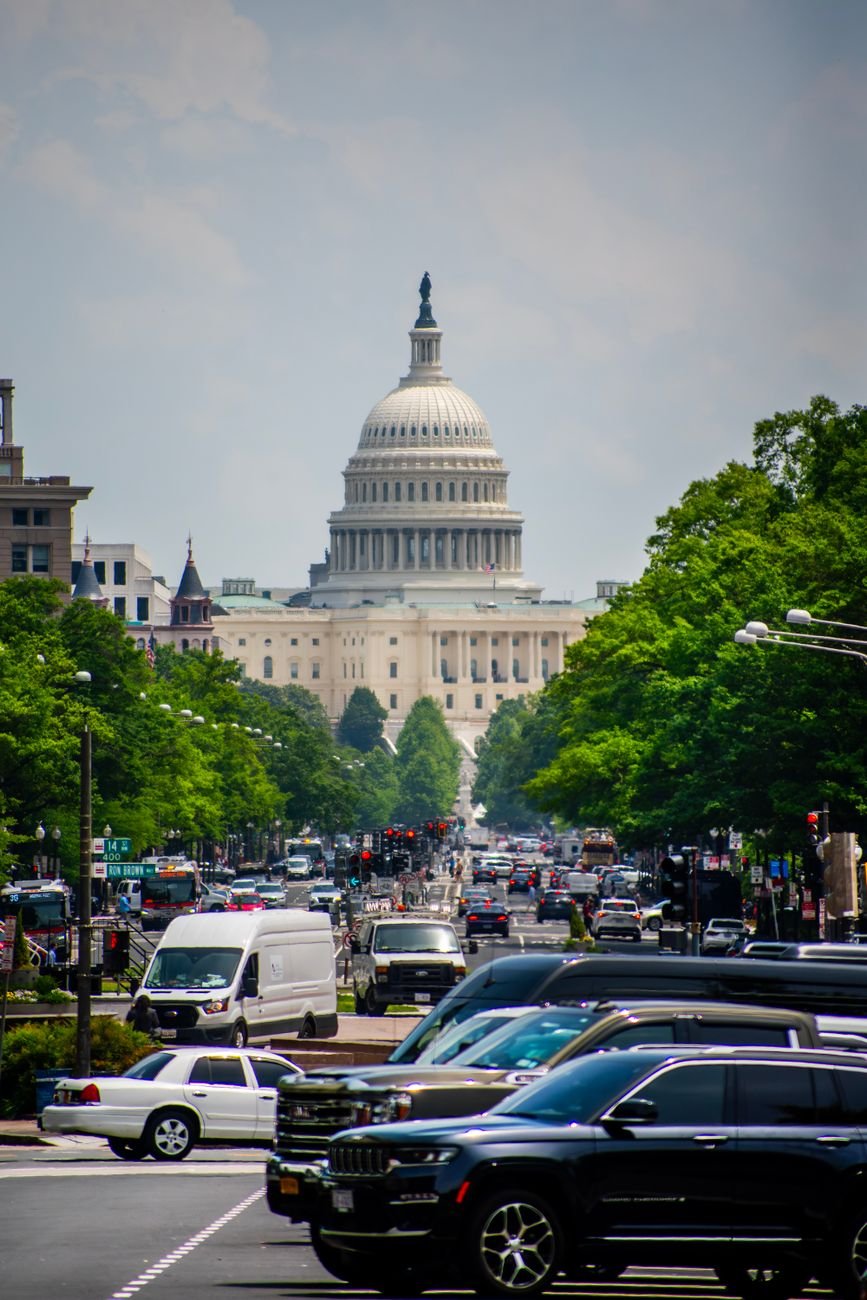
Democrats won control of both houses of the US Congress in Tuesday’s midterm elections. For India, the US midterm results change little before January, because most of the American measures that hit India this year sit with President Donald Trump.
Those measures are a 10% tariff on most Indian exports, a suspended threat of 100% duties on buyers of Russian oil, and a $100,000 fee on new H-1B visas that the courts have blocked for now. The war with Iran, which has raised oil prices and caused cooking-gas shortages in India, also stays with the President.
The Associated Press called the Senate for the Democrats on election night after the party took seven Republican seats, Forbes reported. NBC News projects the Democrats will win about 255 of the 435 House seats. The Washington Post reported that voters were unhappy with high prices and the eight-month war with Iran.
The new Congress is sworn in on 3 January. From then, Democrats control federal spending and the committees that hold hearings. The President largely sets tariffs, sanctions waivers and visa rules, and he can veto any law that tries to change them.

The Iran war and India’s oil and gas bill
The war has hit India hardest. The US and Israel attacked Iran on 28 February. Oil rose from $67 a barrel the day before to above $90 within a week, CNBC reported; Brent passed $100 again in September.
Before the war the Gulf supplied about half of India’s crude imports and around 60% of its gas imports, and nearly 90% of its LPG came through the Strait of Hormuz, according to the Middle East Council on Global Affairs. The Reserve Bank of India now expects growth of 6.7% this financial year, below the government’s pre-war forecast of 7% to 7.4%. GIS Reports said many restaurants that depend on LPG closed, and a fertiliser shortage put the kharif crop at risk.
House Democratic leader Hakeem Jeffries has said the party will keep pushing for votes to end the war. Trump can veto such resolutions; from January, Democrats will also control funding. Until then the President faces fewer limits. He had said the US would not resume strikes on Iran before the election, NBC News reported, and that pledge has now lapsed. Oil fell more than 7% on Monday after both sides said they were open to talks, CNBC reported.
US tariffs on India and the unsigned trade deal
The tariff on Indian goods fell this year because of a court ruling. On 20 February the US Supreme Court ruled that the emergency law Trump used for his “reciprocal” tariffs gave him no power to impose them. That removed the legal basis for the 25% duty on India and for the 18% rate the two governments announced on 6 February, ATB Legal noted.
Since 24 July most Indian goods have paid a 10% duty under Section 301, which covers 60 economies the US says have not banned imports made with forced labour. India won the lower rate after bringing in its own ban. China, Vietnam, Thailand and Brazil pay 12.5%, Global Trade Alert said.
The trade deal remains unsigned. Finance Minister Nirmala Sitharaman said in October that talks had reached “a plateau”. A separate US Trade Representative investigation into “excess capacity” in 16 economies, India among them, could bring new duties on Indian solar modules, petrochemicals and steel. Congress has no say in that decision.
Democrats have promised to reverse Trump’s tariffs, and he can veto any such bill. Jefferies analysts expect average US tariffs to stay between 10% and 20%, Business Today reported. The result may still help India in the talks. Hearings on what tariffs cost American consumers could make the White House keener to sign, which would spare India rushed concessions on farm and dairy products.

Russian oil and the 100% duty waiver
A stronger Congress could cause India trouble on Russian oil. In September Trump signed a law, passed by the Senate 86 votes to 11, that allows a 100% duty on goods from the five largest buyers of Russian oil and gas. On 16 October he waived the duties with no end date, law firm Freshfields said.
India stays protected only while that waiver lasts. Democrats may challenge it through hearings or spending bills. If it is withdrawn, the 100% duty becomes a risk for India again.
H-1B visas, remittances and Kerala
Two federal courts have blocked the H-1B fee, SHRM reported. A 1% US tax on remittances sent in cash took effect on 1 January, and repealing it needs a new law. India received a record $135 billion in remittances in 2024, about 28% of it from the US, the Niskanen Center estimated. More than 9 million Indians live in the Gulf and send home close to 40% of the total, according to the Hudson Institute. For Kerala and other states that depend on Gulf earnings, a long war in the region matters more than any change in Washington.
Africa and Latin America
Across the developing world, Congress sets programmes and funding while the President decides which countries benefit. Congress extended AGOA, the US duty-free scheme for African exports, to the end of 2028. On Monday the administration said it would remove South Africa and Rwanda from the scheme from 1 January, African Business reported.
Congress approved $9.42 billion for global health this year, Health Policy Watch reported, and the administration has asked for $5.12 billion next year, according to Legis1. Democrats will now chair the committees that decide. In Latin America, $75 billion for immigration enforcement was approved outside the annual budget, so Democrats cannot easily cut it.


