
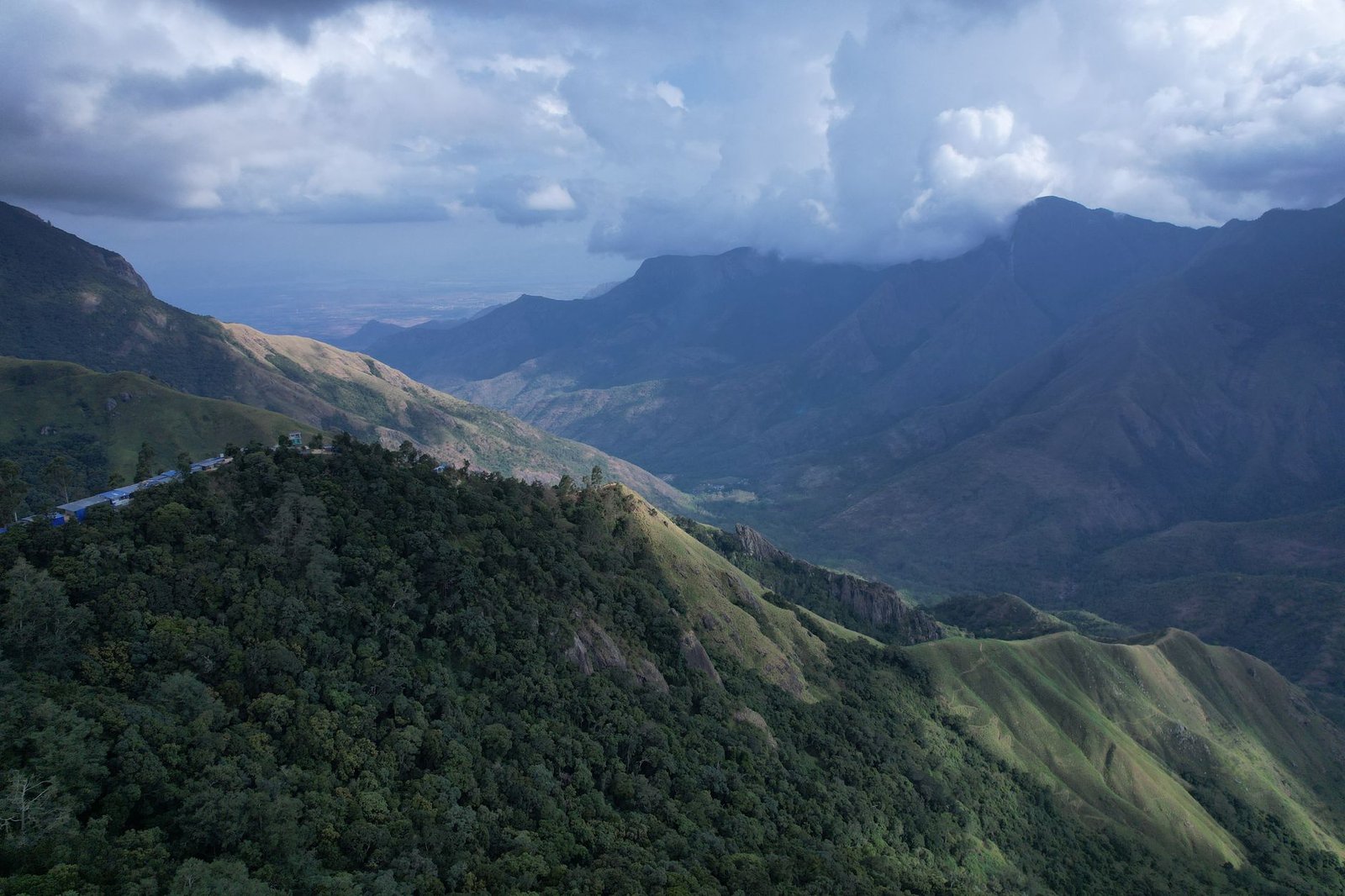
The public comment window on the latest Western Ghats ESA notification closes on 25 September 2026. That gives Kerala’s hill farmers less than a week to make their case, before the federal government finalises which parts of the mountain range become an Ecologically Sensitive Area.
The dispute traces back to the Kasturirangan report, commissioned by the Centre and first submitted in 2014. It recommended treating 13,108 square kilometres across the Western Ghats, spanning 123 villages, as ecologically sensitive and subject to tighter development rules. Successive draft notifications have trimmed that figure over the past decade. The Centre’s current benchmark draft, dated March 2014 and reissued for a seventh time on 27 July 2026, proposes 9,993.7 square kilometres for ESA status.
Kerala’s government has pushed back with its own map, covering 8,590.69 square kilometres and 98 villages. It is seeking to exclude 33 villages from the ESA altogether, down from the Kasturirangan report’s original 123 villages. Environment Minister Sunny Joseph described the state’s approach as one of balance, saying it is “protecting the interests of people, particularly farmers, while ensuring that ecologically important areas remain protected.”

What worries farmers in the high ranges
In Idukki and other high-range districts, residents worry the ESA will bring new restrictions on farming practices, including limits on chemical fertiliser and pesticide use, tree felling and infrastructure work. Many fear routine activities, from repairing a farm shed to widening an access track, could suddenly require environmental clearance. Advocate Jose Cheruvil, legal cell director of the Kerala Independent Farmers Association, said agriculture and tourism are the main sources of livelihood for people in the high ranges. “The ESA will only push them decades behind,” he said.
Kerala faces a sharper version of this dilemma than most other Western Ghats states. Homes, farms and forest are tightly interwoven across its high ranges, unlike states such as Karnataka or Maharashtra, which have larger stretches of uninhabited forest to draw ESA boundaries around. That density makes it harder to separate ecologically sensitive terrain from inhabited and cultivated land. It explains why the Western Ghats ESA debate has become so fraught in Kerala specifically. Villages in Idukki, Wayanad and other high ranges often have farmland running right up to reserve forest boundaries, making a single line on a map far more consequential than it might be elsewhere in the range.
What happens once the comment window closes
Once the comment window shuts, the Ministry of Environment, Forest and Climate Change is likely to move quickly toward a final notification. That would close a process that has run for more than a decade since Kasturirangan’s original report. For farmers in Idukki’s cardamom and pepper belt, and in the tea-growing high ranges beyond it, the wait for clarity has itself become a source of anxiety. Years of shifting draft boundaries have left many uncertain which side of any future ESA line their land will fall on.
The comment period closes within days, and the final shape of the notification could still shift. Even so, the process looks set to conclude far faster than the decade of delay that preceded it. A related tension is playing out nearby. Fourth Plate has separately reported on a Supreme Court ruling this year that ordered a fresh nationwide survey of elephant corridors and banned fireball deterrents used against elephants near farmland, another Western Ghats-adjacent dispute where conservation goals and farming livelihoods are pulling in different directions. For now, farmers in Idukki are watching the calendar as closely as the map.