
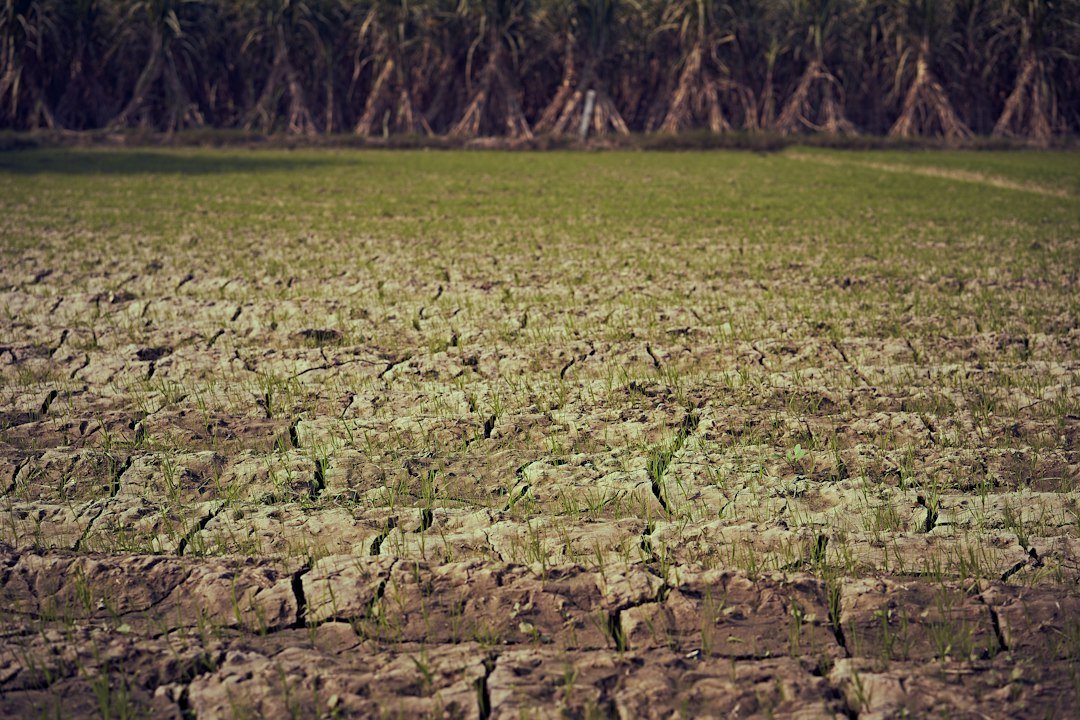
Paddy farmers in Wayanad’s Pulpally region say this year’s monsoon has failed them in a way they have not experienced before, leaving fields too dry to till or plant weeks after transplanting should have been completed. Both the pre-monsoon showers and the main south-west monsoon fell well short across the district, according to local farmers, with Mullankolli, Pulpally and Noolpuzha registering the lowest rainfall totals in Wayanad this season.
The shortfall has hit the Kolavalli fields near the Karnataka border and the Krishnagiri paddy tracts along the Kabini river particularly hard. Water levels in the Kannaram river, a key irrigation source, fell so low that pumping stopped entirely for a period, before farmers built a makeshift sandbag check dam to restore flow. Irrigation drawn from the Kabini has also been disrupted, forcing farmers to lower pump motors that are normally kept raised during a typical monsoon, a workaround they warn will stop working if river levels drop further.
Seedlings sown late because of the delayed rains are now ready for transplanting, but with fields too parched to work, planting across the affected tracts has effectively stalled. Farmers estimate that putting one acre of paddy under cultivation costs at least 30,000 rupees, a sum many say they stand to lose outright if the dry spell continues much longer. Normally, transplanting in Wayanad is substantially complete by the middle of Chingam, the Malayalam month that runs through mid-August to mid-September; this year, large stretches of farmland remain unplanted well beyond that point.

Farmers describe a mood of growing anxiety rather than acute crisis, as many are now pinning their hopes on the north-east monsoon, locally known as Thulavarsham, to deliver the rain the south-west monsoon withheld. Without it, agricultural economists who track Wayanad’s paddy belt say households already carrying the cost of seed, labour and fertiliser for a crop that may never be transplanted face a difficult calculation over whether to attempt a shortened planting window or write off the season.
The district’s farmers have also pointed to long-delayed irrigation infrastructure as part of the problem. Projects at Kadamanthode and Noolpuzha, designed to draw on Kerala’s share of Cauvery basin water under its inter-state agreement with Karnataka, remain incomplete years after they were first proposed, leaving Wayanad’s paddy tracts more exposed to a bad monsoon than they might otherwise be. No state irrigation or agriculture department official has yet issued a public response to the specific complaints raised by farmers in the Pulpally and Noolpuzha belt this season.
The Wayanad shortfall sits within a wider pattern of erratic monsoon behaviour across Kerala’s eastern highlands in recent years, where districts have alternated between landslide-triggering downpours and the kind of prolonged dry spells now affecting Pulpally. For a district still rebuilding after the 2024 Chooralmala landslides, a failed paddy season adds a further strain on rural livelihoods that depend on a narrow and increasingly unpredictable window of south-west monsoon rain.
Agricultural officers in neighbouring taluks say the Pulpally pattern, a late start followed by an extended dry gap mid-season, has become harder to plan around than the more familiar risk of excess rainfall, since crop insurance and relief schemes in Kerala have traditionally been calibrated for flood and landslide damage rather than for a stalled, underwatered planting season. Farmers in the affected belt say they have raised the irrigation gaps with local panchayat representatives but have yet to receive a firm timeline for completing the stalled Kadamanthode and Noolpuzha works.
Related reading: Guatemala’s dry corridor maize losses leave 3.1 million facing food insecurity, on another smallholder farming region contending with an unusually severe seasonal rain failure.



