
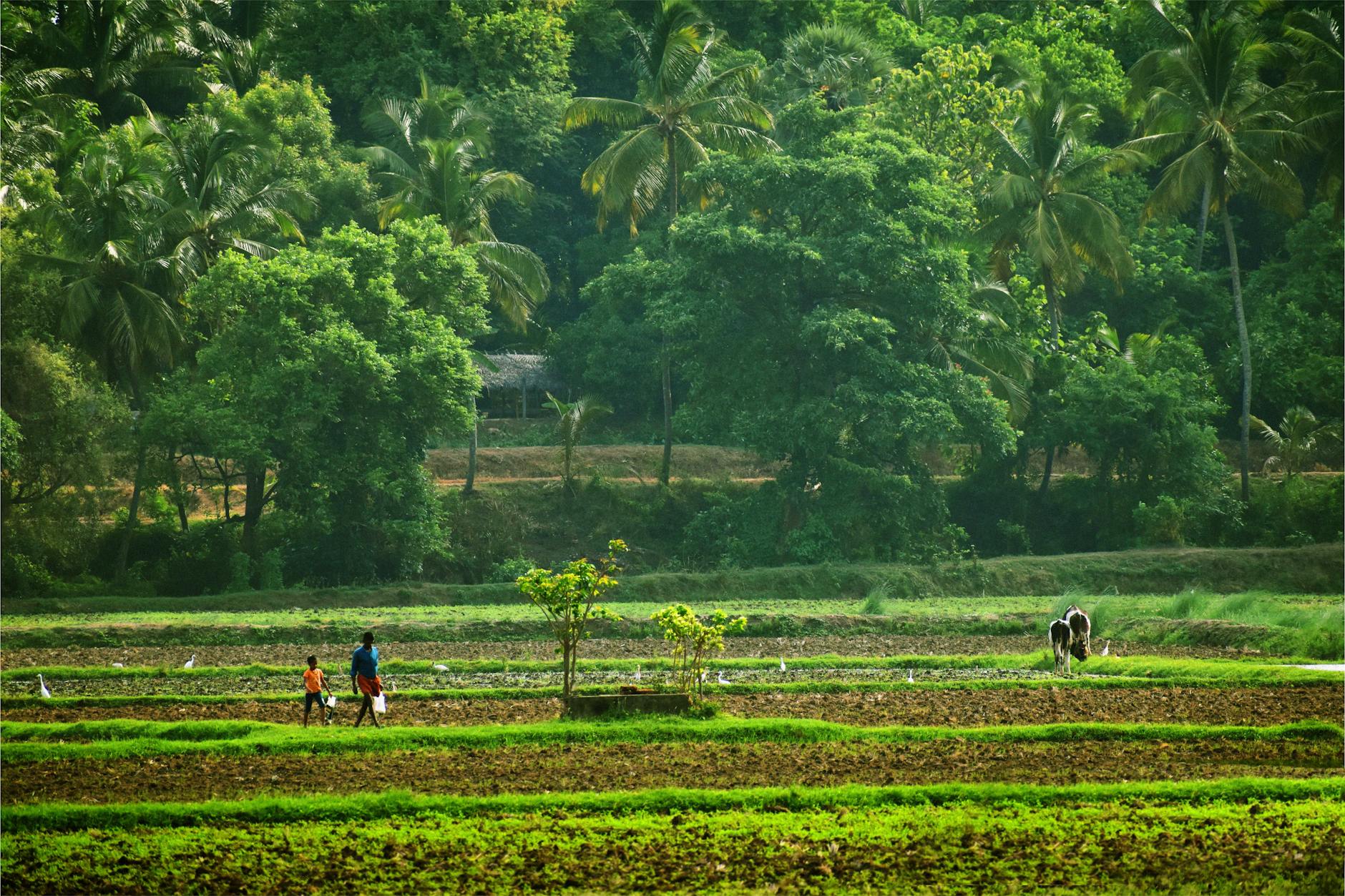
Every day, millions of children across Kerala sit down to a free midday meal, a cornerstone of the stateโ€™s social welfare system. While these meals provide essential calories, the source of the ingredients tells a different story.

Much of the produce travels long distances from other states, often arriving coated in chemical residues from intensive farming. Muhammed Hadith Hussain, a young innovator from the Balasabha, looked at his school plate and saw a systemic flaw. His response is “Krishi Malayalam,” a project designed to turn schools into self-sufficient hubs of organic nutrition.

Muhammed Hadith Hussain, a young innovator from the Balasabha, looked at his school plate and saw a systemic flaw. His response is "Krishi Malayalam," a project designed to turn schools into self-sufficient hubs of organic nutrition.
Muhammed Hadith Hussain, the innovator of ‘Krishi Malayalam’

Muhammed presented his vision at the LIORA Innovation Conclave, held at the Kerala Startup Mission. As a member of the Balasabha – the neighborhood-level children’s collective organized by the Kudumbashree Mission – Muhammed is part of a movement that empowers over 4.3 lakh children to solve community problems. LIORA, meaning “My Light,” served as the launchpad for these ideas, providing a platform where social awareness meets technical execution.

This article is part of an ongoing series by The Fourth Plate documenting the innovations of young thinkers across the Global South. We believe these grassroots prototypes hold the keys to a more resilient future. Our hope is that by highlighting these projects, we can capture the interest of entrepreneurs and startups ready to scale these sustainable solutions for everyday challenges.

The success of Krishi Malayalam lies in its integration of community and curriculum. The project proposes the creation of practical agricultural spaces within school premises. Here, farming serves as a hands-on activity where children grow the very vegetables that end up in their lunch. This process is supported by a circle of local wisdom, involving parents and neighbors who share traditional farming techniques with the younger generation.

Mentored by theย Udhyam Learning Foundation, participants at LIORA, including Muhammed, have been able to refine the project beyond simple gardening into a structured social enterprise model. The Udhyam team helped develop a framework where children learn the science of agriculture while gaining a sense of responsibility. Further ecosystem support fromย TinkerHubย has encouraged a “tinkering” mindset through its volunteers that supported the event.

The impact of Krishi Malayalam is three-fold. First, it secures the health of students by providing clean, chemical-free produce for midday meals. Second, it fosters a culture of healthy eating that extends to the families of the students. Finally, it introduces the concept of financial independence. Muhammed envisions a system where surplus vegetables are sold to the community, with the potential to develop school-grown produce into local brands.

For entrepreneurs and startups, Krishi Malayalam offers a scalable blueprint for “Agri-Ed” (Agricultural Education) ventures. By transforming schools into micro-farms, we can achieve better health outcomes and economic progress simultaneously. Muhammedโ€™s initiative proves that when we teach a child to farm, we are not just growing vegetables; we are nurturing a healthy, self-reliant generation capable of sustaining the fourth plate of the future.

Discover more from The Fourth Plate

Subscribe to get the latest posts sent to your email.

Leave a Reply

Trending

Financial Literacy, Islamic Finance and the Future of Sustainable Agricultural Development

Financial literacy has increasingly been recognized as a critical factor in improving agricultural productivity and economic resilience. Farmers who possess strong financial literacy are more likely to manage resources efficiently, access credit responsibly, and invest in long-term agricultural development.

Kullunna Babu: An Open Letter to Shri Mani Shankar Aiyar and Dr. Shashi Tharoor

From where we sit, your intellectual sparring over the war feels deeply insulting.

When the Strait of Hormuz chokes, the men in your circles write op-eds and appear on television panels to debate the ethics of imperialism.

Varkala’s ‘Zero Waste’ Crown: A Model of Substance or a Convenient Label?

While many larger cities like Bangalore (10 million) and Dakar (5 million) are also on the list, Varkalaโ€™s potential inclusion is significant because it demonstrates that a comprehensive waste management system can be effectively implemented in a densely populated municipality, not just in smaller towns or villages.

ย Signals to the Market: What Nigeriaโ€™s Ondo State is Getting Right About Industrialization

For agribusiness, infrastructure determines competitiveness. Efficient transport lowers post-harvest losses. Digital connectivity facilitates traceability and market access. Without these foundations, even well-designed agricultural investments struggle to scale sustainably.ย 

EmiratesGBC and UNESCO GEP Sustainable School Building Guidance Booklet champions call to build sustainable schools to further the greening of the education sector

EmiratesGBC has been hosting various roundtables and webinars to introduce the Sustainable School Building Guidance Booklet to key stakeholders

When a tree and a wayside stone becomes a shrine: Observations from nature

Across cultures, nature worship has existed in countless forms. Perhaps it wasnโ€™t superstition, but indigenous wisdom โ€” an intuitive understanding of interdependence.

Honoring the unparalleled life and legacy of Saalumarada Thimmakka

Thimmakka was 114 years old when she died on 14th Nov, 2025 in a hospital in south Bangalore but only 37 years old when she and Chikkayya started planting trees to heal from the humiliation they faced for being childless.

AURAK Researcher Presents Breakthrough Integrated Solar-Driven Solution to Generate Electricity, Green Hydrogen and Freshwaterย 

The study, published online in the prestigious journalย Process Safety and Environmental Protection, presents a novel multi-generation configuration designed to significantly enhance energy utilisation in urban environments, while reducing losses commonly associated with conventional energy systems.

“Young People Don’t Have the Space to Talk About Climate Grief,” Hemavathi Shekhar of Enact Earth on Building Community-Led Support Systems

“Our vision is a future where every individual and community is equipped with the knowledge, resources, and motivation to actively address climate change, promote environmental equity and foster resilient societies.”

When the World is Not OK: Opening Safe Spaces to Talk About Climate Change and Mental Health

The impact of a changing and changed climate on the human psyche and behaviour is very real. Anyone who has never felt this could be in denial, or profoundly unaware of both โ€“ climate change and mental health.ย 

Something went wrong. Please refresh the page and/or try again.

Discover more from The Fourth Plate

Subscribe now to keep reading and get access to the full archive.

Continue reading