
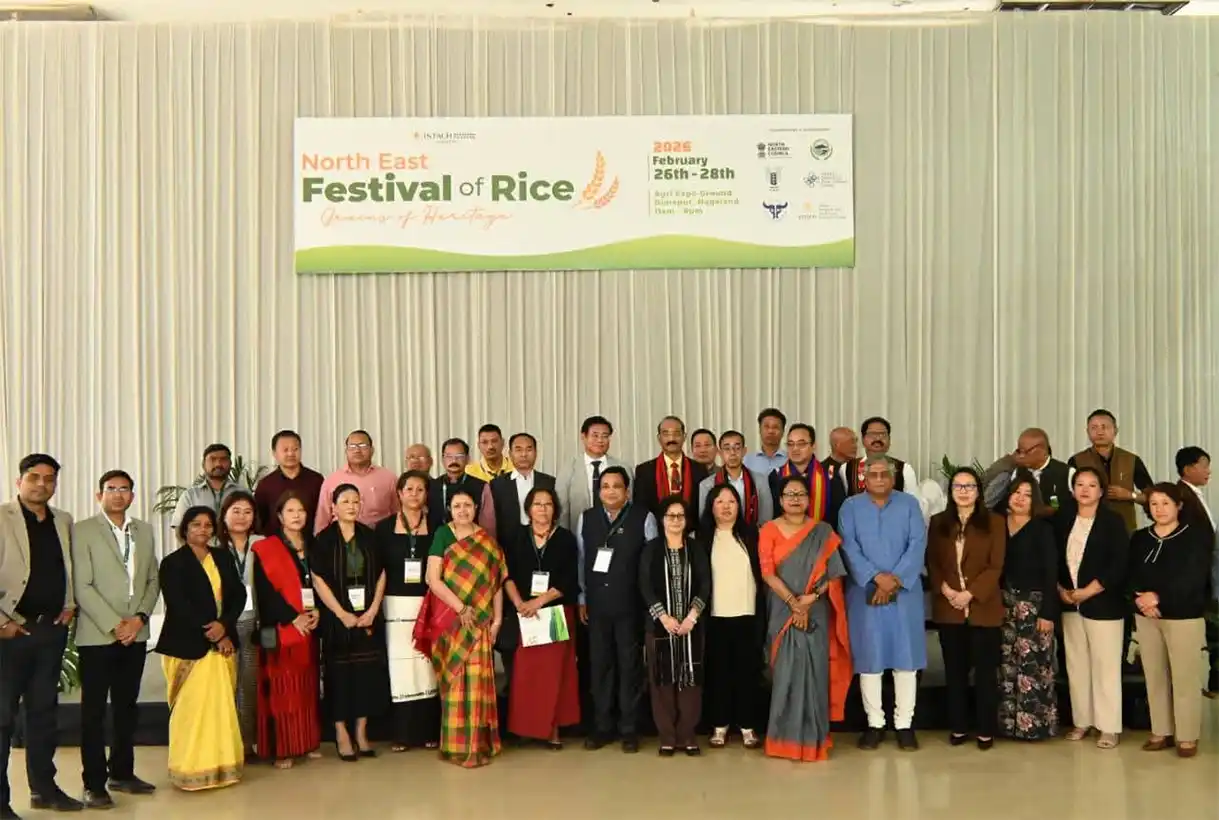
In the heart of Nagaland, a region renowned for its vibrant culture and breathtaking landscapes, a unique festival unfolded, celebrating a grain that is more than just a staple food; it is the very essence of life, identity, and heritage.
The North East Festival of Rice, aptly themed “Grains of Heritage,” held at the Agri Expo in Chumoukedima, was a vibrant testament to the profound connection between the people of North East India and the lifeblood of their land: rice.
The festival, a collaborative effort by the INTACH Nagaland Chapter, the Department of Agriculture, Nagaland, and several other partners, was a sensory explosion of colors, aromas, and traditions. It brought together farmers, scientists, policymakers, and cultural enthusiasts from across the eight northeastern states to celebrate the region’s rich agro-biodiversity and to champion the cause of sustainability and the preservation of indigenous knowledge.

At the heart of the festival was the exhibition by the Department of Agriculture, Nagaland, which showcased the incredible diversity of indigenous rice varieties from across the state. With over 200 identified landraces, each adapted to specific microclimates and terrains, Nagaland is a veritable treasure trove of rice genetics.
From the robust, nutty-flavored red rice, or “Kemenyu,” a daily staple, to the prized glutinous “Dzulie” reserved for festive occasions, the exhibition was a journey through the flavors, textures, and stories of Naga rice.
The inaugural program was graced by the presence of Shri. Mhathung Yanthan, the Hon’ble Advisor for Agriculture, Government of Nagaland, whose impassioned speech set the tone for the festival. “Rice is not merely an agricultural commodity but life, identity, and heritage for the people of the Northeast,” he said, emphasizing the grain’s integral role in the region’s rituals, festivals, and oral traditions. He lauded the festival as a “visionary and historic initiative” and called for a collective effort to conserve the region’s precious seed heritage.

The festival was not just a celebration of the past; it was a clarion call for the future. The two-day seminar, “Harnessing Indigenous Rice Genetic Diversity for Strengthening the Food-Climate-Market Nexus,” brought to the fore the pressing challenges of climate change and the critical need for climate-resilient agricultural practices.
With erratic rainfall, floods, and droughts posing a serious threat to food security, the focus was on developing climate-resilient and short-duration rice varieties that can ensure higher productivity while preserving traditional germplasm.
This is where the true potential of the North East’s rice heritage lies. For centuries, farmers in the region have been the custodians of a vast genetic library, cultivating rice varieties with inherent traits of flood tolerance, drought resistance, and adaptability to low-input conditions. These traditional varieties, like the rare, purple-black grained “Tening” rice, prized for its medicinal properties, or the drought-resistant “Mezhapu,” hold the key to a more sustainable and food-secure future.

The festival also highlighted the intricate connection between rice, community, and culture. The exhibition of traditional farming implements, the symbolic sowing of rice seeds, and the vibrant cultural performances were a poignant reminder that rice cultivation in the North East is not just a profession but a way of life, deeply intertwined with the social and spiritual fabric of the community.
As the world grapples with the challenges of a changing climate and the need for more sustainable food systems, the “Grains of Heritage” festival served as a reminder of the invaluable wisdom embedded in traditional agricultural practices. It was a celebration of the resilience of indigenous communities, the richness of their cultural heritage, and the immense potential of their “grains of heritage” to nourish not just the body, but also the soul.


The festival was a resounding success, not just in showcasing the rich biodiversity of the region, but also in sparking a much-needed conversation about the future of food and agriculture. It has sown the seeds of hope for a future where tradition and innovation can come together to create a more sustainable and equitable world, one grain of rice at a time.
References
[2] More than food: Rice takes centre stage at first Northeast festival
[4] Exploring the Different Types of Naga Rice and Their Uses

Shitangshu Hazarika is the Manager, Jorhat office of Assam Tea Corporation Ltd, Cinnamara, Jorhat
e-mail: jorhatofficeatcl@gmail.com