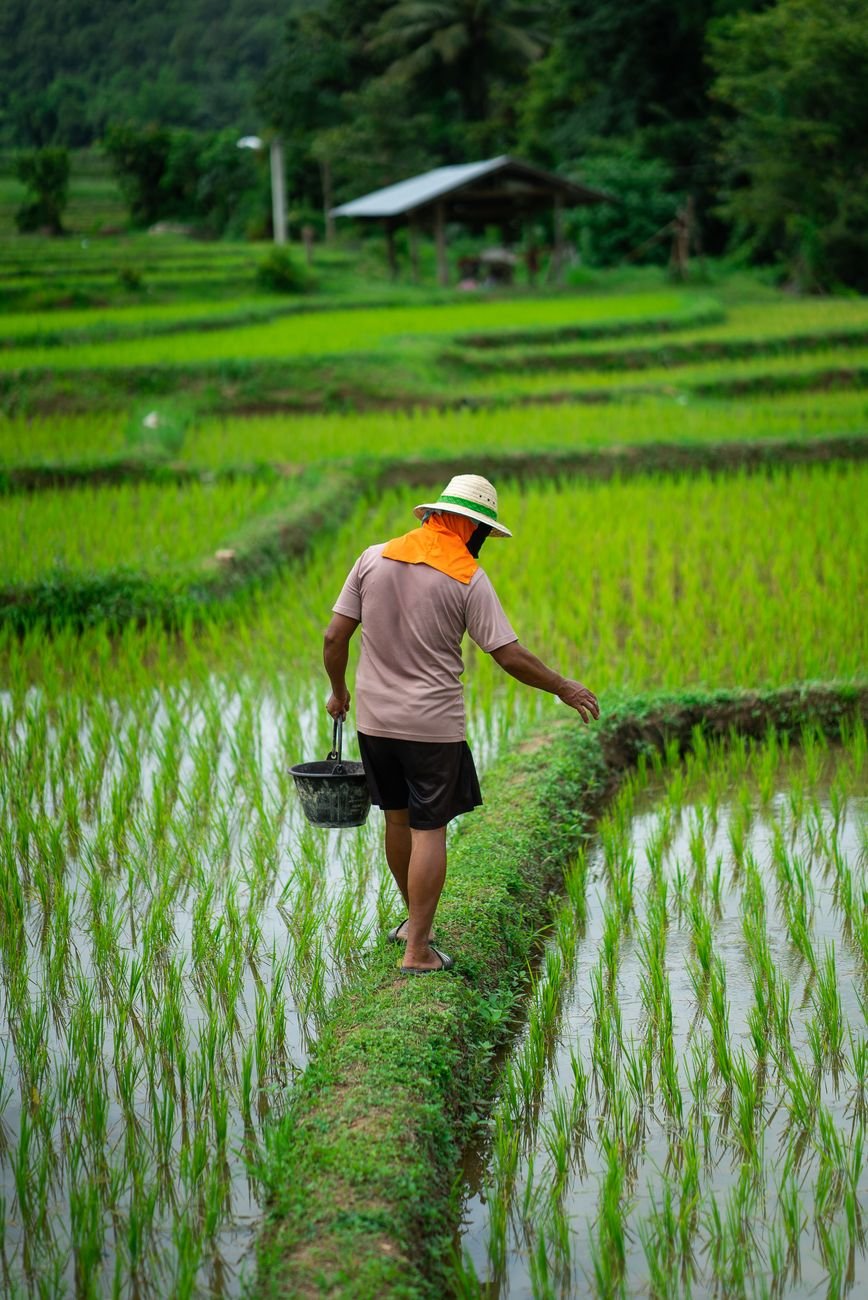
Thailand's rice exports fell to 7.5 million tonnes in the 2024-25 marketing year, down 24% from 9.9 million tonnes the year before. The US Department of Agriculture's Foreign Agricultural Service, known as the FAS, projects exports will hold at roughly the same level through the current 2025-26 season. That would mark a second consecutive year at the lower plateau. Competition from India and Vietnam continues to squeeze Thailand's share of the standard white rice market, the segment that drives most of global rice trade by volume.
The decline has cost Thailand its long-held position among rice exporters. It now ranks third globally, behind both India and Vietnam, a reversal from years in which Thailand traded the top spot with India. The shift is not a result of a poor harvest at home. Thai rice output for 2025-26 is estimated at 20.48 million tonnes, the fourth-largest crop on record. Ending stocks are projected at 3 to 4 million tonnes across both marketing years, comfortably above the level that would signal a genuine supply shortfall at home.
The squeeze has come almost entirely from the export side. India's return to international rice markets, after a period of tighter export restrictions in earlier years, has reintroduced a major low-cost supplier into segments where Thailand once competed comfortably. Vietnam has moved in the same direction from a different angle, investing in upgraded milling technology and expanding its range of high-quality rice varieties, according to the FAS analysis.

Competitors gained ground on Thailand's core market
Together, those two shifts have intensified competition specifically in the standard white rice segment, the bulk commodity grade that makes up the largest share of global rice trade by volume. FAS analysts note that white rice exports declined significantly during the first half of the 2024-25 marketing year. That reversed gains Thailand had made the year before. Buyers in price-sensitive markets shifted orders toward Indian and Vietnamese suppliers, both of which now offer comparable quality at a lower delivered cost for large government and commercial buyers.
Premium varieties hold their ground
Not every segment of Thailand's rice trade has suffered equally. Parboiled and fragrant rice varieties have fared better. That group includes the jasmine rice for which Thailand is best known internationally. The FAS analysis found stronger demand and greater price resilience for these grades in premium export markets. Buyers willing to pay for distinctive quality and flavour have continued to favour Thai suppliers, even as the bulk commodity trade has moved elsewhere.
That divergence points to where Thailand's rice sector may be headed next. Millers and exporters focused on standard white rice face structural pressure unlikely to ease quickly. India and Vietnam have both invested heavily in export capacity, and that investment is not reversing. Producers positioned in premium and specialty segments appear better placed to hold market share and pricing power. Thailand's overall export tonnage, meanwhile, looks set to settle at a lower plateau than it occupied a decade ago, barring a sharp change in either competitor's fortunes.
For rice-importing countries across the Gulf and South Asia, the reshuffling among exporters offers more choice rather than less. India, Vietnam and Thailand are all pursuing different customers within the same global market, a competitive dynamic that has generally kept prices in check for buyers even as individual exporters' rankings shift from one season to the next. Argentina’s grain farmers are navigating a comparable reshuffling of their own this season.