
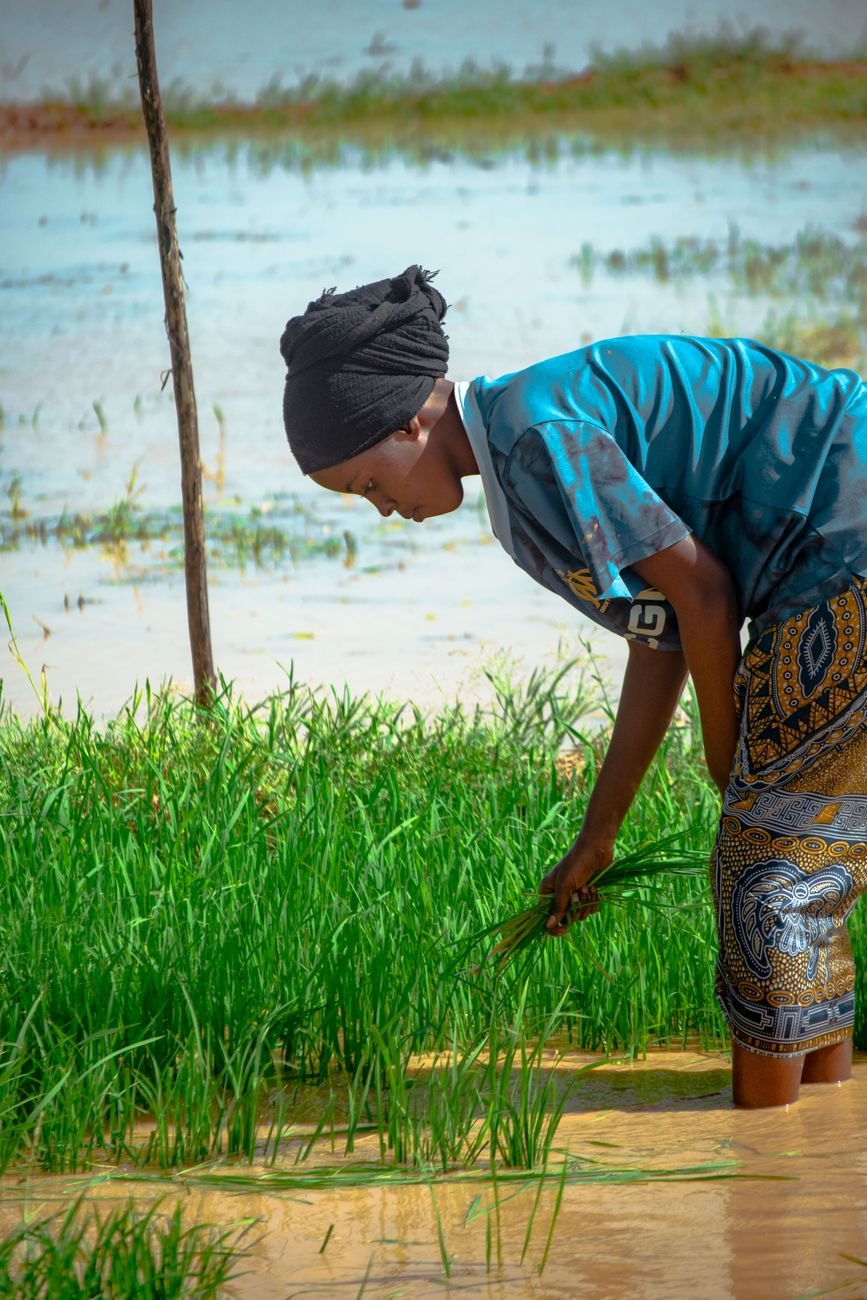
“Land is not an issue. The issue is water.” Kenyan farmer Nora Igoki’s assessment, offered at a Nairobi showcase on climate-smart agriculture, captures the constraint driving the new Kenya-Israel irrigation partnership more than any other single factor.
The event, “Growing Together: A Showcase of Climate-Smart Agriculture,” was held on 6 August 2026 at Mount Carmel Convent Farm in Lavington, Nairobi. It brought together Kenyan officials, farmers and Israeli diplomats around a shared Kenya-Israel irrigation partnership aimed at moving smallholder agriculture away from rain dependence and toward managed water use.
Israel’s ambassador to Kenya, Gideon Behar, told the gathering that irrigation is now the most pressing issue for Kenyan agriculture. He said solutions need to be simple enough for ordinary farmers to understand and apply, rather than reliant on complex infrastructure few can access.

Water emerges as the limiting factor
Kenya’s Secretary to the Cabinet, Mercy Wanjau, framed the stakes starkly: “Food is life. Without water, there’s no food, there’s no life.” Her remarks underline why irrigation, rather than land reform or farm size, has become the government’s central agricultural concern.
Israel’s own record is the benchmark driving the partnership. The country irrigates 50% of its agricultural land and recycles 97% of its sewage water for reuse in farming, figures cited repeatedly as the standard Kenya is working toward. Reaching even a fraction of that recycling rate would mark a significant shift for a country where most smallholder farming still depends on rainfall.
Specific programmes are already running ahead of any national rollout. CultivAid, an organisation involved in the cooperation, distributed one million seedlings to farmers across Embu county and other areas in the year before the Nairobi event. In Embu, the Green Paradise Water Project now counts 780 member farmers, of whom more than 400 currently receive water through government-provided pipes, a partial but concrete step toward reliable irrigation access.
The Kenya-Israel irrigation partnership extends beyond equipment and pipes. It includes technology transfer, training in drip irrigation methods and broader water-management expertise, building on a longer history of Kenyan farmers travelling to Israel for agricultural training. That training relationship predates the current cooperation and gives it an existing base of Kenyan expertise to build from.
Scaling a bilateral model
A Kenya News Agency report on 5 September 2026 confirmed the cooperation remains active, citing continued Israeli pledges of support for Kenyan smallholder farmers. The timing suggests the Nairobi showcase formed part of an ongoing bilateral programme the two governments intend to sustain, rather than a standalone event.
Kenya is not alone in looking for better tools to manage its natural resources under pressure. Elsewhere on the continent, the Regional Centre for Mapping of Resources for Development and the European Union have launched a Regional Biodiversity Outlook for Eastern and Southern Africa ahead of the seventeenth Conference of the Parties to the Convention on Biological Diversity, part of a wider continental push to put better data behind resource management decisions.
For Kenya, the immediate test is narrower and more practical. Programmes such as the Green Paradise Water Project reach hundreds of farmers rather than millions, and Israel’s 50% irrigation and 97% recycling figures remain aspirational rather than achieved. What the partnership offers, on the evidence so far, is a working template: drip irrigation, seedling distribution and piped water access, scaled gradually from pilot counties like Embu outward. Nora Igoki’s framing of the problem, land abundant but water scarce, remains the benchmark against which that scaling will be judged.