
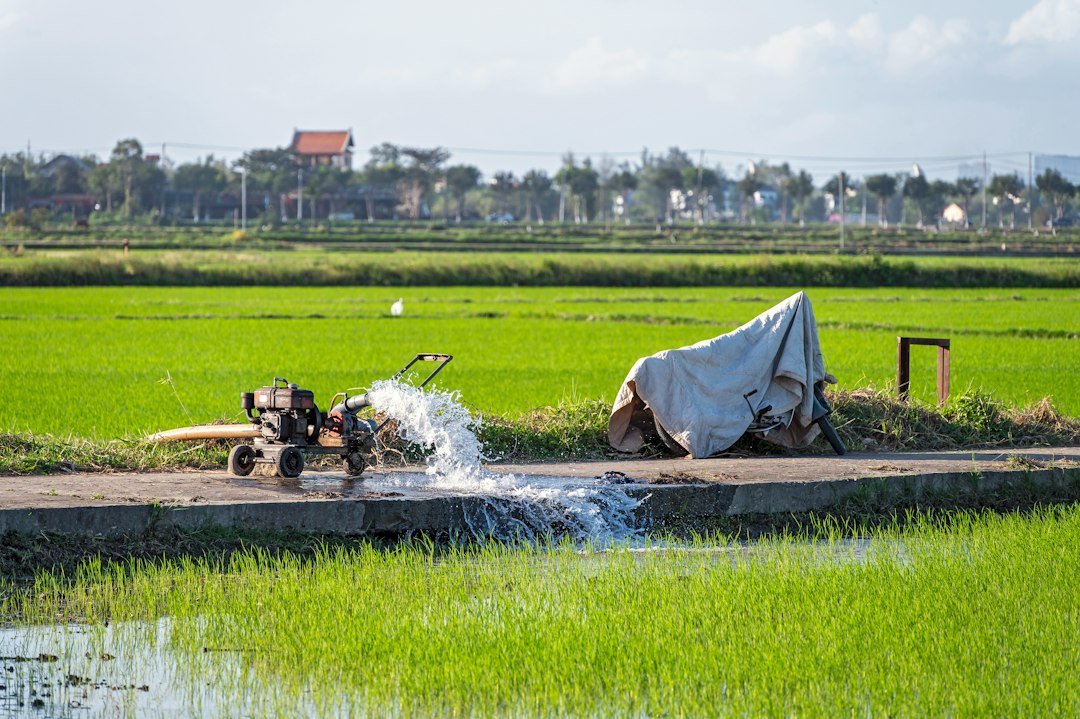
The Asian Development Bank and the Vietnamese government signed a $42.76m financing package on 3 September in Hanoi. That is about £32.4m at the mid-market exchange rate of 14 October 2026. The money will modernise irrigation systems across three provinces hit by increasingly erratic rainfall.
The deal funds the Climate Adaptation Through Irrigation Modernization Project. It will rebuild seven irrigation systems in Dong Nai, Gia Lai and Quang Ngai, spanning Vietnam’s southern and central highland regions.
Most of the money, $40.66m, comes from the ADB’s own capital. The remaining $2.1m is split between two Japan-financed, ADB-administered grants: the Japan Fund for Prosperous and Resilient Asia and the Pacific, and the High-Level Technology Fund. Shantanu Chakraborty, ADB’s country director for Vietnam, said modern and reliable irrigation systems were essential to safeguard rural livelihoods and strengthen food security.

ADB expects the project to deliver a dependable water supply to 21,941 hectares of farmland. A further 11,399 hectares are earmarked for higher-value crops under a diversification plan. Around 295,500 people are expected to benefit directly, through better water access or the training the project funds.
New rules target gender gap in water planning
Beyond canals and pumping stations, the financing pays for new national guidelines on weather-adaptive irrigation. These cover system design, planning, operation and maintenance, and digital monitoring tools. ADB says the guidelines will respond explicitly to the needs of women and girls in water management, an area it says earlier Vietnamese irrigation policy largely overlooked. The project sets a target of at least 40% women among participants in training on high-efficiency irrigation and weather-adaptive farming.
The financing will also help form or strengthen local water user groups. These give farmers a formal voice in managing scarce supplies as competition for water grows between households, industry and agriculture during dry spells. Reliable irrigation scheduling, rather than ad hoc rationing, sits at the centre of the project’s design.
Three provinces face a shared water squeeze
Dong Nai, Gia Lai and Quang Ngai sit in different parts of the country, but share a common pressure. Irrigation infrastructure built decades ago is struggling to cope with less predictable rainfall and longer dry spells between monsoons.
The project is designed to let farmers shift towards crops that need less water or fetch higher prices. That transition is already under way elsewhere in Vietnam. In the central highlands, coffee growers in Dak Lak have diversified into durian for similar reasons. Chinese demand is driving that shift, as a separate Fourth Plate report on the province’s durian acreage has documented.
The weather-adaptive guidelines developed for these three provinces are intended to apply nationally once finalised. That would give other provinces a template for upgrading canal networks that predate current rainfall projections. ADB’s published announcement sets no construction timeline for the physical works. It also does not break down how the $2.1m in Japanese grant funding splits between the two participating funds.
For farming families in the three provinces, the near-term test is practical rather than bureaucratic. It is whether modernised canals and new water-sharing rules hold up through the next serious dry spell, not how the guidelines read on paper in Hanoi.
The signing adds to a broader pattern among multilateral lenders funding climate-adaptive irrigation across South and Southeast Asia. The aim is to upgrade ageing canal networks before water shortages hit harvests, rather than after. Whether the new guidelines travel beyond these three provinces, as ADB intends, will depend on how well the rebuilt systems perform once farmers are using them.



