
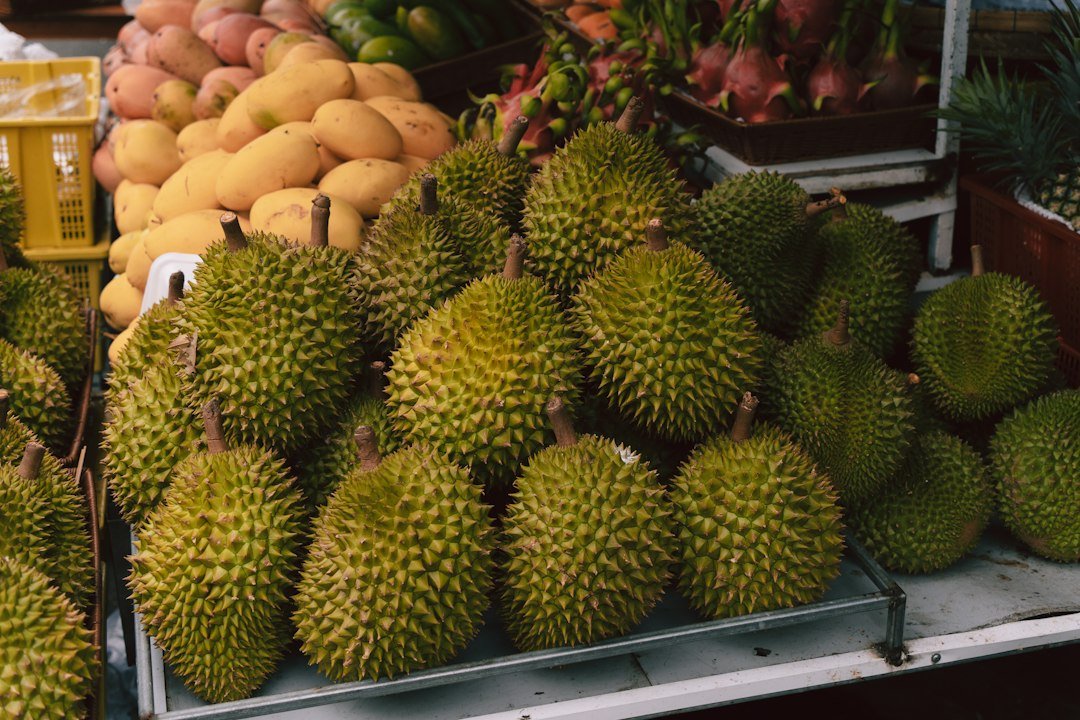
Durian acreage in Vietnam’s Dak Lak province has tripled over four years, growing from roughly 15,000 hectares in 2022 to about 45,000 hectares in 2026, according to local agricultural authorities cited by FreshPlaza and confirmed separately by The Star Malaysia. The expansion has been driven by a 2022 export protocol that opened the Chinese market to Vietnamese durian, turning what had been a minor regional crop into one of the province’s most valuable exports.
Dak Lak is better known internationally as Vietnam’s coffee heartland, home to more than 214,000 hectares of coffee trees and a significant share of the country’s Robusta output. Durian growers in the province have largely planted the thorny fruit alongside, rather than instead of, their coffee, taking advantage of durian’s higher per-hectare returns during years when coffee prices soften.
Farmgate durian prices in Dak Lak rose 20 to 30 percent over a two-week stretch this autumn, reaching roughly $4 per kilogram, as Chinese buyers increased orders ahead of the Lunar New Year demand season. The local durian association has stressed that the crop remains a diversification strategy rather than a wholesale replacement for coffee, since durian trees take five to seven years to reach full fruiting maturity and carry higher upfront costs for irrigation and fertiliser.

Why coffee country took up durian
Robusta coffee prices have swung sharply over the past two years, pushed by weather-related supply shocks in Brazil and Vietnam alike, leaving many Dak Lak smallholders keen to spread their risk across more than one export crop. Durian’s China-driven demand boom, which has also reshaped orchards in Thailand and parts of Malaysia, offered a ready-made alternative that fit the province’s existing irrigation infrastructure.
The International Coffee Organization has separately reported that global coffee output is set to rise 4.4 percent this season, ending four consecutive years of deficit with the first supply surplus since 2022, as Brazil’s harvest came in at a record 67.6 million bags. Dak Lak farmers diversifying into durian are partly responding to the prospect of softer coffee prices that a global surplus typically brings.
The ICO’s September data showed its composite price indicator falling 8.7 percent month on month, with all four of its regional sub-indices, Colombian Milds, Other Milds, Brazilian Naturals and Robusta, posting declines. For Dak Lak households, a weaker Robusta price makes the returns from a durian orchard planted five years ago look considerably more attractive than they did when coffee prices were at their recent peak.
Risks beneath the boom
Agricultural economists tracking Vietnam’s durian expansion caution that the same China-dependency that has driven prices up could just as easily drive them down if Beijing tightens import rules or demand cools. Thailand and the Philippines have faced similar durian price swings tied almost entirely to Chinese buying patterns, with little insulation from alternative export markets.
Local extension officers have also begun advising farmers on spacing and irrigation scheduling that lets durian and coffee share the same plot without competing for water during Dak Lak’s dry season, a technical detail that previously limited how much durian smallholders could safely add to existing coffee land. For now, Dak Lak’s dual-crop model, mature coffee trees shading younger durian saplings on the same land, offers smallholders a hedge that few single-crop regions can match. How durable that hedge proves will depend on whether Chinese demand keeps growing at its current pace or whether, as with coffee before it, durian eventually faces its own boom-and-bust cycle. The same diversification logic is playing out differently in Indonesia, where the halt on forest clearing for new rice paddies has pushed planners towards intensifying existing farmland instead of opening new ground.



