
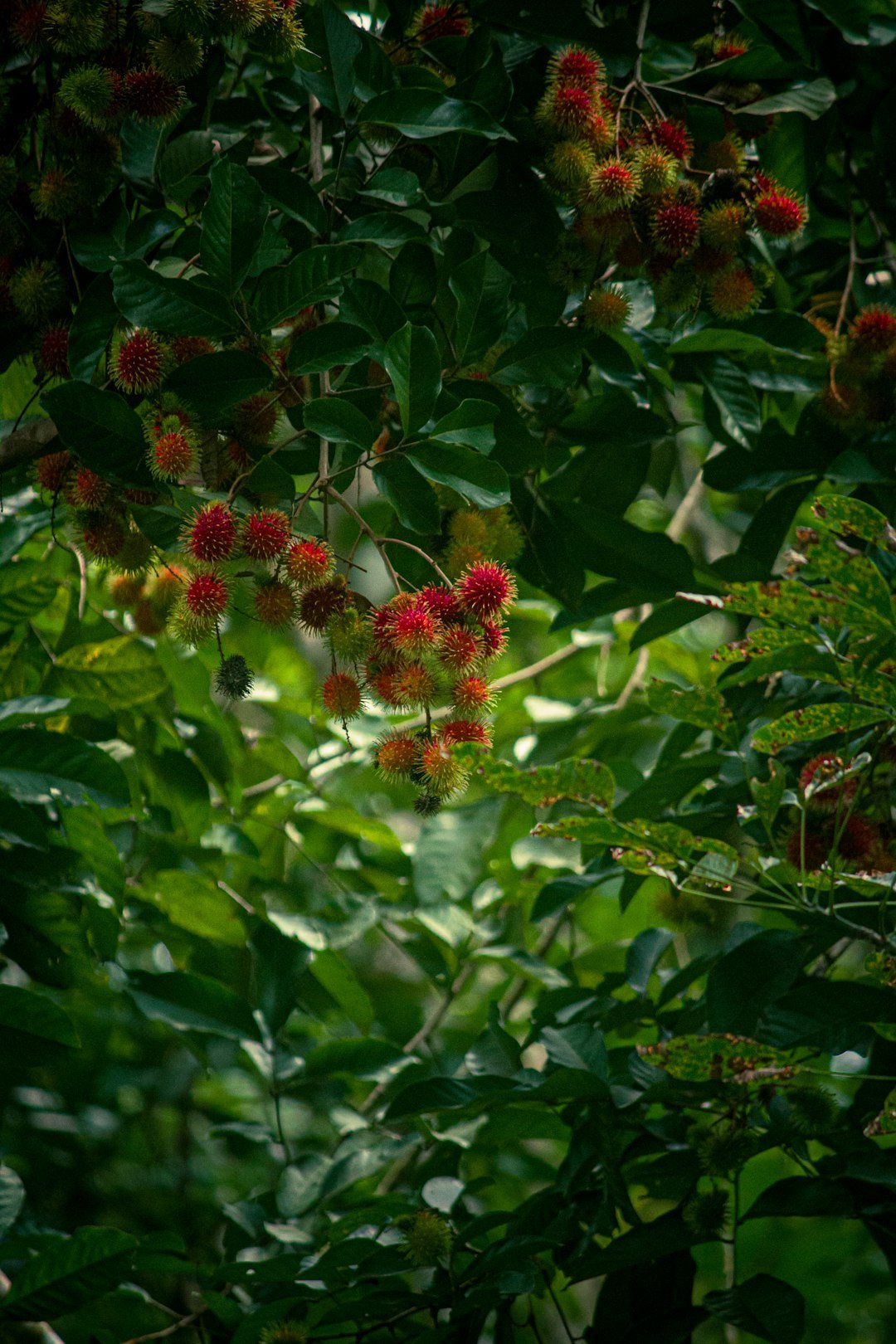
Rambutan, a spiky red fruit native to Southeast Asia, now covers close to 25,000 acres across Kerala’s traditional rubber-growing districts, as farmers abandon a crop whose prices have stagnated for years.
Growers in Pathanamthitta, Kottayam, Ernakulam, Thrissur, Wayanad and Idukki produced about one lakh tonnes of rambutan this season, generating an estimated Rs 1,000 crore (about $105m, or £79m, at October 2026 rates) in revenue, according to the Rambutan Mangosteen Farmers’ Organisation.
M C Saju, the organisation’s president and a farmer at Thirumarady near Koothattukulam, said rambutan trees begin yielding in their third year and can produce up to 300 kg each once mature. At Rs 100 a kilogram, one tree can bring in Rs 30,000 annually, several times what an equivalent stand of rubber trees earns even when latex prices are high.

“Rubber does not reach that level even if the price goes up to Rs 300,” Saju said, contrasting the fruit’s returns with a commodity whose price has swung sharply over the past decade without delivering comparable income growth for smallholders. One farmer in Ernakulam told the organisation he earned Rs 14 lakh (about $14,770, or £11,000) from a single hectare this season, against roughly Rs 60,000 in costs, in his fourth year of harvest.
Markets still outside the state
Kerala’s rambutan is sold almost entirely outside the state. The Kuttalam market handles about five tonnes a day and the wholesale market roughly 15 tonnes, with Chennai and Bengaluru as the main destinations. Farmers are now pushing to reach Hyderabad, Delhi, other parts of north India and the APMC market in Navi Mumbai, part of an effort to reduce dependence on two cities.
That expansion is constrained by the fruit’s biology. Rambutan is non-climacteric, meaning it does not ripen further after picking, and its shelf life is short without refrigeration. Growers are asking for better cold-chain logistics, support for value-added products such as juices and preserves, and stronger Farmer Producer Organisations to negotiate collectively with traders in distant markets.
Rambutan also demands far less daily attention than rubber tapping, which requires farmers or hired tappers to visit every tree before dawn whenever the crop is being harvested. Many of Kerala’s traditional tapping families have left the trade in recent years as wages in construction and services have risen elsewhere, leaving smallholders short of labour even when latex prices are favourable. A fruit crop that is harvested in seasonal bursts rather than daily rounds suits farms that can no longer rely on a steady supply of tappers.
Rumours and real risk
The crop’s rapid spread has also drawn misinformation. Saju’s organisation has had to respond to social media posts linking rambutan consumption to disease, claims it says have no basis and that threaten demand just as the market is growing. A Rambutan Conclave held at Koothattukulam in August brought together farmers, traders, startups and horticulture experts to discuss logistics, branding and the health claims circulating online.
The shift mirrors a broader pattern across Kerala’s plantation belt, where ageing rubber stands, labour shortages for tapping and flat global rubber prices have pushed smallholders toward fruit crops that pay faster and need less daily labour. It comes alongside growing concern about whether Kerala is also losing crop diversity in the other direction: the state recently lost Cheruvayal Raman, the Wayanad farmer who spent decades conserving rare traditional rice varieties, a reminder that agricultural change in the state cuts both ways, trading some forms of diversity for others as farmers chase better incomes.
For now, rambutan’s economics look hard for rubber to match, and Kerala’s rubber belt looks set to keep changing colour, from the pale latex cups of the past to the bright red fruit now filling trucks bound for markets the state had never supplied before.



