
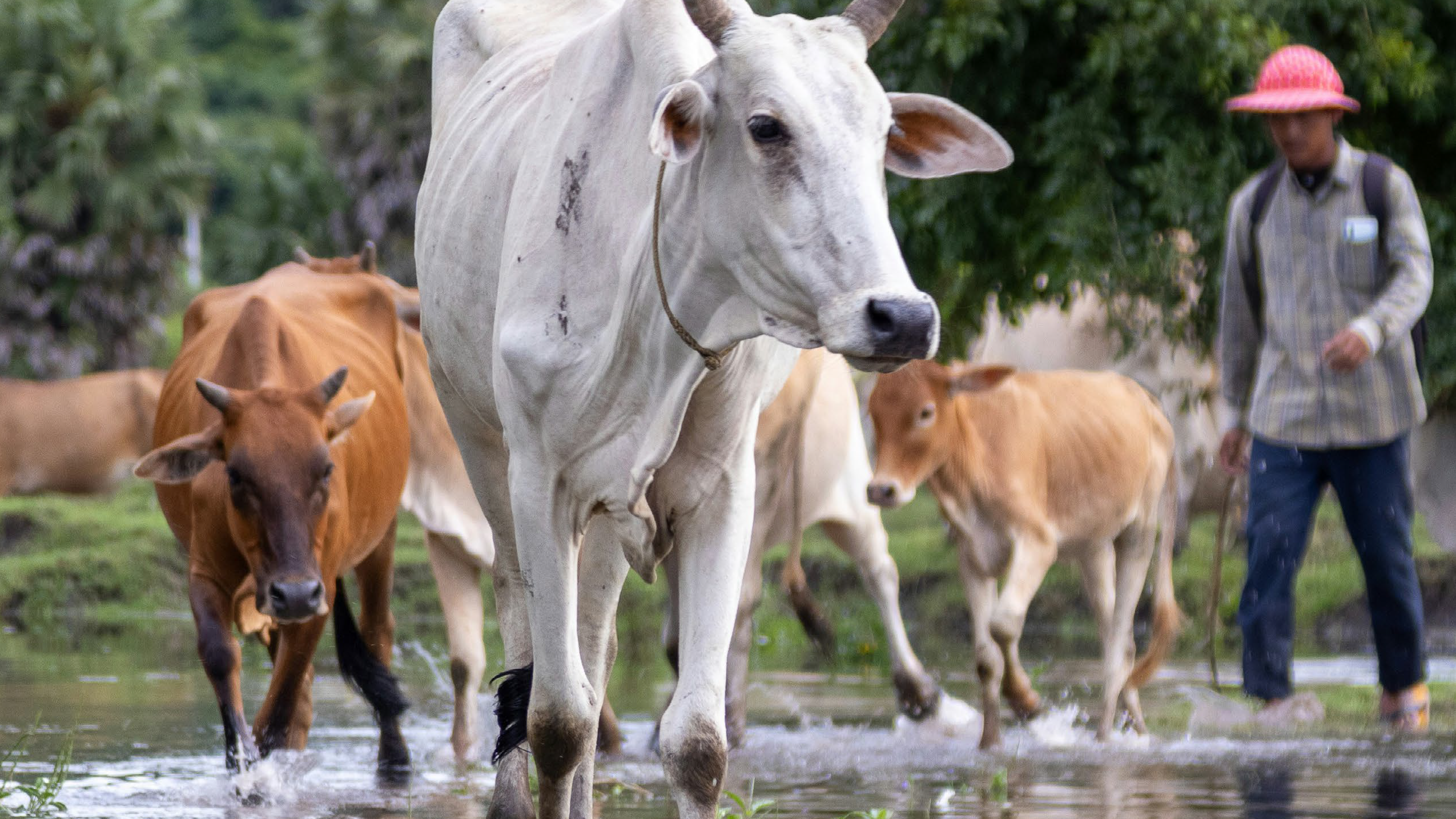
The World Resources Institute has published a comprehensive guide to the most promising technologies for agricultural methane mitigation, incorporating the latest evidence on reducing emissions from the sector that contributes nearly half of global methane emissions.
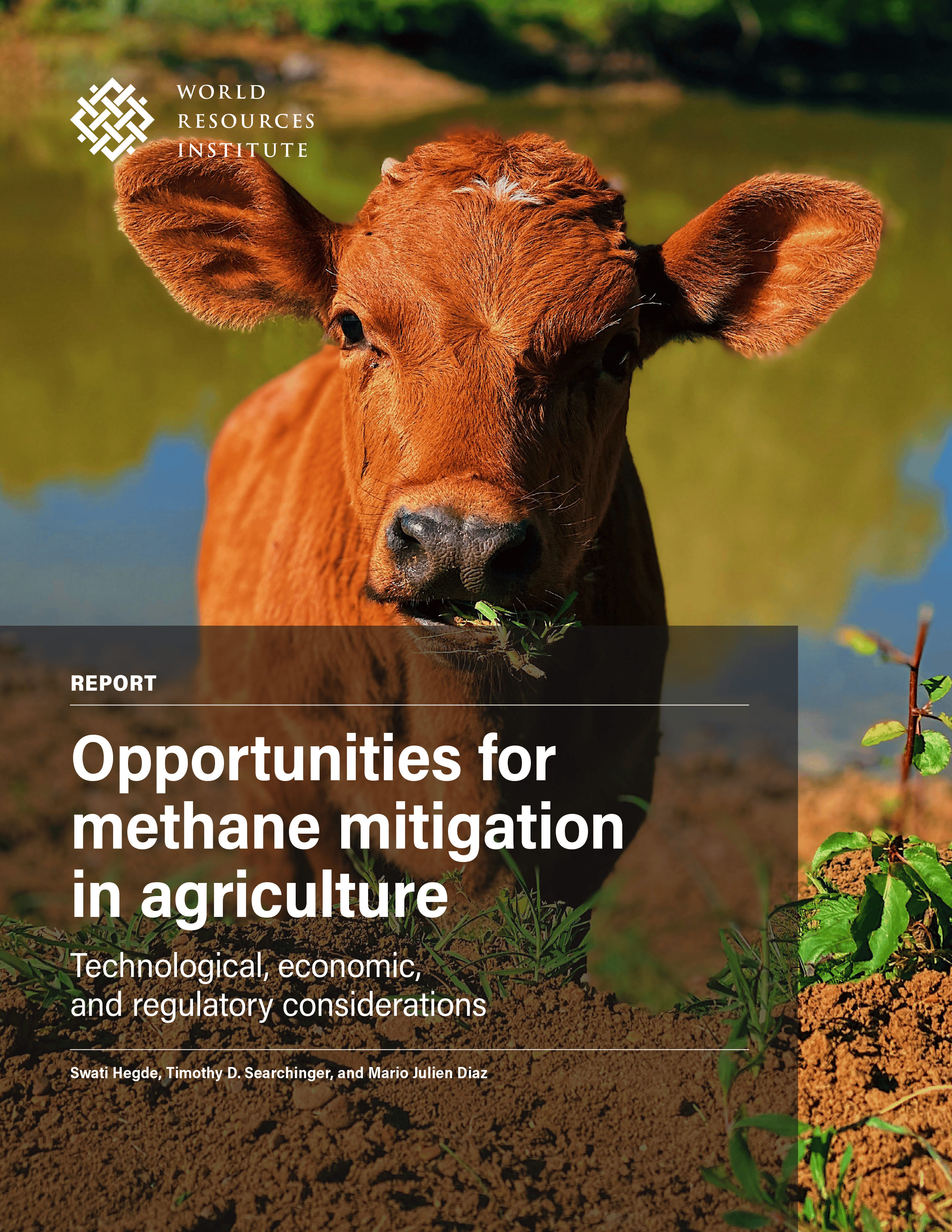
The report “Opportunities for methane mitigation in agriculture: Technological, economic, and regulatory considerations” explores methane reduction strategies for three major sources – livestock digestion (enteric fermentation), manure management, and rice cultivation – analyzing their cost-effectiveness and mitigation potential.
The Urgency of Agricultural Methane Mitigation
With the Global Methane Pledge aiming to reduce global anthropogenic methane emissions by 30% by 2030 relative to 2020 levels, the agricultural sector has become a critical focus for climate action1. Agriculture contributes approximately 46% of all anthropogenic methane emissions worldwide, making it the largest single source of these potent greenhouse gases. Methane has 80 times the warming impact of carbon dioxide over a twenty-year period, making rapid reductions essential for meeting climate goals.
The report details how livestock methane emissions (enteric fermentation and manure management) are responsible for 65% of anthropogenic agricultural methane emissions, while rice cultivation and burning crop residues contribute the remaining 35%. Specifically, enteric fermentation accounts for 27% of global methane emissions, rice cultivation for 8%, and manure management for 3%.
Methane inhibitors like 3-NOP could reduce dairy cattle emissions by up to 30% while innovative water management in rice fields may cut emissions by 20-72%, according to groundbreaking new research on agricultural methane mitigation.
WRI Report
Enteric Methane Solutions: Feed Additives Leading the Way
3-NOP (Bovaer®) – Market Ready Technology
Among the most promising solutions is DSM-Firmenich’s feed supplement Bovaer®, which contains 3-nitroxypropanol (3-NOP) and can reduce methane emissions by an average of 30% in dairy cattle by inhibiting the last step of methanogenesis in the rumen. The Food and Drug Administration cleared Bovaer for use in the US in May 2024, and the additive is now approved for use in 57 countries including the EU/EEA, UK, Paraguay, Australia, Brazil, Chile, Argentina, Mexico, Costa Rica, Uruguay, Pakistan, Switzerland, Turkey, South Africa, and Canada.
Recent large-scale trials have demonstrated the technology’s commercial viability. FrieslandCampina and Agrifirm conducted the most extensive 3-NOP pilot involving 150 farms with 20,000 dairy cows, reporting an average 28% reduction in enteric methane emissions and up to 42% reduction in individual cases1. Bel Group in Slovakia has introduced 3-NOP into 80% of its dairy operations, producing 70 million liters of milk annually.
The cost-effectiveness of 3-NOP is estimated at $144 per tonne CO2e for a 30% reduction in lactating dairy cows, with costs expected to decrease as DSM’s new production plant in Scotland comes online.

Seaweed-Based Solutions Show Promise
Asparagopsis (red seaweed) represents another breakthrough technology, with studies showing methane reduction potential of 26-67% in dairy cattle and 38-98% in beef cattle1. Companies like CH4 Global’s Methane Tamer™, Symbrosia’s SeaGraze, and Blue Ocean Barns’ Brominata are developing commercial-scale seaweed products1. CH4 Global has built the world’s first commercial-scale Asparagopsis facility in South Australia, housing 10 large-scale seaweed cultivation ponds capable of producing 80 metric tonnes annually.
However, seaweed solutions face challenges including higher costs ($243-625 per tonne CO2e depending on reduction achieved) and safety concerns regarding bromoform transfer to milk. The US EPA classifies bromoform as a “probable human carcinogen,” creating regulatory hurdles for dairy applications.
Alternative Feed Additives
The report identifies several other promising enteric methane solutions:
- Nitrates: Cargill’s SilvAir™ calcium nitrate product reduces emissions by 15.5% at a cost of $91 per tonne CO2e
- Lipids: Various oils and fats can reduce methane by 3-17%, with waste cooking oil offering a low-cost option at $84 per tonne CO2e
- Plant metabolites: Products like Mootral’s Enterix™ and Agolin Ruminant™ show 9-38% reduction potential at costs ranging from $42-56 per tonne CO2e
Feed Efficiency Improvements in Developing Countries
The report emphasizes that developing economies should focus on improving feed efficiency through enhanced digestibility of forages and crop residues1. Over 5 billion tonnes of crop residues are generated globally each year, with 27-36% used for animal feed1. In regions like South Asia and Sub-Saharan Africa, crop residues constitute up to 70% of feed rations.
Simple treatments like urea processing can improve crop residue digestibility and reduce methane emissions by 8-44% while increasing milk production by up to 33%1. Dual-purpose crops bred for both grain yield and high-quality residues offer another promising approach, with studies showing 87% improvement in output per animal and 31% reduction in methane emissions per kg of output in India’s mixed-crop livestock systems.

Manure Management: Beyond Anaerobic Digestion
While anaerobic digestion can reduce methane from manure management by approximately 50%, the report highlights more cost-effective alternatives1. Wet manure storage systems generate 80% of manure management greenhouse gas emissions, making targeted interventions crucial.
Promising Low-Cost Solutions
- Solid-liquid separation: Achieves 25-62% methane reduction at costs of just $5-24 per tonne CO2e using basic to advanced separation systems
- Acidification: Can reduce methane emissions by 47-89% at costs of $2-17 per tonne CO2e, while also reducing ammonia emissions and improving fertilizer value
- Aeration: Mechanical aeration systems can achieve 40-99% methane reduction at costs of $16-28 per tonne CO2e
Rice Cultivation: Water Management as Key Strategy
Rice cultivation contributes an estimated 24.5-45 million metric tonnes of methane annually, with significant uncertainty in measurements1. The report identifies several effective mitigation strategies:
Irrigation Management
- Alternate wetting and drying (AWD): Reduces methane emissions by 20-72% while saving up to 38% of irrigation water with no yield reductions
- Mid-season drainage: Achieves 38-80% methane reduction and can reduce grain arsenic levels, providing public health benefits
- Drip irrigation: Netafim’s system claims up to 90% methane reduction with 23% water savings and 15-24% yield increases
Breeding and Soil Management
- Low-methane rice varieties: SUSIBA2 rice shows 22-51% methane reduction per hectare while maintaining yields
- Direct-seeded rice: Reduces methane emissions by 47-65% compared to transplanted flooded systems while lowering labor costs
- Straw management: Off-season plowing of rice straw can reduce methane by 15-68% through aerobic decomposition
Investment and Research Acceleration
The report notes significant increases in research and development funding, including the Global Methane Hub’s $200 million Enteric Fermentation R&D Accelerator announced at COP281. California’s Livestock Enteric Methane Reduction Program has allocated $10 million for demonstration trials1, while the Greener Cattle Initiative consortium has invested $7.2 million in enteric methane research.
Implementation Challenges and Solutions
Despite technological advances, the report identifies key barriers to widespread adoption:
- Regulatory harmonization: Different approval processes across countries slow global deployment
- Financial incentives: Most promising technologies require government support or carbon market mechanisms to achieve economic viability
- Technical support: Rice and manure management solutions often require project-by-project implementation with local technical assistance
- Measurement and verification: Improved monitoring systems are needed to verify emission reductions and prevent methane leakage
Economic and Co-Benefits
Many methane mitigation solutions offer significant co-benefits beyond climate impact. Feed efficiency improvements can increase farmer incomes through higher milk and meat yields1. Water management techniques in rice farming provide substantial water savings – critical in water-scarce regions1. Manure management improvements enhance fertilizer value and reduce water quality impacts.
The report concludes that achieving maximum methane reduction requires a comprehensive, regionally-tailored approach combining multiple interventions. With agriculture contributing nearly half of global methane emissions, these technologies represent a crucial pathway for meeting the Global Methane Pledge targets while enhancing food security and farmer livelihoods.
Download the full report here