
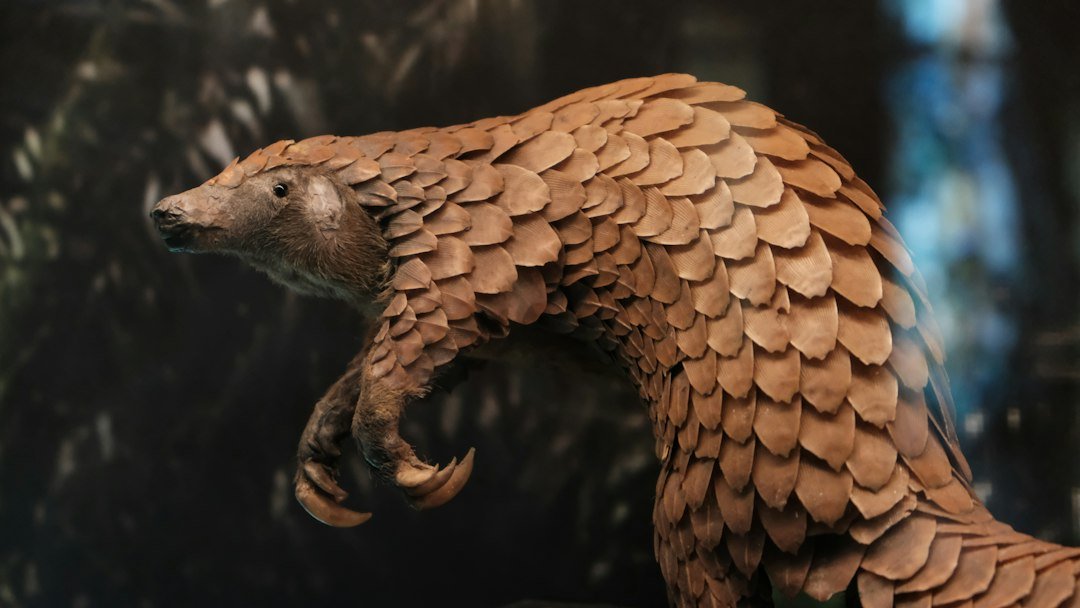
Camera traps set up by the Wildlife Institute of India have recorded a critically endangered Chinese pangolin for the first time in the Riat Laban and Laitkor reserve forests on the edge of Shillong, Meghalaya’s capital. The sighting came as part of the institute’s ongoing project assessing mammal populations across the state, which also captured images of large Indian civets, leopard cats, masked palm civets, yellow-throated martens, Indian crested porcupines and kalij pheasants in the same forest patches.
The Chinese pangolin has been listed as critically endangered on the International Union for Conservation of Nature’s Red List since 2014. Researchers say the species’ greatest threat is poaching for its meat and the keratin scales used in traditional medicine markets, chiefly in China and Vietnam, which have driven large pangolin populations toward collapse across South and Southeast Asia over recent decades, making pangolins among the most heavily trafficked mammals in the world by volume.
Enforcement gaps let networks persist
A forest official told researchers that pangolin trafficking networks operating in the region are worth hundreds of crores of rupees, or several hundred million US dollars at current exchange rates, but enforcement has struggled to reach the people organising the trade. Couriers carrying scales or live animals are frequently caught at checkpoints and border crossings, researchers say, while the traders and buyers who direct the networks are rarely identified or prosecuted, leaving the underlying trafficking largely intact even after individual seizures make headlines.

The Chinese pangolin is protected under Schedule I of India’s Wildlife Protection Act, the strictest tier of domestic legal protection, alongside species such as the tiger and the one-horned rhinoceros. That legal status has not translated into reliable population data, since the species’ nocturnal, burrowing habits make it far harder to survey than larger, more visible mammals, leaving conservationists reliant on incidental camera-trap finds like this one to understand where populations still persist.
The Wildlife Institute of India said the urban-fringe forests around Shillong are “invaluable biodiversity strongholds that must be strictly protected and preserved”, noting that forest patches close to expanding towns are often overlooked in conservation planning even though they can shelter threatened species pushed out of more disturbed habitat elsewhere. Habitat fragmentation from road building and settlement expansion around Shillong has steadily reduced the unbroken forest cover pangolins and other small mammals rely on to move safely between feeding and denning sites.
A hotspot under growing pressure
Meghalaya’s hill forests, part of the wider Eastern Himalaya biodiversity hotspot, host a disproportionate share of India’s mammal diversity relative to the state’s small land area, a pattern researchers attribute to steep terrain that has historically limited large-scale clearance compared with the plains. The institute’s mammal assessment project is intended to build a clearer picture of which species persist in these increasingly isolated forest fragments as Shillong’s urban footprint grows and demand for land on the city’s margins intensifies.
Conservationists say confirmed sightings of elusive, nocturnal species such as pangolins are valuable precisely because the animals are otherwise difficult to study, with population estimates for Chinese pangolins across their range remaining imprecise. Camera-trap evidence of breeding populations, rather than single individuals, would be needed to establish whether Shillong’s urban-fringe forests can sustain the species over the longer term, researchers say.
The find comes in a month when global conservation negotiators, from the IPCC’s climate scientists to biodiversity delegates meeting elsewhere, have struggled to match political commitments to the scale of evidence researchers are gathering on the ground.



