
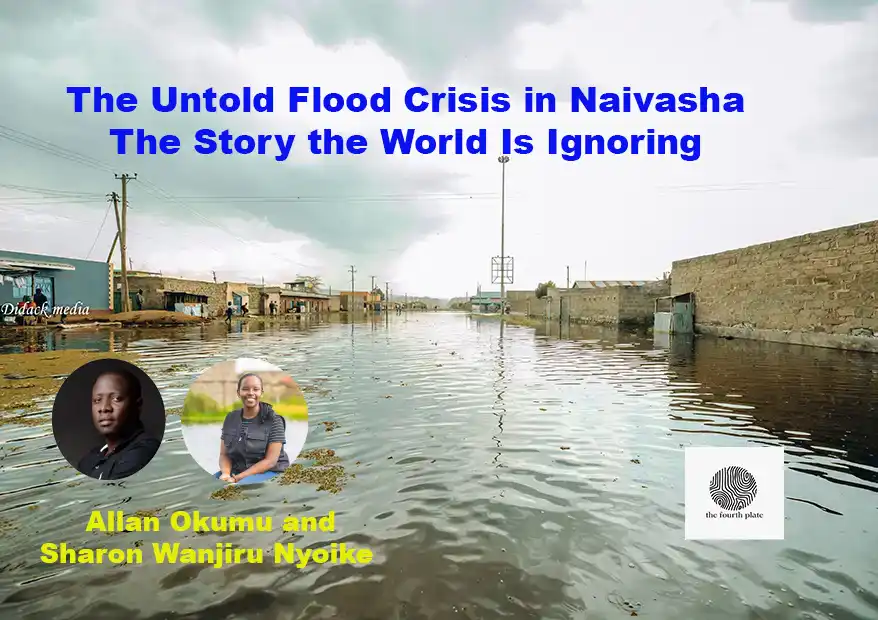
For the past several weeks, Didack Media has been on the ground in Naivasha documenting one of the most devastating crises to hit the region in recent years. More than 2,000 families have been displaced or trapped as Lake Naivasha continues to swell, flooding homes, farmlands, and entire estates. What began as heavy rainfall has now grown into a worsening humanitarian emergency. Each passing day, the situation deteriorates further.
Entire homesteads in Kihooto Estate and other affected wards are underwater. Families have been forced to remain in submerged houses, unable to relocate due to financial constraints. Landlords in unaffected dry areas have sharply increased rent, making relocation nearly impossible for already vulnerable families. Many residents especially the elderly, the sick, and young children remain trapped in flooded homes with little to no assistance.
The dangers extend beyond rising water levels. Hippopotamuses from the lake have started appearing in the flooded areas, creating widespread fear among residents. Parents worry about children encountering these wild animals while navigating the murky waters to and from school. While no attacks have been reported so far, the threat remains ever-present.

Health risks are also escalating. Sewer lines have mixed with floodwaters, exposing residents to contaminated water and increasing the spread of waterborne diseases. Families wade through these waters daily, and with the local water supply compromised, they are forced to purchase safe drinking water—an additional financial burden they can scarcely afford. Cases of coughs, fevers, and stomach illnesses are on the rise, especially among children and expectant mothers.
Despite calls for warm clothes and blankets, the reality is grim. Even if provided, families still face the same harsh truth: waking up and sleeping in flooded houses. Vulnerable groups, bedridden patients, the elderly, and those with chronic illnesses remain stranded indoors, with caregivers unable to evacuate them without adequate resources.
From the first day we covered this crisis to our most recent documentation, it has been evident that the situation requires urgent intervention. As Didack Media, we believe that the plight of Naivasha’s flood victims deserves immediate global attention. Humanitarian aid in the form of medical supplies, protective gear, clean water, relocation support, and temporary shelter is not just necessary—it is critical for survival before things worsen further.

This is a silent crisis that grows louder each day. The resilience of these communities is remarkable, but resilience alone cannot keep them safe. Greater intervention is needed to ensure that these families are not forgotten.
A flood years in the making: Understanding the crisis at Lake Naivasha
Lake Naivasha, located in Kenya’s southern Rift Valley at about 2,000 meters above sea level, is a vital but fragile freshwater ecosystem. Known internationally as a Ramsar wetland of significance since 1995, the lake supports a diverse economy, including floriculture, commercial fishing, and geothermal power generation. Yet its unique hydrology—being a freshwater lake without a visible outflow—relies on a delicate balance influenced by underground flows and sedimentation. For decades, this balance has been disrupted.
Historically, the Naivasha basin was managed by the Maasai as seasonal grazing lands where fluctuating water levels were embraced and adapted to. Since colonial times beginning in 1895, however, the landscape drastically changed. Large-scale settler farming replaced traditional pastoralism, accelerating after Kenya’s independence in 1963 with rapid population growth and subdivision of land. The rise of commercial farming, especially floriculture since the 1980s, has intensified resource pressures through water abstraction, pollution from agro-chemicals, and deforestation—leading to weakened soil and increased runoff.
The floods engulfing Naivasha today are the catastrophic outcome of this long history of human-environment interaction combined with more recent climatic extremes.

The 2025 flood disaster: Unprecedented rainfall and rising Lake Naivasha water levels
The September 2025 flood event shattered previous records. Between 1990 and 2023, Lake Naivasha’s water levels fluctuated naturally, peaking at 1,891.5 meters above sea level in 2021. But this year, intense and unusual rainfall—amplified by a positive phase in the Western Indian Ocean Dipole—caused the lake to surpass this height, swelling beyond its traditional boundaries and merging with neighboring Lake Oloiden. This merger created a new estuary, disrupting water chemistry and threatening aquatic ecosystems deeply.
Between 2010 and 2020, satellite data showed the lake’s surface area had already increased by 21%, a trend accelerated by climate change. The 2025 deluge intensified this greatly, flooding riparian zones and infrastructure. The timing—at the wet season’s start—meant the land was saturated and relief unlikely in the near term. This prolonged inundation has left thousands displaced, destroyed homes, farms, and key sector infrastructure, and severely impacted the lake’s ecosystem.

Socio-economic impact of the Naivasha floods: Displacement, agriculture, and fishing industry losses
The floods have inflicted heavy socio-economic damage. Over 2,000 families are displaced or trapped, facing not only loss of homes but livelihoods. The floriculture industry—a major employer and export earner—has suffered flooded greenhouses, farm processing plants, and damaged irrigation systems, jeopardizing income for thousands.
Fishing, while potentially benefiting from increased lake area in the long term, faces acute shocks now. The sudden siltation, chemical runoff, and water chemistry shifts from the lake merger disrupt fish populations and food chains, threatening sustainability.
Residents are caught in a dire humanitarian crisis exacerbated by health hazards. Contaminated floodwaters infected with sewage have spiked waterborne diseases; this burden disproportionately affects children, pregnant women, and the chronically ill. Meanwhile, wild hippopotamuses displaced by rising waters have entered residential zones, raising fear and complicating daily survival. The elderly and bedridden remain trapped with little aid.

Environmental threats to the Lake Naivasha Ramsar Site and surrounding protected areas
The floods menacingly threaten the globally significant papyrus swamps and waterbird habitats lining the lake. Prolonged deep water drowning out critical plant life risks permanent habitat loss. Additionally, invasive species like Water Hyacinth may flourish in the nutrient-rich floodwaters, further damaging water quality.
Important national infrastructure near the lake includes the Olkaria Geothermal Power Project close to Hell’s Gate National Park. This facility is vital for Kenya’s energy supply but faces operational risks due to flooding and land instability. Damage here could lead to wider economic consequences beyond Naivasha.
Institutional challenges and the need for climate adaptation in Kenya’s Lake Naivasha region
Despite extensive scientific knowledge of Lake Naivasha, including management plans and environmental assessments, the scale of the 2025 flood exposed institutional shortcomings. A lack of political will and implementation gaps have left communities vulnerable. Climate policy emphasis has focused on long-term carbon mitigation through forestry, neglecting urgent needs for flood defense infrastructure, engineered embankments, and early warning systems.
Moreover, stakeholder participation remains limited, sidelining local pastoralist knowledge critical for adaptive land use. Without robust climate adaptation strategies privileging flood hazard management, the region remains exposed to recurring disasters.

Media coverage and global awareness: Why the Naivasha flood crisis remains underreported
While local and regional media extensively covered the disaster’s humanitarian devastation, international attention remained muted. The month was dominated by geopolitical crises with reports of mass casualties and political turmoil overshadowing environmental calamities in East Africa.
This global media imbalance undermines urgent funding and expert intervention needed to build long-term resilience. The Naivasha flood, emblematic of climate-driven disasters worldwide, highlights the challenge of securing sustained international focus on chronic environmental vulnerabilities.
Path forward: strategic Recommendations for flood relief and long-term resilience on Lake Naivasha
The path ahead demands immediate humanitarian aid urgently: medical supplies, clean water, protective gear, and relocation support along with strategic flood mitigation efforts. Implementing advanced climate-informed flood warning systems, enforcing riparian zoning, halting land degradation, and restoring local stakeholder governance are essential.
Kenya’s climate strategy must rebalance mitigation with urgent flood adaptation funding. Without decisive action, future floods threaten to worsen displacement, ecological collapse, and economic instability.
The floodwaters that have engulfed Naivasha tell a story far bigger than a seasonal disaster. They reveal the deep scars of environmental mismanagement, climate change, and institutional inertia, combined in a crisis whose echoes ripple far beyond Kenya’s Rift Valley.
The resilience of Naivasha’s people is heroic. But resilience alone is no shield against a crisis five decades in the making and growing louder every day.

Allan Okumu is the Lead Creative Director at Didack Media. He is a climate change storyteller and humanitarian photographer. Sharon Wanjiru Nyoike, is a Reporter at Didack Media
Reach out to Allan via Linkedin
Email: info@didackmedia.com
Visit: https://didackmedia.com


