
South Africa won five awards at the 26th congress of the International Commission on Irrigation and Drainage, held in Marseille, France, with four of the country’s historic irrigation structures added to the body’s World Heritage Irrigation Structures register and the South African National Committee on Irrigation and Drainage named the commission’s best-performing national committee. The awards were announced on 14 October.
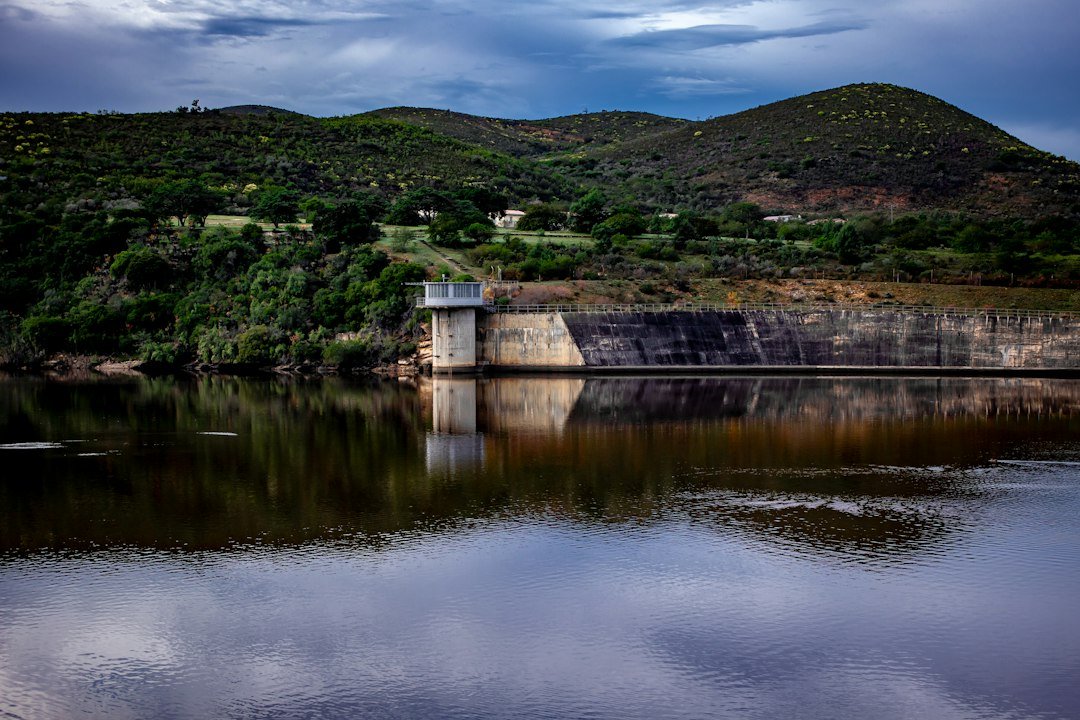
The four structures recognised were the Bulshoek Dam, the Nqweba Dam, the Upper Van Stadens Dam and the Vaal Barrage, each added to a global register that documents historically significant irrigation infrastructure. The register is separate from the UNESCO World Heritage list and focuses specifically on engineering that has shaped irrigated agriculture over time, rather than on broader cultural or architectural merit.
Research on women farmers stood out
Among the South African delegation honoured was Zanele Ntshidi, who manages the Arid Lands Node at the National Research Foundation’s South African Environmental Observation Network and serves as an executive member of the national irrigation committee. She presented research on long-term water and food security focused on empowering female emerging farmers through climate-smart agricultural methods that help women smallholders grow food more reliably despite erratic rainfall.

“This achievement is a testament to the power of collaboration and strong partnerships,” Ntshidi said, crediting cooperation across the research bodies, government department and university involved. The winning submissions drew on work from the Water Research Commission, the Agricultural Research Council, the University of the Free State and South Africa’s national Department of Agriculture.
South Africa’s recognition arrives as water security has become a more urgent planning question across southern Africa, where irregular rainfall and periodic drought have repeatedly strained both commercial and smallholder farming over the past decade. Cape Town’s own near-miss with running out of municipal water in recent years has left water-security planning higher on the national agenda than in many comparable middle-income countries, and that political attention has fed through into sustained funding for irrigation research even during periods of broader public spending restraint.
Dams and irrigation schemes built decades ago, including the structures newly added to the heritage register, remain central to the country’s ability to grow food through dry spells, even as new investment in modern irrigation technology lags behind need in many rural areas. Gender gaps in access to irrigation infrastructure, extension support and land tenure have left women farmers in South Africa and across the region disproportionately exposed to climate shocks, a pattern researchers and donors have increasingly tried to address through targeted programmes rather than general agricultural support. Ntshidi’s recognised research forms part of that broader effort to document which interventions actually close the gap, rather than assuming general irrigation investment benefits all farmers equally regardless of land size or formal title.
The award also lands in a month when dryland crop breeding research elsewhere, including a newly signed Icarda programme for Arab drylands, has drawn similar international funding and attention, underscoring how water-scarce agriculture is drawing more global research investment generally as climate pressures mount on both sides of the Indian Ocean.
The International Commission on Irrigation and Drainage, founded in 1950, counts more than a hundred member countries and holds its congress every three years, giving national irrigation bodies a venue to benchmark research and infrastructure against international peers.
South Africa’s national committee has competed at the triennial congress for decades, but officials said winning the best-performing national committee title alongside four heritage-register entries in a single year was an unusually strong showing, reflecting sustained investment in irrigation science even as the country’s broader public research budgets have come under pressure. The recognition carries no direct funding, but South African officials say it has already helped attract renewed interest from international research partners looking to collaborate on future water-security projects across the region.



