
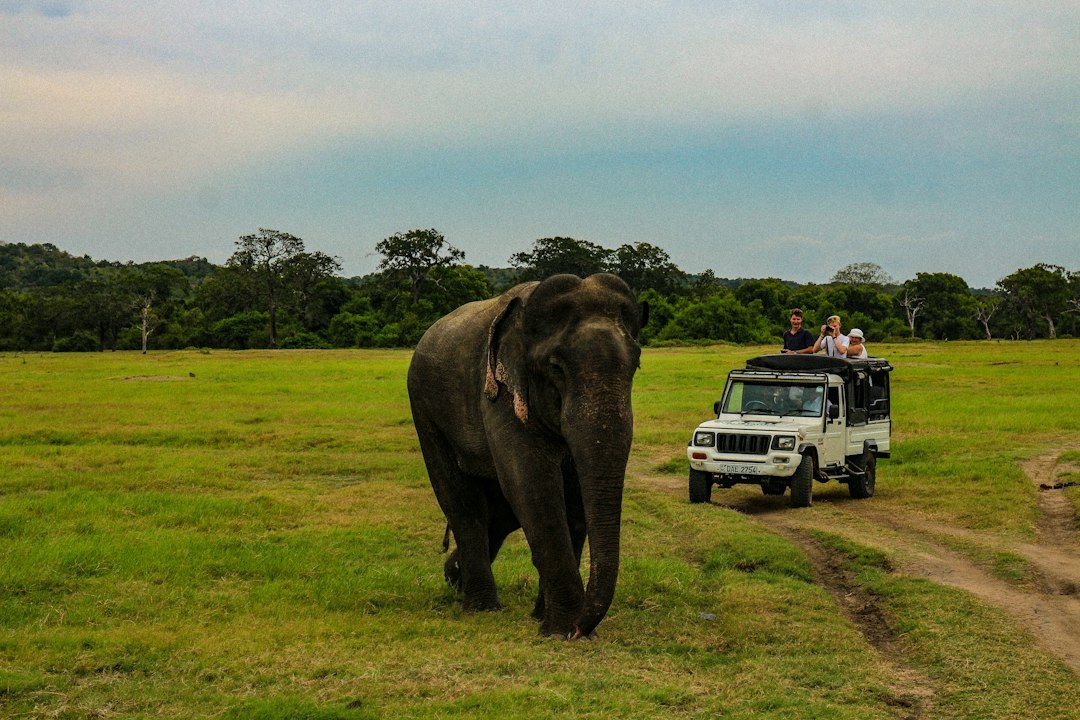
Sri Lanka’s human-elephant conflict has claimed another prominent victim. Kavantissa, widely regarded as the island’s tallest living tusker, died from a suspected gunshot wound in Galgamuwa, a rural village in North Western Province, after a three-week illness that veterinary teams struggled to manage.
Wildlife officials believe a gunshot injury to Kavantissa’s right front leg triggered his decline, though the government’s postmortem report has not yet been released. He was first seen limping on 21 September, received treatment from 24 September, appeared to improve, and then deteriorated again in early October before dying around 16 or 17 October.
Rights activist Tharindu Uduwaragedara has called for “an independent investigation” into both the cause of death and the quality of treatment Kavantissa received. Galgamuwa resident Jayathilaka Bandara, who knew the animal, described him as gentle and said he never attacked a person despite living close to human settlements.

Gunshots are a leading cause of elephant deaths
Sri Lanka’s Department of Wildlife Conservation has recorded 976 wild elephant deaths from gunshots between 2010 and May 2026, alongside fatalities from electrocution, homemade jaw bombs, poisoning, and collisions with trains and vehicles. The department estimates the country holds more than 7,000 wild elephants, of which roughly 70 percent live outside protected areas.
That overlap between farmland and elephant habitat lies at the heart of Sri Lanka’s human-elephant conflict. Prithiviraj Fernando of the Centre for Conservation and Research notes that humans inhabit 82 percent of Sri Lanka’s land, leaving elephants and people competing for the same space. Reuters has reported that Sri Lanka has lost an average of 402 elephants a year to the conflict since 2019, with 488 deaths recorded in 2023 alone.
Authorities promise a faster response
Department of Wildlife Conservation Director General Ranjan Marasinghe said his agency “has the resources and funding to carry out wildlife management activities,” while cautioning that “as a department we cannot focus on one tusker alone.” An expert committee met for the first time on 21 October to design standard procedures for responding to injured elephants, including a proposed rapid-response veterinary unit.
Authorities also plan daily raids targeting illegal firearms, aiming to curb the gunshot injuries that account for a large share of elephant deaths nationally. Separately, animal rights groups in Thailand are pressing their government to repatriate two elephants it previously donated to Sri Lanka, citing welfare concerns unrelated to Kavantissa’s case.



