
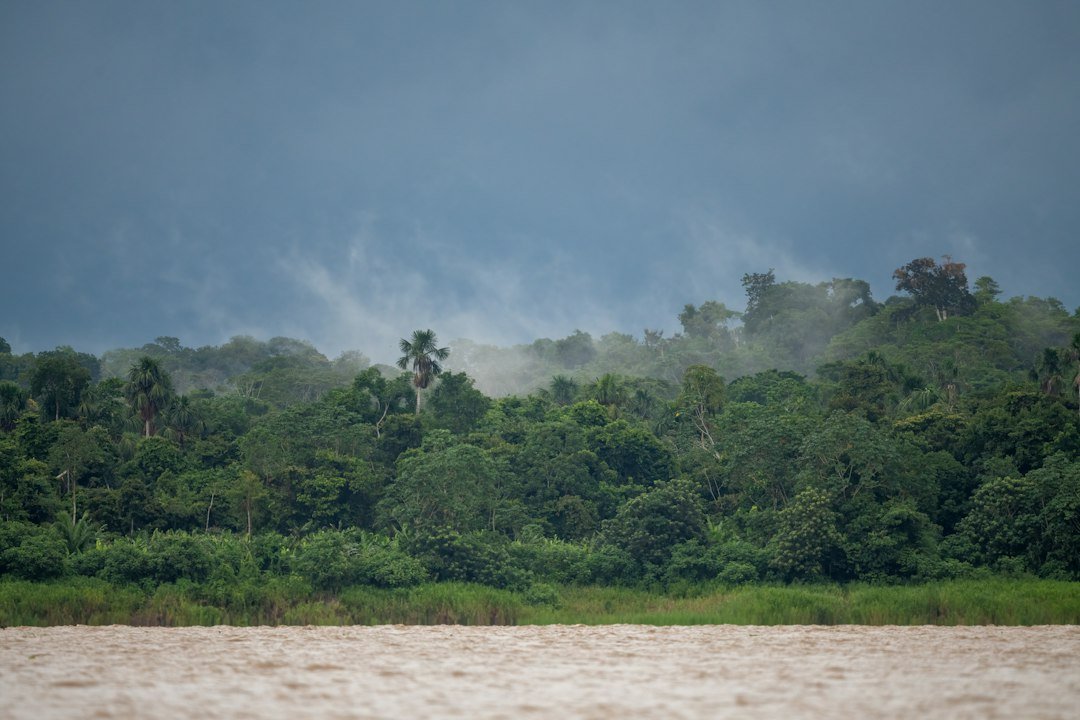
Brazil’s Amazon deforestation has fallen to its lowest level since satellite records began in 1988, days before President Luiz Inácio Lula da Silva won a fourth term in office. As The Fourth Plate reported on 13 October, the runoff against Flávio Bolsonaro was being watched closely for its Amazon-policy stakes. That contest is now settled, and the numbers behind it are striking.
Lula won the 25 October runoff with 51.8% of the vote against Bolsonaro’s 48.2%, a margin of roughly 4.4 million ballots, according to Euronews. Bolsonaro, son of the former president, says he will not accept the result and plans a legal challenge, pointing to a last-minute Supreme Court ruling that extended voting hours.
Deforestation at a record low
Brazil’s National Institute for Space Research recorded a 41.8% drop in Amazon deforestation between August 2025 and July 2026, to 333,500 hectares, Amazon Watch said in a statement issued the day of the result. That is the lowest figure since monitoring began nearly four decades ago, and it follows a 71% fall from 2022 levels.
The turnaround traces to the revived Action Plan for the Prevention and Control of Deforestation in the Legal Amazon, which tightened satellite monitoring and enforcement after clearing rose roughly 60% during Bolsonaro’s 2019-2023 presidency. More than 45,000 square kilometres were lost under that administration, an area larger than Kerala itself.
Environmental groups welcomed the win cautiously. Mighty Earth’s Glenn Hurowitz called the result “a much-needed relief for the rainforest,” while Greenpeace Brazil’s Camila Jardim said the gains must be sustained and Indigenous and local rights respected as enforcement continues.
A hostile Congress ahead
The celebration comes with a warning. Bolsonaro’s Liberal Party won 121 of 513 seats in the Chamber of Deputies and is projected to hold 28 of the Senate’s 81 seats from February 2027, making it the largest party in both chambers. Amazon Watch says the party is pushing to open Indigenous lands to mining and weaken environmental safeguards, and that incoming governors in Rondônia and Roraima have already backed mining expansion.
Alessandra Korap Munduruku, coordinator of the Munduruku Pariri Indigenous Association, said Lula’s win “prevents a president who promised to halt Indigenous land demarcation from taking office.” On 19 October, Brazil’s Supreme Court had already reinstated a suspension on a Canadian firm’s gold-mining licence in the Volta Grande do Xingu, reinforcing consultation rights in a region scarred by the Belo Monte dam.
El Niño conditions are also expected to bring hotter, drier weather that favours wildfires, even as enforcement improves. For a publication tracking food and climate security across the Global South, Brazil’s result matters beyond its borders: the Amazon absorbs carbon that affects rainfall patterns as far away as the Indian Ocean monsoon, the same system that waters Kerala’s paddy fields.
Lula’s fourth term begins with a cleaner record on deforestation than any of his predecessors managed. Whether a hostile Congress lets him keep it intact is now the question that matters most.



