
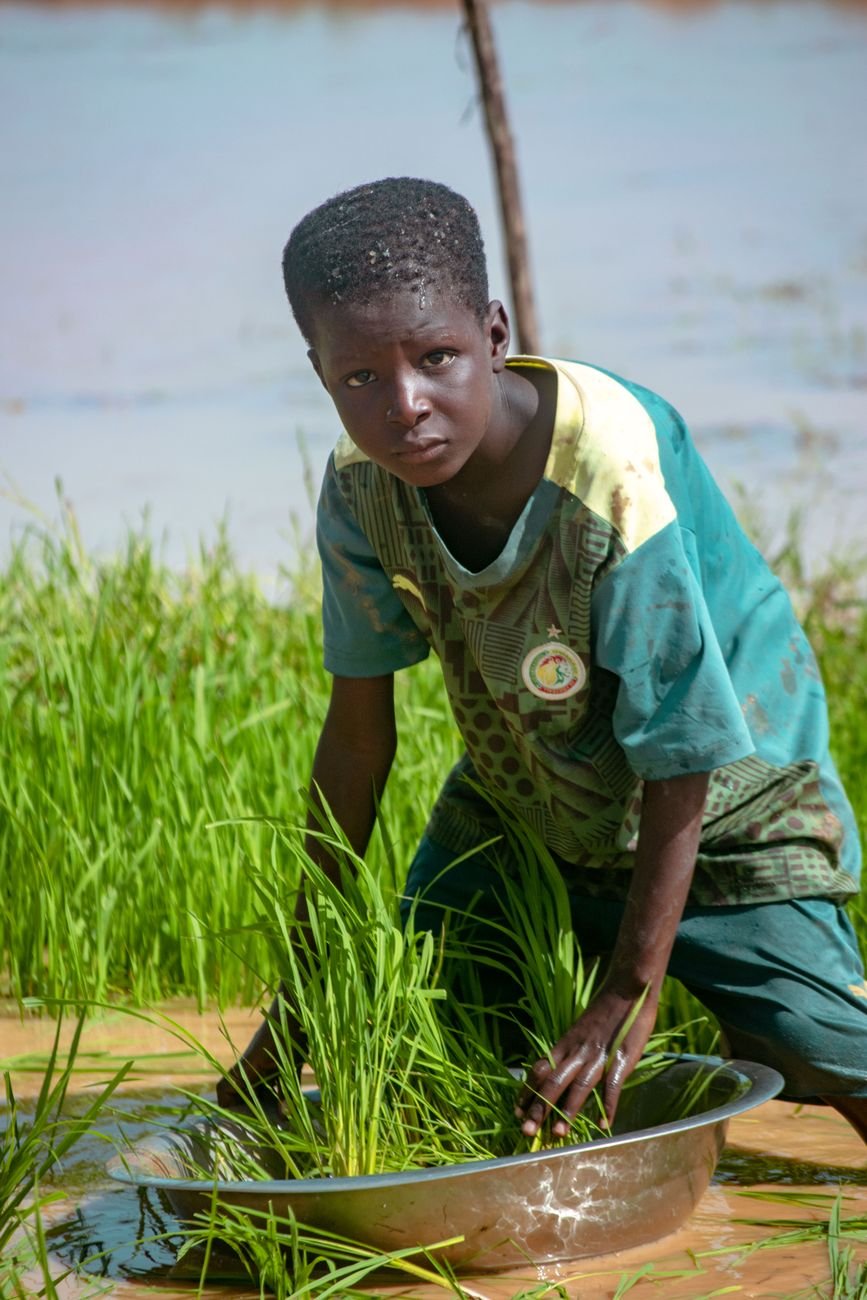
Almost 95% of Africa’s arable land depends on rainfall rather than irrigation, according to the International Water Management Institute (IWMI). This reliance has turned drought years into hunger crises across the continent. The resulting irrigation investment gap, rather than any real shortage of water, is now driving policy debate over how sub-Saharan Africa can withstand increasingly erratic rainfall patterns.
The stakes became clear during the 2023/2024 El Niño event, which devastated farming across southern Africa. More than 26 million people faced hunger as a result, according to data cited from the US National Oceanic and Atmospheric Administration (NOAA). Maize crops failed across Zambia, Zimbabwe and Malawi as rains collapsed for consecutive seasons, exposing how little buffer rain-fed farming systems have against a single bad year.
Yet Africa is not, by any global measure, a water-poor continent. It holds around 9% of the world’s renewable freshwater resources, even as only about 5% of its arable land is irrigated. Asia, by contrast, irrigates roughly seven times more of its farmland proportionally. India and China spent decades building large-scale irrigation networks during their own green revolutions, an investment scale that Africa’s governments and donors have yet to match.

Smallholders carry the heaviest burden
Smallholder farmers make up 80% of all farmers in sub-Saharan Africa, working plots that are rarely connected to irrigation schemes and depend almost entirely on seasonal rainfall. Around 439 million Africans live in extreme poverty, a population heavily overlapping with these rain-fed farming communities, leaving little capacity to absorb repeated crop failures.
A senior Nigerian government agriculture official argued that the barriers are not technical. “The technology is there and the workforce is there. What we need is collective action,” the official said, pointing to existing irrigation equipment and agronomic expertise that remain underused across much of the continent. The same official summed up Africa’s water endowment in stark terms, saying, “This is not a continent of scarcity but of strategic abundance.”
Vincent Kabuti, an irrigation secretary, put the shortfall down to financing rather than engineering. “We have a lot of water, but it is the investment that we do not have,” he said. His comment echoes findings from the Alliance for a Green Revolution in Africa (AGRA), which has repeatedly flagged the shortage of capital for irrigation infrastructure as a bigger constraint than water availability itself.
Funding still lags policy ambition
Policy frameworks already exist on paper. The African Union’s Framework on Irrigation Development sets out continental targets for expanding irrigated farmland, though implementation has been slow and uneven between member states. IWMI researchers argue that closing the gap will require blended finance, combining public investment with private capital willing to accept longer repayment horizons than commercial lenders typically allow.
One example of that kind of financing has already emerged this month. Equity Bank and the International Fund for Agricultural Development (IFAD) have launched a US$200 million, 12-year climate finance mechanism for smallholder farmers across Kenya, Uganda, Tanzania and Rwanda, offering the sort of patient capital that irrigation expansion typically needs.
Whether such initiatives can scale quickly enough to matter remains uncertain. As El Niño and La Niña cycles grow more volatile, the margin for rain-fed agriculture to keep failing without triggering fresh hunger crises is narrowing fast. For now, Africa’s irrigation investment gap looks set to widen before it narrows, even as the water needed to close it remains in plentiful supply.