
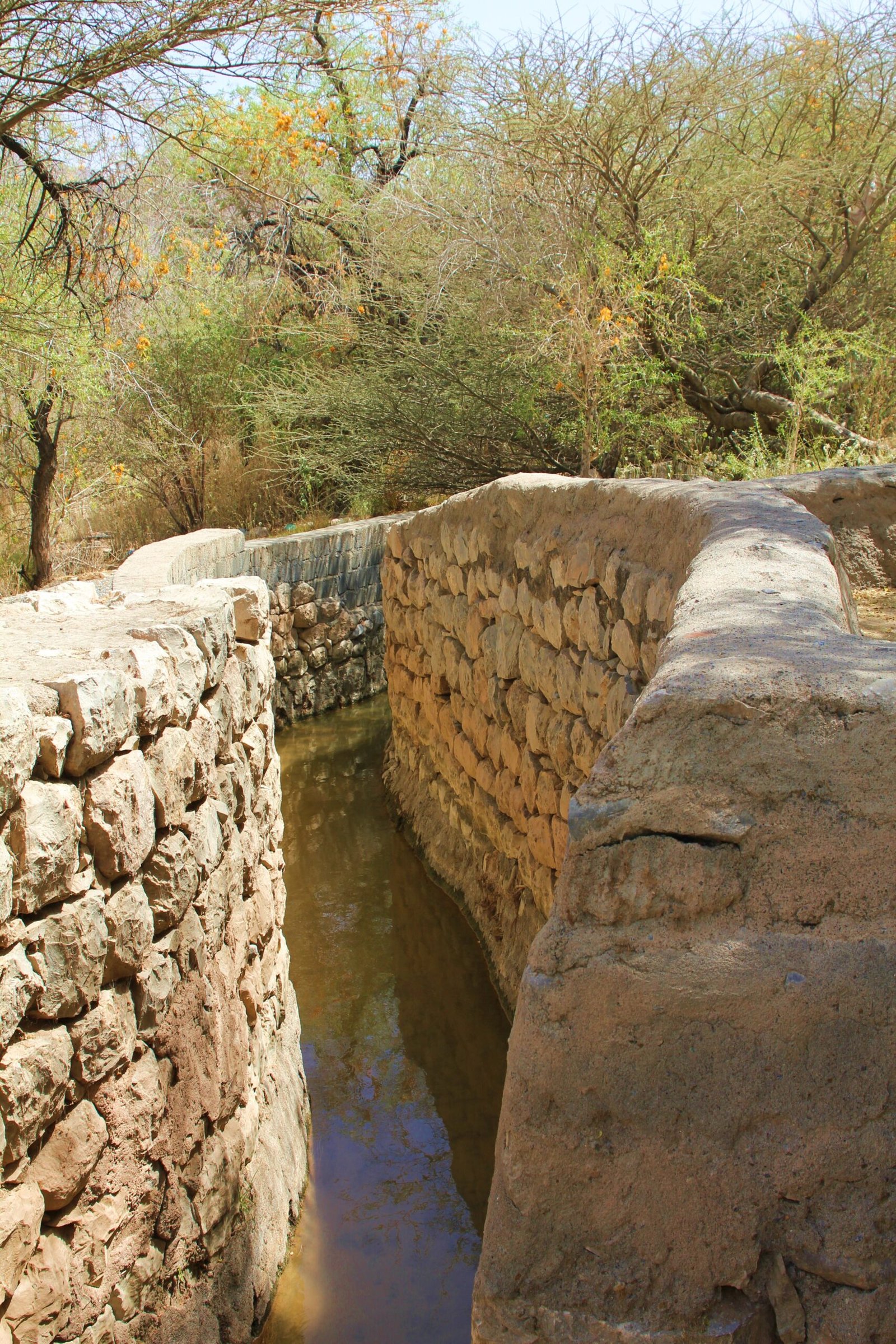
The Sultanate of Oman is integrating solar power into its 2,000-year-old aflaj irrigation networks, demonstrating how traditional water management can adapt to modern challenges while preserving UNESCO World Heritage status.
In the Buraimi Governorate, five solar energy stations now power water pumps from 41 auxiliary wells, serving 400 acres that include 27,833 palm trees. The RO 1.6 million ($4.2 million) project serves as a model for similar implementations across Oman’s Al Dakhiliyah region, where approximately 3,000 active aflaj systems remain in operation.
The aflaj networks, designated as a UNESCO World Heritage Site in 2006, are one of the world’s most sophisticated traditional irrigation systems. Archaeological evidence dates similar irrigation methods in the region to 2500 BC, though current structures were likely constructed around AD 500.
As Hassan, a multidisciplinary storyteller observes, “Aflaj irrigation systems, dating back over 2,500 years, carried life-giving water to arid regions, while thick walls and narrow windows kept interiors cool under the desert sun. But time, weather, and modernization took their toll, leaving many of these historical treasures neglected as concrete and glass began to redefine cityscapes.”
These gravity-fed channels transport water from underground aquifers and springs to support agriculture and domestic use, often extending several kilometres through Oman’s arid landscape. The integration of solar technology addresses critical water management challenges while respecting traditional practices.
The modernisation effort focuses particularly on date palm cultivation, which consumes 558 million cubic metres of water annually, which is about 38 percent of Oman’s total irrigation water. Research at Al-Kamil Research Station demonstrates that new subsurface drip irrigation systems can reduce water consumption by 60 percent while maintaining fruit production.
Traditional flood irrigation methods require date palms to consume between 60 litres daily in cooler months and up to 210 litres during peak summer periods. The new systems integrate soil moisture sensors and precision agriculture techniques to optimize these water allocations.

https://commons.wikimedia.org/w/index.php?curid=25509309
The Ministry of Agriculture has developed an Electronic Management System for Omani Aflaj, allowing farmers to monitor water allocation timing through digital platforms. This preserves the traditional role of the “Wakil”, the falaj manager who controls water gates according to centuries-old timetables, while enhancing efficiency through modern monitoring.
Recent infrastructure investments include a RO 128 million water transmission project in Al Dakhiliyah featuring a 173-kilometre pipeline and reservoirs with 440,000 cubic metres capacity. The ministry has accelerated restoration efforts, completing 233 aflaj system restorations in 2022, up from 70 in 2021.
Research by the University of Nizwa emphasizes that aflaj systems extend beyond mere irrigation infrastructure. These networks have historically organized intertribal cooperation and economic interdependence through what researchers term “hydro-tribalism“—where shared water management, rather than fixed territorial boundaries, shapes social interaction.
The successful integration of solar technology with ancient aflaj systems demonstrates how traditional water management practices can evolve while maintaining cultural significance. This approach offers valuable lessons for agricultural communities across the Middle East facing increasing water scarcity.