
Every year between July and October, something extraordinary happens in East Africa. But let us also remember that it is happening on borrowed time.
The migration should not be seen as just a bucket-list safari experience. It’s a massive carbon-sequestration engine, a biodiversity driver, and an ecosystem regulator that scientists now understand is critical to East Africa’s environmental health.
Like the human migrations triggered by climate change across the globe, this ancient movement faces an existential threat from agricultural expansion and this demands urgent action.

Nature’s Climate Warriors
Recent research reveals that the wildebeest migration plays a surprising role in combating climate change. As these massive herds move through the Serengeti-Mara ecosystem, their grazing habits reduce the size and frequency of savanna wildfires. By consuming dry grass that would otherwise fuel fires, the migration prevents the release of stored carbon and actually promotes soil carbon accumulation.
The numbers are staggering. The migration’s grazing patterns help sequester an estimated 4.4 million tons of carbon annually. That is equivalent to taking nearly a million cars off the road. The herds also spread nutrients and seeds across thousands of miles, enhancing the ecosystem’s resilience against climate change, much like how human agricultural communities have historically managed landscapes through seasonal movement.
The Agricultural Squeeze
The parallels between wildlife and human displacement are striking. Just as climate change has created what researchers call a “migration-agriculture-climate nexus” for human populations, where agricultural failure drives mass movement. The wildebeest face their own version of this crisis, but in reverse: agricultural expansion, sadly, is destroying their movement corridors. It is a difficult choice but nature has its rhythms. As do people, who do not follow them.
Across Kenya, farmland is eating away at the migration’s historical corridors. What were once open rangelands that allowed wildlife to move freely are now increasingly fragmented by fences, crops, and settlements. The migration between the Maasai Mara National Reserve and the Loita Plains, which is a critical dry-season refuge, has decreased by over 70% in the past three decades.
The problem isn’t just physical barriers. Chemical runoff from farms pollutes water sources, while livestock compete for grazing land. In some areas, wheat and maize farms have completely blocked traditional migration routes that wildlife have used for millennia.
This mirrors the global pattern where, according to recent studies, up to 216 million people could be displaced within their countries by 2050 due to climate impacts on agriculture; yet here, it’s agriculture displacing nature’s climate regulators.

Beyond the Postcard
Witnessing the migration today means seeing nature at its most raw and majestic but also at its most vulnerable. The famous Mara River crossings, where thousands of wildebeests plunge into crocodile-filled waters, still deliver the adrenaline rush that brings tourists from around the world. Lions, cheetahs, leopards, and hyenas still follow the herds, creating the ultimate wildlife spectacle.
Yet these dramatic scenes mask a troubling reality. The crossing points are becoming more concentrated as development narrows the migration corridors. This creates dangerous bottlenecks where massive die-offs can occur, disrupting the delicate balance of the entire ecosystem. Scientists call this phenomenon “immobility traps”, whereby populations become concentrated in shrinking safe zones, increasing their vulnerability to catastrophic events.
The timing of the migration, traditionally predictable based on rainfall patterns, is becoming increasingly erratic due to climate change. Unexpected droughts leave millions of animals stranded without adequate grazing, while unseasonal rains can trigger movements that lead herds into areas now dominated by agriculture.
The Human Dimension
The conflict between conservation and agriculture isn’t simply about wildlife versus farming. It’s about the livelihoods of millions of people living in poverty who see agriculture as their path to economic stability.
Some promising models are emerging. Wildlife conservancies that pay landowners to keep their properties unfenced and wildlife-friendly are expanding around the Maasai Mara. These arrangements provide steady income for local communities while maintaining crucial wildlife corridors.
The Maasai people, who have coexisted with wildlife for centuries, are key to these efforts. Many are transitioning from pure pastoralism to become wildlife guides, conservancy managers, and cultural educators for tourists. Their traditional knowledge of animal behavior and land management is invaluable for conservation efforts.

The Science of Coexistence
Research on climate-smart agriculture (CSA) offers solutions that could benefit both wildlife and farming communities. CSA practices, such as crop rotation, agroforestry, and water-efficient irrigation, which have been shown to increase yields by up to 13% while reducing environmental impact. When applied to areas bordering wildlife corridors, these techniques could reduce the pressure to expand farmland into critical migration routes.
Studies from West Africa demonstrate that integrating trees into farming landscapes not only improves soil health but creates buffer zones that wildlife can navigate. In the context of the Maasai Mara, strategic implementation of such practices could create a mosaic landscape where agriculture and wildlife coexist rather than compete.

A Race Against Time
If the Great Migration collapses, the consequences will ripple far beyond the loss of a tourist attraction. The entire Serengeti-Mara ecosystem could unravel, affecting water cycles, soil health, and the livelihoods of millions who depend on these lands.
Conservation organizations are working frantically to secure wildlife corridors before they’re lost forever. This includes negotiating with farmers, compensating for crop damage, and developing wildlife-friendly farming techniques.
The World Bank’s recent analysis of climate migration offers a crucial insight: immediate action could reduce displacement pressures by up to 80%. The same principle applies here: Proactive investment in sustainable land use could prevent the complete fragmentation of the migration route.
Climate change adds another layer of urgency. As weather patterns shift, both wildlife and farmers are struggling to adapt. The traditional ecological knowledge that has guided both for generations is becoming less reliable, creating conflicts where cooperation is desperately needed.
Witnessing History
For those who still want to see the migration, the window is narrowing but not closed. July through October remains prime viewing time in the Maasai Mara, with large herds arriving from the Serengeti and dramatic river crossings at their peak. The Musiara, Talek, and Sand River areas offer the best vantage points.
But seeing the migration today means more than just ticking off a bucket list item. It means witnessing a 1,800-mile journey that has shaped an entire ecosystem for millions of years and understanding that you might be among the last generations to see it in its full glory. That is why I urge you to seize the chance now and visit this nature’s spectacle.
Choosing eco-conscious tour operators and lodges that support local communities and conservation efforts is really about directly funding the protection of this phenomenon. Every tourism dollar that goes to community conservancies helps keep land open for wildlife. Be part of this movement.
The Path Forward: Lessons from Global Conservation
The migration crisis exemplifies what researchers call “the immobility paradox”, whereby the most vulnerable (in this case, wildlife) lack the resources to adapt to changing conditions. Just as climate-vulnerable human populations need support to either migrate safely or adapt in place, the wildebeest need maintained corridors for movement and restored habitats for survival.
International frameworks for managing human climate migration offer valuable lessons. The concept of “planned relocation”, meaning, carefully managed movement of communities from high-risk areas, could be adapted for wildlife through the strategic creation of new protected corridors. Similarly, the principle of “migration as adaptation” recognizes movement as a legitimate response to environmental change, not a failure to be prevented.
The Choice Before Us
The Great Migration stands at a crossroads. One path leads to continued fragmentation, where agriculture and development slowly strangle this natural wonder until only isolated pockets remain.
The other path requires unprecedented cooperation between conservationists, farmers, governments, and local communities to create a landscape where both wildlife and people can thrive.
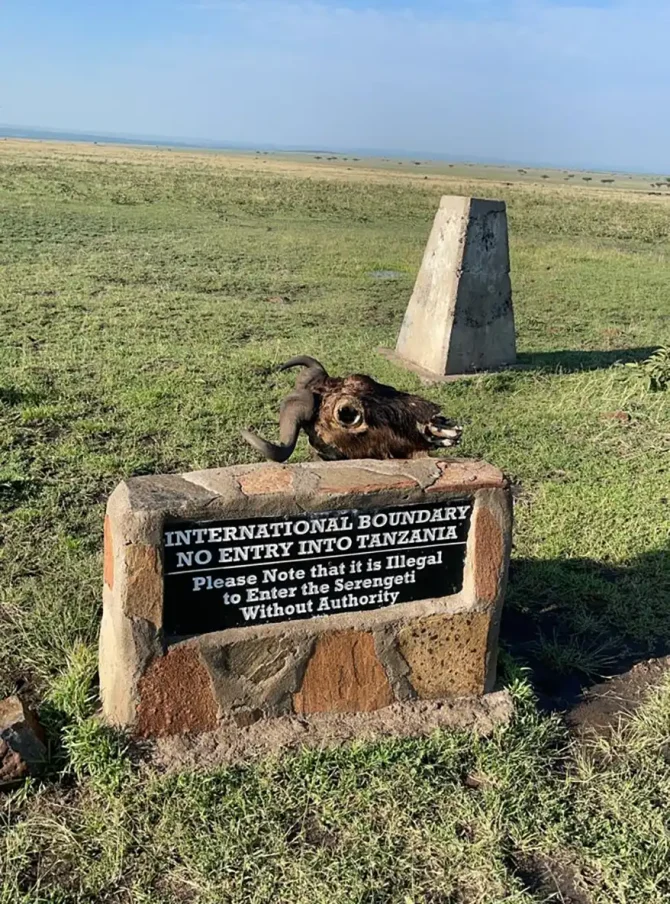
The migration represents something larger than Kenya or Tanzania. I believe, from my experience of watching this and guiding thousands of visitors, is that it is a planetary life-support system.
Recent research shows that large-scale animal migrations worldwide are declining by 1-2% annually, with cascading effects on carbon storage, nutrient cycling, and ecosystem resilience.
The wildebeest migration is among the last of these great natural engines still functioning at scale. Its loss would not just be an aesthetic tragedy but an ecological catastrophe with global implications.
For now, nature’s greatest show continues. The wildebeests still run, the rivers still churn with crossings, and the endless cycle of life and death plays out across the savannah. But unless we act decisively to balance human needs with wildlife conservation, future generations may know the Great Migration only through photographs and documentaries — a cautionary tale of what we had and couldn’t keep.
The real question isn’t whether you should see the migration. It’s whether you’ll help ensure others can see it too, long after the dust from your safari vehicle has settled.

Kennedy George is the Director of Vacanza Africa Safaris. He organizes tours and his experience and native knowledge are the biggest assets that will enable tourists to not jsut understand the nature’s spectacle but also gain insights on why it matters for the communities. Write to him at Vacanzasafari@gmail.com or connect on phone or WhatsApp at +254 799 973431


Leave a Reply