When I began my academic journey in law and economics, my motivation was clear: I wanted to unite values with efficiency. I believed then, as I do now, that human rights and universal ideals would only endure if they were embedded in systems that work. That belief carried me from my PhD in human rights and economics to the founding meeting of the UN Global Compact in 2000, where Kofi Annan made a call that still resonates with me: “Let us choose to unite the power of markets with the authority of universal ideals. Let us choose to combine market forces with human needs.”

Beginnings in Ghana
Shortly after, I became a UN Volunteer in Ghana. My role was to train business leaders on how their companies could contribute to the UN’s global goals. What struck me most was not what I taught, but what I learned—how local leaders already carried immense creativity and resourcefulness, often without recognition. That experience instilled in me a conviction that would stay with me: real change is built locally, with those who know their context best.
From Essential Nutrients to Inclusive Business
I then joined a leading multi-domestic company producing essential nutrients. There, I worked at the intersection of science, markets, and public health, and saw the potential of business to meet essential needs. But I also saw its limitations if left only to profit motives. This led me to co-found an impact-first, inclusive business focused on low- and middle-income countries (LMICs).
The vision was shaped by Prahalad and Hart’s seminal Base of the Pyramid publication, which challenged business to see opportunity where others saw only poverty. Our aim was not about “delivering aid,” but about creating markets that served the needs of families long excluded from access to nutritious food.
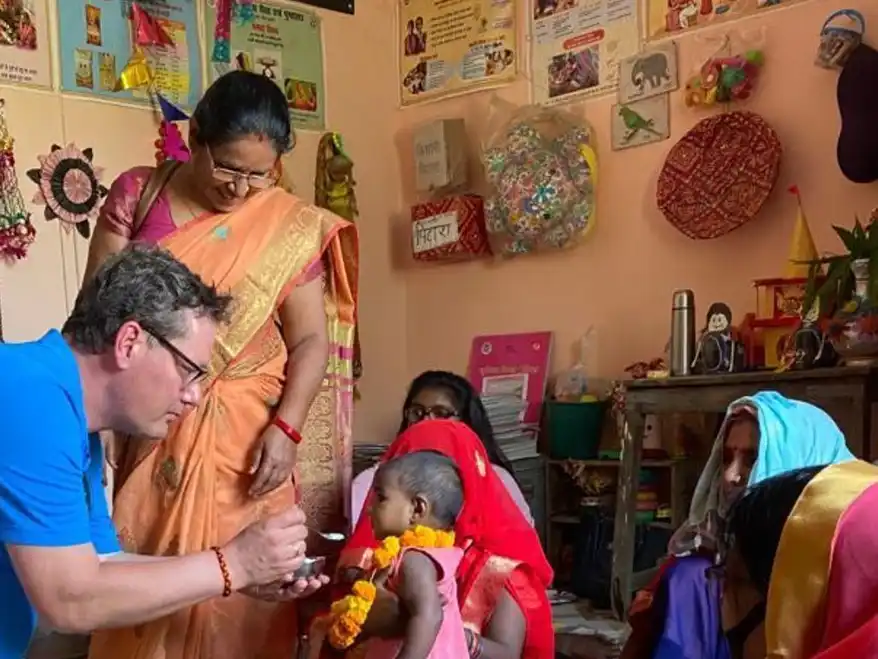
I was fortunate to work alongside extraordinary local entrepreneurs—women leading small-scale fortification businesses, farmer cooperatives creating resilient food supply chains, and innovators who saw solutions where others only saw constraints. Their work, not mine, taught me the importance of designing systems where inclusion is not an afterthought but the starting point.
Broadening the Lens
My commitment to essential needs took me across 50+ LMICs, from nutrition programs in West Africa to health initiatives in South Asia. That journey eventually caught the attention of the Bill & Melinda Gates Foundation. Invited to re-strategize its nutrition program, I became Director and worked with colleagues to open the portfolio to broader partnerships—public and private, global and local—and to integrate digital innovation.
It was in this context that my focus on digital tools deepened: track-and-trace systems to improve food safety, GPS mapping to monitor coverage gaps, and AI/ML predictive modeling to anticipate nutrition outcomes. But again, the most powerful lesson came from the people on the ground. The best digital solution was never the most advanced—it was the one that strengthened local ownership and could be sustained long after donor funding ended.

Founding Dr. Blüthner & Partner
In 2023, I founded Dr. Blüthner & Partner, a consultancy rooted in that philosophy. We are a strategy, philanthropy, sustainability, and impact investment practice, bringing together a team of associates and global experts across 20+ countries. My colleagues—scientists, business strategists, former UN staff, and local innovators—are the heart of this firm. They bring a diversity of expertise that allows us to bridge food, nutrition, health, financing, and digital innovation.
Our clients are equally diverse: multi-domestic leaders in food, pharma, and machinery; impact entrepreneurs and inclusive business leaders in LMICs; and non-profits pushing the boundaries of what’s possible. What unites them is not their size, but their commitment to impact. For small start-ups and non-profits, we offer special rates and mentorship, because the next transformative idea often starts with those who have the least resources. For large firms, we build systemic strategies that align profit with social value and co-investments with public good.

Innovation and Localization
My time as a founding Advisory Board Member of the WFP Innovation Accelerator reinforced my conviction that innovation must be both daring and practical. I have seen blockchain used to improve transparency in supply chains, AI applied to predict public health trends, and digital tools track the reach of fortified foods. Yet the real breakthroughs came when these innovations were localized—when a farmer cooperative, a local university, or a small business could use them to solve problems in their own way.
Looking Forward
Looking back, I see a journey shaped less by my own milestones than by the people and partnerships I’ve had the privilege to work with: Ghanaian business leaders testing new ways to align with the UN goals; women-led enterprises ensuring fortified foods reached children; scientists in multi-domestic firms balancing shareholder value with social impact; and today, my own team of experts who bring rigor and creativity to every client challenge.
The values that inspired me at the UN Global Compact—uniting ideals with entrepreneurship—still guide me. They have taken me from academia to UN service, from corporate leadership to inclusive business, and now to building bridges between philanthropy, business, and innovation.
As Dr. Blüthner & Partner grows, we are shaping ourselves into a multi-domestic network of experts—supporting innovation, blended finance, and co-investments into LMICs. In times of declining traditional ODA, our mission is to ensure that resources flow where they are most needed, that partnerships unlock real value for communities, and that innovation becomes a tool not of exclusion, but of inclusion and empowerment.

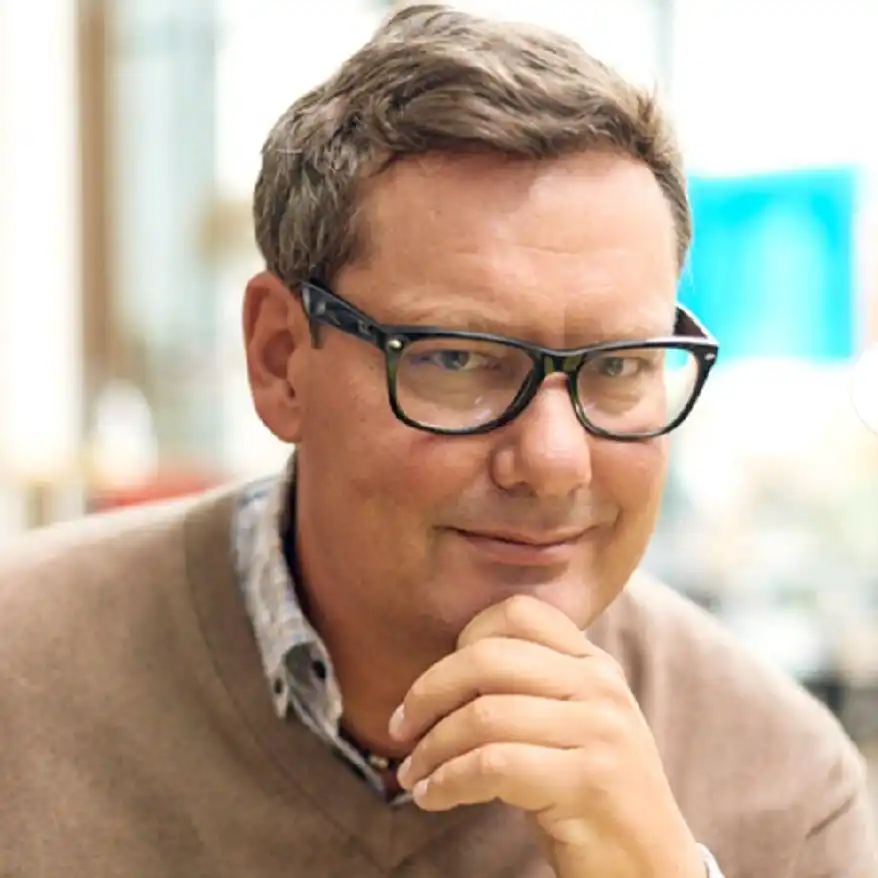
Dr. Andreas Blüthner the founder of Dr. Blüthner & Partner, a strategy and investment firm. He was the former Nutrition Program Director at the Bill & Melinda Gates Foundation and founding Director of BASF’s multi-awarded Nutrition & Health Inclusive Impact Business Initiative. Dr. Blüthner’s personal work experience includes strategy development, investment planning, strategic partnerships, resource mobilization, communication, regulatory and outreach work, with a focus on pharmaceuticals, food and nutrition security, agriculture, climate-smart food systems and multi-sectoral innovation. Follow him on LinkedIn