
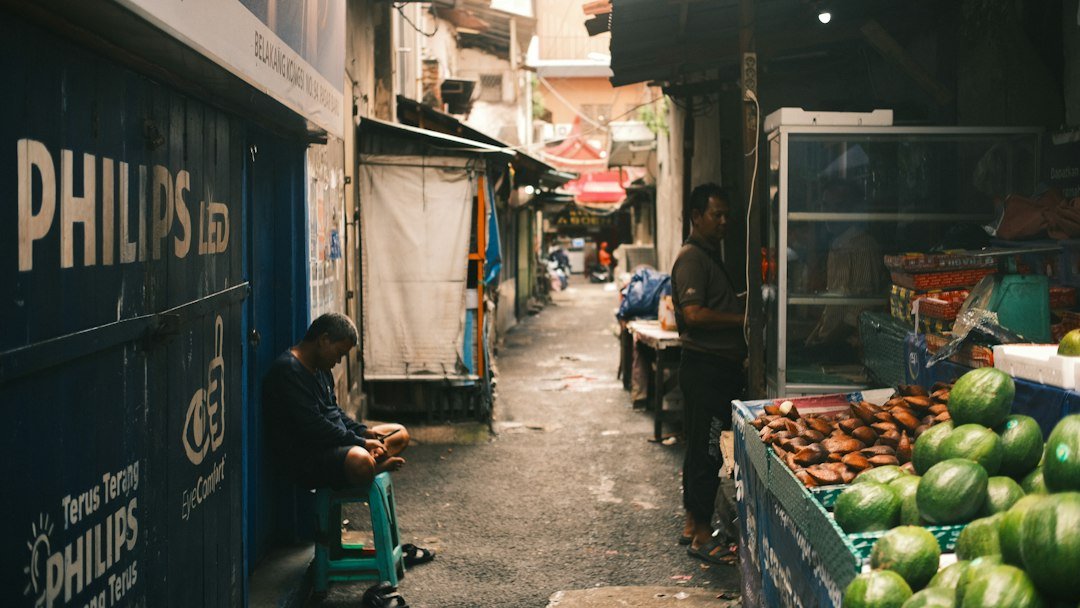
Indonesia food aid reached a shrinking share of poor households in 2026, fresh government data show. Only 15.08% of households received food assistance in March 2026, according to Indonesia’s national statistics agency, BPS. That is down from 18.07% in March 2025, a fall of nearly three percentage points. It is the lowest share recorded since the survey series began in March 2021. The figures have drawn renewed attention to how Indonesia balances universal and targeted welfare spending.
The decline comes even as state spending on food-related programmes expanded sharply. Nominal government goods spending rose 67.5% year-on-year to Rp389 trillion, equivalent to roughly USD24.6 billion at an exchange rate of about Rp15,800 to the dollar. Of that sum, Rp131.3 trillion, or roughly USD8.3 billion, went to Makan Bergizi Gratis, the government’s free nutritious meals programme. That programme serves students and other groups across the population, beyond registered poor households.
Two Indonesian outlets reported the same official figures independently in October. Bloomberg Technoz detailed the goods-spending increase and the free-meals allocation on 13 October. It described the budget available for poor households as a shrinking slice of a larger pie, even as overall nominal spending climbed. Databoks, the data journalism arm of Katadata, reported the falling share of households reached by food assistance on 6 October, citing BPS’s Susenas survey.

Targeted aid loses ground to universal meals
Indonesia runs two main targeted food schemes. BPNT, or Non-Cash Food Assistance, delivers aid as electronic money, spent at designated e-Warong outlets. Sembako provides similar cash or non-cash food support. Both target registered poor households, known as KPM, listed in the government’s integrated social welfare database. Eligibility is checked against that database rather than left open to all applicants. The combined reach of these schemes has declined over the past year, BPS data show.
The Susenas survey is conducted twice a year and underpins most of Indonesia’s official poverty and welfare statistics. Its March 2026 round covers household food assistance alongside measures such as poverty and inequality. The survey has tracked food-assistance coverage since March 2021, giving BPS a five-year comparison point for this year’s decline.
Meanwhile, Makan Bergizi Gratis has expanded rapidly since its launch as a flagship government initiative. The programme provides free meals intended to improve child nutrition on a broad, non-targeted basis. Its Rp131.3 trillion allocation already ranks among the largest single items in the state goods budget, exceeding a third of the total.
Poverty falls as targeted aid narrows
The shift unfolds against a backdrop of moderating poverty. Indonesia’s poverty rate stood at 8.07% in March 2026, down 0.18 percentage points from a year earlier. Income inequality, measured by the Gini ratio, held steady at 0.38. Annual inflation reached 3.28% in September 2026, adding pressure to household food budgets even as poverty edged lower.
Falling poverty rates do not necessarily track the reach of welfare programmes. A household can exit official poverty measures while remaining vulnerable to food-price shocks, particularly with inflation running above 3%. The narrowing of BPNT and Sembako coverage means fewer such households now receive direct support.
The figures reflect a trade-off between two budget priorities. Indonesia food aid, aimed squarely at the poorest households, now reaches a smaller share of the population than at any time since 2021. The free-meals programme, open to a far wider group, absorbed roughly a third of total state goods spending this year. Budget decisions ahead will determine whether that balance shifts again.



