
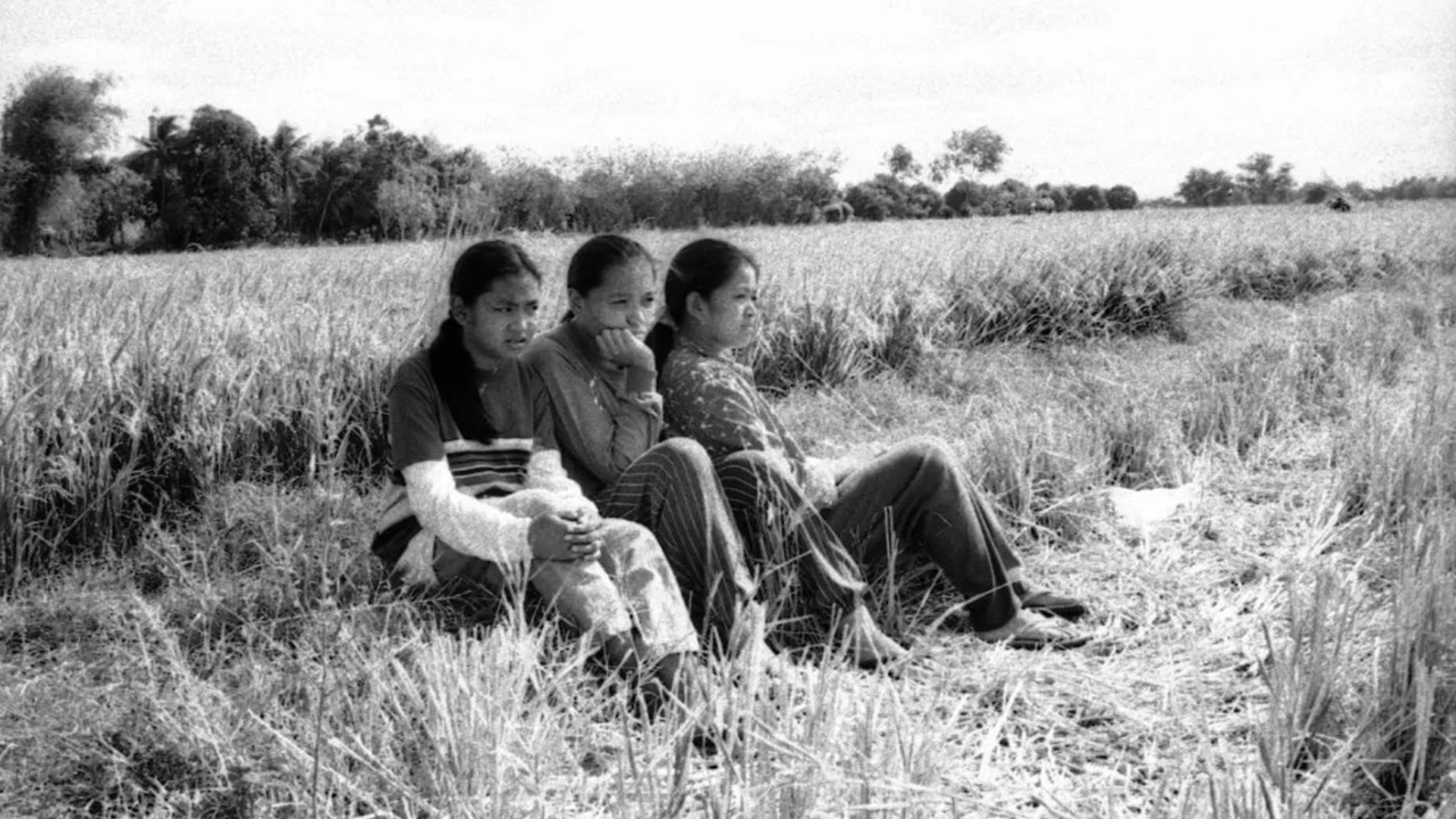
In contemporary cinema, few filmmakers embody artistic integrity and uncompromising vision quite like Lav Diaz.
The Filipino auteur, whose works often stretch five to 11 hours, has set out on a unique journey in world cinema by challenging conventional boundaries of storytelling and duration. Through his lens, cinema becomes a spiritual journey toward truth and understanding.
Born into a world of paradox – where beauty and hardship coexisted in equal measure – Diaz’s early life laid the foundation for his distinctive artistic perspective.

Growing up in poverty shaped Diaz’s worldview profoundly. “I didn’t see electricity in our place until college. We practically grew up with mud, with snakes, mosquitoes, crocodiles in the middle of the forest,” he recalls. “As a child, everything was beautiful – the mud, the mosquitos, the coconuts, even the snakes. They were like Disneyland. I didn’t realize we were in poverty.”
This ability to find wonder in adversity would later inform his approach to storytelling, where darkness and light often intertwine in complex narratives, and where films do not have music or background scores to stir or manipulate emotions.
Despite financial constraints, Diaz’s childhood was rich in cultural exposure. His father, a social worker, would take the family to multiple film screenings on weekends, planting the seeds of cinematic appreciation in young Diaz.
More crucially, his father maintained an extensive library with a particular emphasis on Russian literature. “We were poor but had many books, especially Russian literature. This influenced my storytelling significantly,” Diaz says. This early immersion in literature, particularly Russian classics, would later manifest in his work, including his acclaimed film “The Woman Who Left,” an adaptation inspired by Leo Tolstoy’s “God Sees the Truth, But Waits.”

This early exposure to cinema was later complemented by formative encounters with socially conscious Filipino filmmaking. “The biggest influence was watching Lino Brocka’s Manila in the Claws of Light,” Diaz recalls. “I was shocked watching it. It was the first socially conscious Filipino cinema, which changed my whole concept and outlook about the medium, and how to use cinema to change people.”
Before developing his signature style, Diaz worked within the commercial Filipino film industry of the 1980s, including the notorious Pito-Pito system. “In the late 80s, I was writing screenplays for cinema. The biggest production company wanted to make money by doing fast works, so they imposed this thing – seven-seven-seven,” he explains, referring to the practice of shooting a film in seven days with seven days of post-production. “I made three films in that system.”
The experience proved formative but ultimately unsatisfying. “After making like four or five commercial films, I said I needed to revive my cinema in a more holistic way. I didn’t like the commercial work,” Diaz reflects. This dissatisfaction would eventually lead him to develop his more contemplative, uncompromising approach.
The Journey to Artistic Freedom
Diaz’s path to becoming one of contemporary cinema’s most distinctive voices was far from straightforward. His transition from commercial cinema marked a crucial turning point in his artistic journey.
The watershed moment came with “Batang West Side,” a five-hour exploration of the Filipino-American diaspora that demonstrated his commitment to examining complex social realities without compromise.
The advent of digital technology proved transformative for Diaz’s artistic expression. “When I switched to digital, it was liberation time,” he explains. “It allowed me to explore and express without the constraints of film costs.” However, Diaz maintains that technology should serve the story, not dictate it. “Whether it’s film or digital, the goal is to capture truth.”

Time, Space, and the Filipino Perspective
Central to understanding Diaz’s work is his unique approach to time and duration in cinema. His perspective is deeply rooted in his Filipino heritage and the natural rhythms of Southeast Asian life.
“In Southeast Asia, particularly the Philippines, we have a different relationship with time and space,” he explains. “Our lives are centered around the ways of nature – dealing with 20 to 25 typhoons yearly, living with constant destruction and renewal. This creates a different perspective on how we experience time.”
This cultural understanding of time manifests in Diaz’s signature long, uninterrupted shots. “I want to unify space and time in one shot, just like life, so I can understand more,” he says. “I don’t want to impose movement or manipulate emotions. I want to see more by controlling less.” This stands in stark contrast to conventional cinema’s rapid editing and artificial manipulation of time.

The Creative Process: A Lonely Journey
For Diaz, filmmaking is an intensely personal and often solitary pursuit. “Cinema is something like the work of an exile. It’s a lonely, lonely journey,” he reflects. “You lose track of reality, do poetry, go back to reality again. It’s all about dealing with life.” This solitude in creation allows him to delve deeper into the human experience and emerge with stories that resonate on a profound level.
His creative process is marked by thorough research and immersion. “When I make a film, I live in the location, trying to feel the ways of life – the heat, the mosquitos, the birds. Understanding comes first, then the characters emerge from that reality.” This commitment to authenticity has resulted in works that feel deeply rooted in their settings and true to the experiences they portray.
“I want to detach the use of eye, of imposing movement for cinema,” Diaz explains of his distinctive style that emerged in reaction to his commercial filmmaking days. “I want to see more on a matter of discussion, debate, just watching what is going on. I don’t want to impose music or manipulate cinema.”
For Diaz, the duration of his films is intrinsically linked to his Southeast Asian perspective on time. “In Southeast Asia, we have a different perspective of dealing with time and space,” he explains. “Our lives are centered around the ways of nature. Space is destroyed by the strong typhoons, and time for us is waiting for them to stop – just as we wait for corruption to end.”
Cinema as a Tool for Truth
Diaz views cinema as a crucial instrument for combating what he terms “the wall of ignorance.” His concern about this growing phenomenon is palpable: “Look at what’s happening around the world – we must act fast. Cinema can be a tool for understanding, for fighting this ignorance. It’s about projects of humanity’s struggles.”
This commitment to truth-telling extends to his approach to filmmaking technique. “You have to give room to breathe, like in a novel,” he insists. “Don’t manipulate with music or conventional editing patterns. You have to show life and let audiences experience it.”
This philosophy is evident in works like “Evolution of a Filipino Family” and his Golden Lion-winning “The Woman Who Left,” where the extended duration allows viewers to fully immerse themselves in the characters’ worlds.
His commitment to authenticity extends to his treatment of violence and emotion. “In my works, you don’t see violence directly, you only feel it, hear it,” he explains. “I don’t want to manipulate with music or conventional editing patterns. Reality is subjective – I want to see more, feel more, understand more by showing less.”
Contemporary Challenges and New Frontiers
Diaz continues to explore new ways to tell important stories. His venture into television with a nine-part series examining the Marcos years demonstrates his willingness to adapt while maintaining his commitment to truth-telling. “The medium might be different, but the commitment to truth remains the same,” he notes, acknowledging the ongoing challenges of addressing political subjects in Philippine media.
His work “Norte, The End of History” exemplifies his ability to explore complex themes through seemingly paradoxical lenses. The film emerged from his investigation of how darkness can spring from beauty, inspired by the contradiction of former dictator Ferdinand Marcos’s origins in one of the Philippines’ most scenic regions.
A Spiritual Approach to Art
For Diaz, the act of creation transcends mere storytelling. “Doing art is a spiritual thing,” he reflects. “We can never fully understand this thing called creating – it goes back to biblical times. Life is a mystery, but through cinema, we can at least try to understand humanity better.” This spiritual approach to filmmaking infuses his work with a depth that goes beyond conventional narrative cinema.
Despite the challenges of making uncompromising cinema, Diaz remains committed to his vision. “It’s hard to make cinema in the first place,” he acknowledges. “You grapple with questions like ‘Am I making sense at all?’ But there’s responsibility as well to discourse in life, to put these things out and just be free about it. Even if it’s just one person who sees my work and is changed by it, that’s good enough for me.”
Through his dedication to artistic truth, Lav Diaz has created a body of work that stands as a testament to cinema’s potential as a medium for deep philosophical exploration and social discourse.
His films challenge viewers not just to watch but to experience, to think, and to engage with the complex realities of human existence. In an age of increasing superficiality and shortened attention spans, Diaz’s work reminds us of cinema’s power to illuminate the depths of human experience and serve as a beacon of truth in an increasingly complex world.