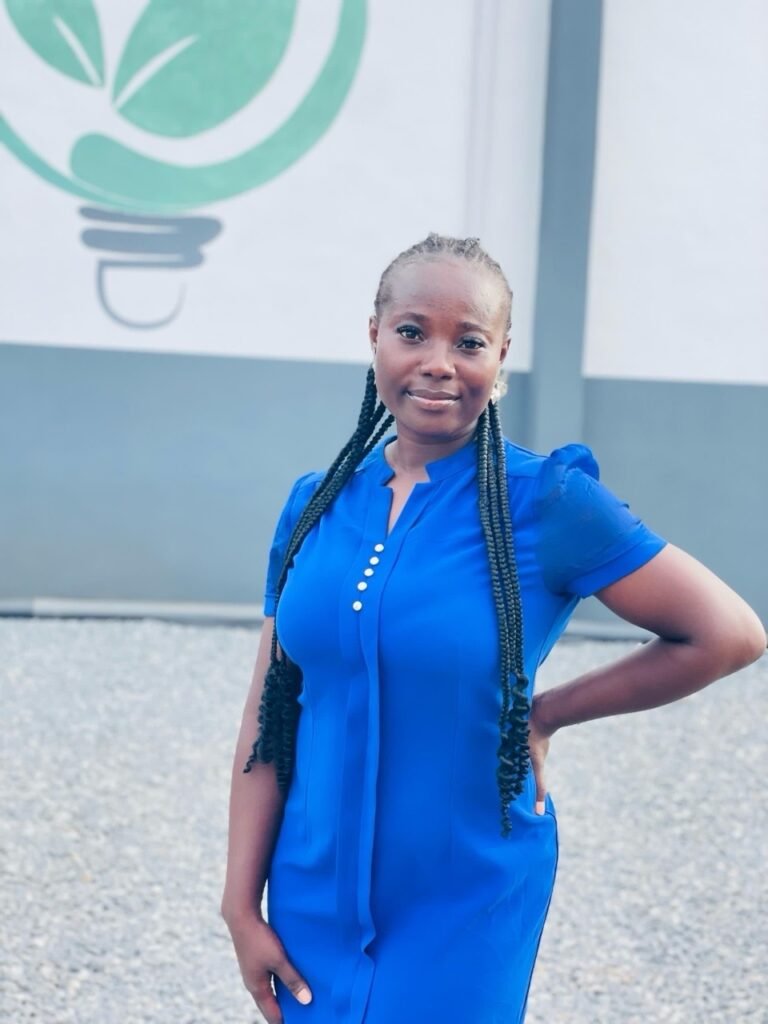

By Emmanuel Precious Chinanu
I didn’t always dream of becoming an agripreneur. When I first applied to university, I wanted to study Pharmacy. Agriculture wasn’t even on my radar.
Later when I applied for Microbiology to Akwa Ibom State University, Nigeria, I was offered admission into Soil Science, I cried. It felt like my dream was slipping away before it even began.
Still, I took the admission, uncertain, confused, but hopeful that I could switch later. I worked hard throughout my first year, determined to hit the required GPA to transfer to another course. And I did.

But when the time came, the Head of Department and Dean refused to let me go. I was one of their best students so they wanted to keep me.
It was a moment I’ll never forget, not because I didn’t get what I wanted, but because I began to realize I might have been placed where I needed to be.
In my second year, my perspective on agriculture started to shift. I began to see it not as a last resort, but as a vast, dynamic field full of untapped opportunities.
Agriculture wasn’t just hoe and cutlass in the bush, it was science, it was technology, it was transformation. That’s when something in me clicked. I stopped fighting it and started embracing it. Fully.
By the time I graduated with a first-class degree in Soil Science, I had grown proud of how far I’d come. But as with many stories in the Global South, passion and excellence alone don’t always open doors.
I couldn’t get a job right away, and life wasn’t waiting for me to catch up. To survive, I turned to another skill I had picked up during university: fashion design.
I opened a small shop, started sewing for clients, and ran my business full-time. For nearly two years, I poured myself into it, creating, growing, and building something I loved.
It paid off financially, but deep down, I knew something was missing. I kept having this quiet longing for more, more relevance, more impact, more alignment with the vision I’d always carried of solving real-life problems in agriculture.
Around that time, I got selected for the Enterprise for Youth in Agriculture (EYiA) program. It was a big deal, but I didn’t go. I was still too caught up in my fashion work and couldn’t bring myself to let it go.
But the decision haunted me. I kept thinking, What if? What would I have done differently? What impact could I have made if I had just gone?
The thought of soilless farming in particular wouldn’t leave me alone. The idea that you could grow food without soil, that you could combine science, innovation, and sustainability in such a powerful way, lit something up inside me.
I started researching it. The more I learned, the more I realised I needed to be part of it. And when the opportunity to join the program came around again, I just knew, it was time. So, I grabbed it with both hands.
“A mentor once told me, ‘One dream doesn’t have to die for another to live.'”
Emmanuel Precious Chinanu
The EYiA program opened my eyes to a new world, one where agriculture and technology walk hand-in-hand. I learned tech-enabled farming, soilless farming, greenhouse crop production, climate-smart practices, and how to manage tomatoes, bell peppers, and cucumbers and other crops in controlled environments.
I wasn’t just reading theory anymore; I was touching soil alternatives, installing irrigation systems, pruning vines, and interpreting what plants were telling me at different stages.

I finally felt like I was in the place I was meant to be.
Close to the end of the program, I was seriously contemplating within my self if I should just go back to fashion full-time. But something in me knew the work wasn’t done. I needed to stay, to deepen my knowledge, to complete a full cycle,from nursery to transplanting, from flowering to harvest. I wanted to understand not just how to grow food, but how to grow a future.
So, I stayed back at the Soilless Farm Lab. It wasn’t the easiest choice. My fashion business had to slow down. Financially, things got tighter. But the tradeoff was worth it, I was investing in my future.
And now, things are gradually coming together. I’ve found ways to blend both my passions. A mentor once told me, “One dream doesn’t have to die for another to live.” That stuck with me.
I don’t have to abandon fashion to pursue agriculture. I’m finding new, creative ways to merge both and that’s the journey I’m still unfolding.
Looking back, I realized that what felt like a detour was actually a redirection. From crying over Soil Science to falling in love with agriculture. From running a fashion business for survival to building skills for sustainability.
From turning down an opportunity to now championing one. Every piece of this story has shaped the woman I’m becoming, intentional, curious, and committed to solving challenges in agriculture with both heart and innovation.
If you’ve ever felt like your path was unclear or that your passions were too far apart to ever connect, know that it’s okay to start again. To root yourself where growth is possible. To pause one thing to master another. And to believe that somehow, all the pieces of your story will come together in the end.
Thank you to the Soilless Farm Lab and Mastercard Foundation for giving young people like me the platform to learn by doing, and to dream with purpose.I’m still becoming, but I’m becoming boldly. Thank you.

Emmanuel Precious Chinanu is an agriculture enthusiast and emerging agripreneur from Nigeria, passionate about building sustainable, tech-enabled food systems in the Global South. With a First-Class degree in Soil Science and hands-on experience in soilless farming, greenhouse cultivation, and agri-innovation, she is committed to exploring creative, inclusive solutions across the agriculture value chain. Balancing purpose and creativity, she also runs a fashion brand and envisions a future where agriculture and design intersect to create impact and opportunity. Contact her at: http://linkedin.com/in/precious-emmanuel-69aa87219; Email: preciouschinanu411@gmail.com; Facebook: https://www.facebook.com/share/16uX2X9jFe/?mibextid=LQQJ4d; https://www.facebook.com/share/1F4NmiRDaG/?mibextid=LQQJ4d