
India’s ‘liquid gold’ silk commands premium prices as international demand surges, but climate change threatens ancient craft
In the green hills of Assam, where silkworms feed on som and soalu leaves under the watchful eye of skilled artisans, a textile revolution is unfolding, bringing with it the force of history.
Muga silk, known as India’s “liquid gold” for its distinctive golden lustre, is capturing the attention of luxury markets worldwide, with recent projections showing the global market expanding at a compound annual growth rate of 8-10% over the next five years.
The lustrous fabric, which can only be produced in Assam’s unique climatic ecosystem, has become the unlikely star of an industry worth ?40 crores annually to the northeastern Indian state. From Japanese kimono designers to high-end European fashion houses, international buyers are increasingly recognising the value of this ancient craft.
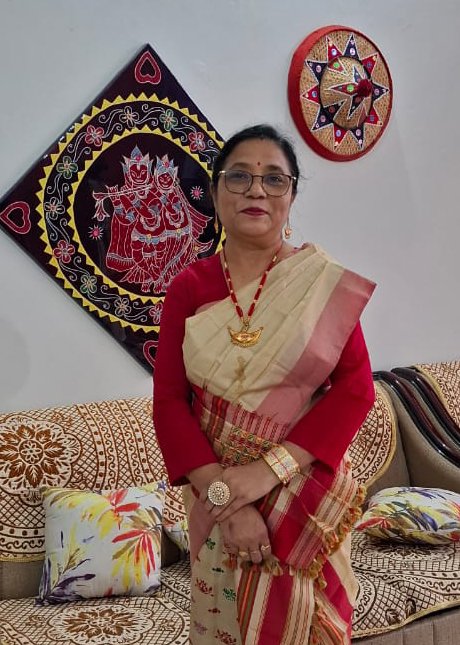
Yet for all its global appeal, muga silk remains deeply rooted in Assamese culture. The state’s biggest cultural exports in clothing, such as the elegant mekhela-chador and the ceremonial gamosa, are crafted from this golden thread. These traditional garments hold immense cultural significance, worn during weddings, Bihu festivals, and religious ceremonies, embodying centuries of textile artistry and cultural identity.
The history of muga silk is deeply intertwined with the cultural heritage of the region; it is not merely a textile but part of the social fabric and economic system of Assam. References to the muga silkworm appear in ancient texts including the Ramayana and Mahabharata, while evidence suggests continuous production throughout the Ahom dynasty’s reign from 1228-1828.
The Ahom rulers elevated muga silk to a symbol of wealth, status, and power, patronising its expansion as a trade commodity. Many looms operated under royal supervision, known as Rajaghoria looms, cementing the fabric’s association with prestige and authority. Today, this legacy continues as muga silk occupies a vital place in Assamese life across all communities and castes.
“Assamese women weave fairy tales in their clothes,” Mahatma Gandhi once remarked during his tour to promote khadi and swadeshi movement, a sentiment that resonates more than ever as global fashion pivots toward authentic, sustainable luxury.

The golden thread among four treasures
Assam’s silk heritage encompasses four distinct varieties, each with unique characteristics and applications. While muga silk commands the highest premium, the state also produces eri silk (known as endi, ahimsa, or peace silk), brilliant white mulberry silk (paat silk), and tasar silk (kosa silk) valued for its rich texture and natural deep-gold colour.
Muga silk, obtained from the semi-domesticated Antheraea assamensis silkworm, stands apart for its lustrous golden-yellow color, exceptional durability, and natural sheen. The silkworms feed exclusively on som (Persea bombycina), soalu (Litsea polyantha), digloti (Litsaea salicifolia), and mejankari (Litsea cubeba) plants — a dietary specificity that contributes to the silk’s unique properties.
The state’s silk diversity extends beyond muga’s golden glow. Eri silk, produced by Samia ricini worms feeding on castor, kesseru, borpat, and other plants, typically yields white to creamy white fibres.
However, a rare variety in Kokrajhar district feeds on ficus leaves, producing distinctive reddish-orange cocoons that create beautiful red eri silk. Meanwhile, mulberry silk from Bombyx mori and tasar silk from Antheraea mylitta and Antheraea pernyi complete the quartet, each serving different market segments.

The science behind the shimmer
What sets muga silk apart from others is not just its golden hue but its remarkable properties. The fabric, composed of 97% proteins and 3% wax and fat, possesses an extraordinary ability to absorb 85.08% of harmful UV rays, which potentially offers protection against skin cancer.
This natural shield, combined with the silk’s wrinkle-resistant properties and ability to maintain its shine even after repeated washing, has caught the eye of both fashion designers and industrial manufacturers.
The Indian Institute of Technology (IIT) Guwahati has pushed the boundaries further, creating bioink with live cells using proteins from muga silk. This breakthrough technology is being explored for 3D printing of tissues, implants, and even human organs at significantly lower costs, a development that could revolutionise medical manufacturing.
The production process itself is a testament to traditional knowledge systems. The semi-domesticated Antheraea assamensis silkworms are reared outdoors on specially cultivated som (Persea bombycina) and soalu (Litsea polyantha)trees. Each tree can yield 1,000 cocoons annually, with five trees producing enough material for one kilogram of silk. The intricate lifecycle spans 65-70 days in spring and autumn, with the larval stage lasting 30-35 days through four molting stages.

Market dynamics and global demand
The numbers tell a compelling story. In 2023-24, global demand for GI-tagged muga silk reached 210 metric tonnes, with Assam’s production meeting 96.58% of this demand at 202.83 metric tonnes. This near-perfect supply-demand balance reflects both the industry’s maturity and its constraints.
Traditional applications remain strong: the fabric continues to dominate in mekhela-chador, riha, shawls, and gamosa, the ceremonial and wedding costumes that form the backbone of Assamese cultural identity. But new markets are emerging rapidly. Beyond fashion, muga silk is finding applications in UV-resistant umbrellas, bicycle tyres, parachutes, and even bulletproof jackets.
The luxury segment shows particular promise. In Japan, designers are incorporating muga silk into kimonos and traditional Japanese garments, while European fashion houses are drawn to its unique properties and sustainability credentials. The fabric’s compatibility with various dyes including acid, metal-complex, and reactive offers designers unprecedented creative flexibility.
Threats on the horizon
Yet this golden thread faces significant challenges. Climate change poses perhaps the greatest threat to an industry that depends entirely on specific environmental conditions. Changes in temperature and rainfall patterns directly affect both the silkworms and their food plants, potentially devastating yields.
Environmental degradation compounds these concerns. The establishment of tea plantations using pesticides near rearing lands has adversely affected muga silkworms, while industrial activities from oil refineries release gases that contribute to silkworm depletion. These ecological pressures highlight the fragility of an industry built on centuries-old natural processes.
Competition from cheaper imitations presents another challenge. The high cost of production, which is driven by the labour-intensive nature of traditional methods, makes authentic muga silk vulnerable to synthetic alternatives that lack the genuine article’s durability and unique characteristics.
Authentication and quality control
The high cost of production makes muga silk vulnerable to competition from cheaper imitations that often lack the authenticity, durability, and unique characteristics of genuine fabric. This poses a significant threat to the market.
To combat counterfeiting, the industry has developed sophisticated authentication methods. The Silk Mark Organization of India (SMOI) certifies pure muga silk with tags featuring holograms, unique serial numbers, Silk Mark logos, and QR codes that allow consumers to verify authenticity instantly. Upon scanning the QR code, consumers receive a link providing details of the authorized user, such as Sualkuchi weavers.Geographical Identification (GI) tags provide additional protection, enhancing customer trust while giving local producers competitive advantages.
Physical tests also help identify genuine muga silk. Authentic fabric feels uniformly smooth, soft and lightweight, drapes beautifully without wrinkling, and maintains its shape. When ignited, genuine muga silk does not melt instantly and continues burning after removing from flame. The fabric emits a distinctive charred hair smell when burned, andforms soft grey ash rather than hard beads when ignited — ash that is crushable between fingers. Additionally, pure muga silk threads turn blue or green when soaked in copper sulphate solution for two minutes.
Innovation meets tradition
Muga silk is mainly produced in Lakhimpur, Dhemaji, Biswanath, Tinsukia, Dibrugarh, Sivasagar, Charaideo, Golaghat and Jorhat districts of upper Assam. In the lower part of Assam, it is produced in Kamrup, Goalpara, Udalguri, and Kokrajhar districts.
Eri silk is produced across the state especially in Kamrup, Goalpara, Udalguri, Darang, Tinsukia, Dibrugarh, Sivasagar, Jorhat, Golaghat, Lakhimpur, Dhemaji, Nagaon, Morigaon, Darrang, Cachar, Karbi Anglong, N.C. Hills, Kokrajhar and Dhubri districts.
Production of Mulberry silk at present is being restricted to Jorhat, Golaghat, Sivasagar and Darrang districts whereas Oak Tasar is confined to a very limited scale in North Cachar hills and Karbi Anglong districts.
The industry is gradually embracing modernisation while preserving traditional techniques. The journey from cocoon to finished fabric involves intricate processes that have remained largely unchanged for centuries.
Muga cocoons are first cooked in alkaline soda ash solution to soften the natural gum holding filaments together, then processed through traditional ‘bhir’ reeling. This is a labour-intensive method producing just 80g per day but yielding untwisted yarn that weavers prefer for 60% of their requirements.
The reeling process, concentrated in Kamrup, Kokrajhar, Goalpara, and other districts, extracts only 50% of each cocoon as usable silk yarn, with the remainder processed into spun silk. After three to four days of shade drying, threads are wound into skeins on ‘sereki’ devices, ready for weaving.
Sualkuchi, situated in Kamrup district and known as “The Silk Heaven of India,” remains the centre of innovation. Here, traditional bhir reeling processes are being supplemented by improved ‘bani’ reeling machines developed by Central Silk Board that boost productivity, along with pedal-driven machines and motor-driven equipment that can produce 150g daily.
The weaving process itself remains an art form, with throw shuttle looms, fly shuttle looms, and lion looms creating fabrics where no two pieces are exactly alike. The personality of each weaver, such as their hereditary skill, innate sense of colour and balance, ensures every creation is unique.
Solar-powered reeling and twisting machines (Unnati) have been developed for producing both warp and weft yarns, while improved mechanisms like dobby and jacquard are being introduced in commercial centres. These technological advances promise to enhance efficiency without compromising the hand-woven quality that makes each piece unique.

The road ahead
Government support and research programmes are crucial for the industry’s future growth. Investment in infrastructure and skills training could help realise the sector’s full potential, while development programmes focused on modernising spinning and marketing could significantly boost global competitiveness.
The sustainability narrative works in muga silk’s favour. As luxury consumers increasingly seek authentic, environmentally responsible products, this ancient craft offers a compelling alternative to synthetic fabrics. The fabric’s natural properties, such as breathability, UV protection, and durability, align perfectly with contemporary consumer values.
However, scaling production remains challenging. The delicate balance between maintaining traditional methods and meeting growing global demand requires careful management. Climate resilience must be built into the industry’s future planning, potentially through diversified growing regions and adaptive farming techniques.
Weaving the future
As international fashion weeks showcase muga silk creations and research laboratories explore its medical applications, this golden thread stands at the intersection of tradition and innovation, sustainability and luxury.
The industry’s success in meeting 96.58% of global demand while maintaining artisanal quality standards demonstrates the viability of traditional crafts in modern markets. Yet the narrow supply-demand gap also highlights the urgency of addressing climate and environmental challenges.
For Assam’s silk weavers, the future looks golden but only if they can navigate the complex challenges of scaling an ancient craft for global markets while preserving the very environmental conditions that make their product unique. In an era where authenticity commands premium prices, muga silk’s greatest challenge may be maintaining its traditional character while meeting the demands of an increasingly connected world.
The story of muga silk is ultimately about preserving cultural heritage while building economic opportunity, about balancing tradition with innovation, and about proving that sometimes the most valuable luxury is one that has been centuries in the making.

Dr. Urmimala Hazarika is a Scientist-D (Retd.) from the Central Silk Board, Ministry of Textiles, Government of India. She has a Doctorate in Botany from Gauhati University and did Ph.D in Sericulture Related Works from Central Muga Eri Research Institute, Jorhat, under the Botany Department of GU
References
Das, A (2022) Muga-silk-weaving-golden-dreams https://www.iiad.edu.in/the-circle/muga-silk-weaving-golden-dreams/#:~:text=Despite much advancement
Chakravartty, P. and Basumatary, K (2018) Sualkuchi Village of Assam: The Country of Golden Thread IOSR Journal of Business and Management (IOSR-JBM) e-ISSN: 2278-487X, p-ISSN: 2319-7668. Volume 20 (3). Ver. VI , PP 12-16 www.iosrjournals.org DOI: 10.9790/487X-2003061216
Sentinal Digital Desk Assam’s silk industry and its global market potential –Published on: 30 Mar 2025, 7:19 am
Sentinal Digital Desk Assam meets 96.58% demand for Muga silk but only 5.13% for Pat silk Published on: 09 Mar 2025, 9:25 am Sentinal Digital Desk