
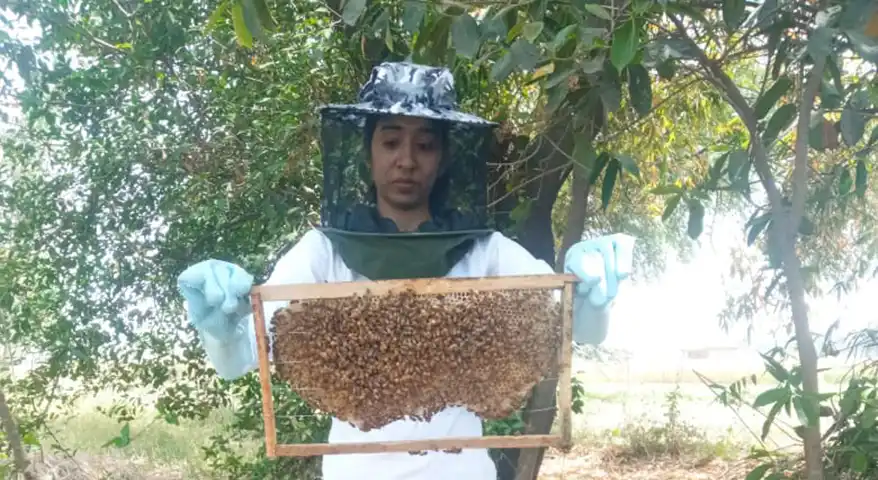
In a quiet part of Prayagraj in India, during the stillness of the COVID-19 lockdown, something beautiful took root. While the world slowed down, Jasleen – a trained chef with a deep love for clean, real food – began exploring something new: bees.
It wasn’t planned or part of a big business idea. It started with curiosity and care. Jasleen began taking online and offline training in beekeeping, learning how these tiny creatures work, what they need, and how they give us one of nature’s purest gifts—honey.
She started small, with just two bee boxes, just to understand how things worked. Her goal was clear from the beginning: to give people raw, filtered honey without any adulteration – honey that’s straight from nature, without any heat, blending, or tricks. Just as the bees make it.

Challenges: Learning in the Buzz of Reality
Beekeeping may look peaceful from the outside, but it comes with plenty of real-world challenges. One of the biggest hurdles Jasleen faced was unpredictability during season.
Sometimes, the flowers bees depend on don’t bloom on time due to unexpected weather shifts. If there’s no nectar, there’s no honey—and harvesting becomes impossible for that cycle. Then comes bee health, a responsibility that requires constant attention.
From fungal infections to mite attacks, keeping bees safe demands deep understanding and daily care, especially without easy access to trained support in the area. Finding manpower is also tough.
Many people are still afraid of bees, and farmers are often hesitant to keep bee boxes on their land, not realizing the long-term benefits bees bring to crops and biodiversity. And while Melflora has earned loyal customers who love pure honey, competing with large, well-known brands with flashy packaging and advertising is a challenge for any grassroots brand. Still, Jasleen stands firm in her belief: honest products build lasting trust, and that’s what matters most.

Growth: One Step at a Time
Melflora is growing intentionally and with purpose. The focus today is clear: to offer pure honey, directly from hives that are lovingly managed and responsibly harvested.
Along with her own hives, Jasleen also partners with rural beekeepers who share her values. She carefully sources from them to ensure quality, while helping them access a fair market for their efforts.
Melflora’s approach is all about depth over speed—creating something authentic, customer-focused, and built to last. “I didn’t plan for this to become a brand. I just wanted people to taste honey the way nature gives it—untouched, unheated, and honest, says Jasleen, the founder of Melflora.

Current Status: A Bee-Led Brand with a Purpose
Today, Melflora is steadily building its place in the honey world. Through local exhibitions and word-of-mouth, more and more people are discovering the difference raw honey can make—not just in taste, but in trust. Every step, from harvest to bottle, is managed with complete transparency and intention.
Jasleen handles each part of the process herself, ensuring purity is never compromised. Right now, Melflora proudly focuses on its signature: pure, raw mustard honey, delivered with unmatched care and transparency. This focus is by design.
Jasleen believes that doing one thing exceptionally well sets the standard for everything that follows. With a clear vision in mind, Melflora is also laying the groundwork for a thoughtful expansion by exploring new bee-based possibilities through research and customer conversations. Each step is guided by the same core values: purity, purpose, and trust.

The Vision: Where Melflora is Headed
Jasleen sees Melflora not just as a brand, but as a long-term journey, where slow growth is good growth, and where quality always comes before quantity. The roadmap ahead includes: Introducing new floral varieties of raw honey, sourced responsibly from diverse Indian landscapes; collaborating with more rural beekeepers, giving them a platform to share their harvest while ensuring traceability and quality; expanding the product range gradually, with wellness-focused additions that stay true to Melflora’s commitment to clean, natural ingredients; continuing to educate and engage customers, helping them understand what raw honey really is, and why it matters. The focus will always remain on integrity, sustainability, and doing right by the bees.

A Brand with a Heart
Melflora didn’t begin in a lab, a factory, or a boardroom. It began with a simple desire – to stay close to nature and offer people something real. From just two boxes in a farm to jars filled with pure golden honey, Jasleen’s journey with Melflora is a story of courage, care, and quiet determination.
Every jar is a promise – from the bees, from the beekeeper, and from the land. And in a world full of shortcuts, Melflora chooses the honest path – one hive, one harvest, one customer at a time.
Contact MELFLORA The Bees Craft
+91 74338 59388
Email: info.melflora@gmail.com
Instagram: Melflora
Watch the story here: