
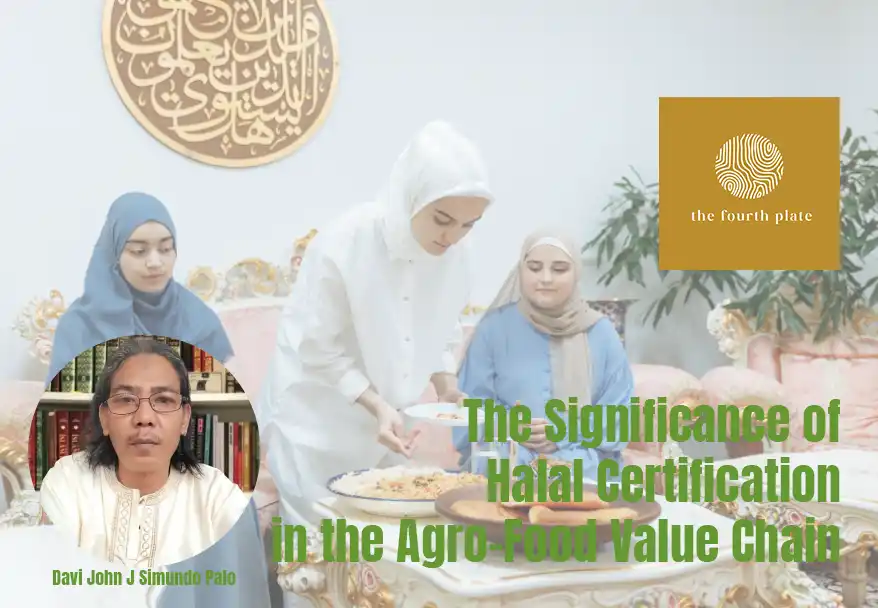
The global halal food industry is experiencing unprecedented growth, with increasing demand not only from Muslim-majority countries but also from diverse, non-Muslim markets worldwide. According to Grand View Research (2022), the halal food market was valued at USD 1.9 trillion in 2021 and is projected to reach USD 3.2 trillion by 2028, with a CAGR of 8.1%. Notably, the consumption of halal products in non-Muslim regions is a significant driver of this expansion.
Recent data indicates that in North America, halal food sales reached approximately USD 20 billion in 2022, with a consistent annual growth rate of 10% (Research and Markets, 2022). In Europe, halal product sales are estimated at EUR 15 billion (~USD 16 billion) for 2022, with a forecasted CAGR of 12% through 2025 (Euromonitor International, 2022). These figures, alongside emerging consumer preferences, demonstrate the widespread appeal of halal-certified foods.

Furthermore, a 2023 consumer survey conducted by Nielsen found that over 60% of non-Muslim consumers in North America and Europe express willingness to purchase halal products, primarily citing health, safety, and ethical considerations as key motivations. This shift indicates a broader acceptance and recognition of halal as synonymous with quality and trust.
Case Study: Halal Products in the UK Supermarket Sector
In the UK, a leading supermarket chain reported that halal product sales increased by 20% in 2022, reaching GBP 1.2 billion. The chain launched a dedicated halal range to meet rising consumer demand, and market analysts attribute this growth to multicultural demographic shifts and increasing awareness among non-Muslim shoppers.
A survey conducted by Mintel in 2022 revealed that 65% of non-Muslim UK consumers associated halal products with high standards of hygiene and animal welfare—signaling a significant shift in perception. The supermarket’s halal range now accounts for approximately 8% of total meat sales in the store, underscoring halal’s mainstream acceptance.
Consumer Surveys and Insights in North America
In the United States, a 2023 survey by the NPD Group found that 70% of Muslim consumers prioritize halal certification when purchasing food, but notably, over 60% of non-Muslim respondents also actively seek out halal options due to perceptions of cleaner processing and higher quality standards.
Additionally, a report from the Hartman Group highlights that 45% of American consumers are willing to pay a premium for ethically sourced, high-quality foods, with halal products often positioned as aligning with these values. The survey indicates that halal-certified foods are increasingly viewed as a “healthier” or “more trustworthy” option, even among non-Muslim populations.

Market Expansion and Economic Impact
This rising demand has translated into tangible economic benefits. For example:
– In Australia, halal exports increased by 18% in 2022, primarily driven by markets in Asia and non-Muslim regions seeking ethically produced meats (Australian Trade and Investment Commission, 2023).
– In Canada, halal food sales grew by 12% in 2022, with non-Muslim consumers accounting for over 40% of halal product purchases (Canadian Food Inspection Agency, 2023).
– In Germany, halal-certified products constitute roughly 7% of total meat sales, with notable growth in organic and ethically produced halal options (Euromonitor, 2022).
Sustainable Development and Ethical Considerations
The increasing popularity of halal products in non-Muslim regions aligns with consumer trends favoring sustainability and animal welfare. A 2023 survey by the Ethical Consumer Research Association found that 55% of respondents in Europe and North America associate halal certification with humane animal treatment and responsible sourcing.
Moreover, companies like Nestlé and Unilever have launched halal-certified product lines in Western markets, emphasizing ethical standards, transparency, and sustainability. These initiatives contribute to SDG 12 (Responsible Consumption and Production) and SDG 13 (Climate Action) by promoting environmentally friendly practices.
The expanding sales figures and consumer acceptance of halal products across non-Muslim regions underscore their vital role in the global food economy. The examples from the UK, US, Australia, and Canada demonstrate that halal certification is increasingly viewed as a mark of quality, safety, and ethics—appealing to a broad consumer base.
Harnessing technological innovations such as blockchain traceability and international standard harmonization will further facilitate market access and trust. As halal’s mainstream appeal continues to grow, it offers significant opportunities to support sustainable development, ethical practices, and economic resilience worldwide.
References
– Grand View Research. (2022). Halal Food Market Size, Share & Trends Analysis Report. Retrieved from https://www.grandviewresearch.com
– Research and Markets. (2022). Global Halal Food Market Analysis. Retrieved from https://www.researchandmarkets.com
– The Grocer. (2023). Halal Food Market in the UK. Retrieved from https://www.thegrocer.co.uk
– UK Department for International Trade. (2023). UK Halal Export Data. Retrieved from https://www.gov.uk
– Australian Trade and Investment Commission. (2023). Halal Industry Growth in Australia. Retrieved from https://www.austrade.gov.au
– Canadian Food Inspection Agency. (2023). Halal Market Data. Retrieved from https://inspection.canada.ca
– Euromonitor International. (2022). Halal Market Trends in Europe. Retrieved from https://www.euromonitor.com
– Nielsen. (2022). Global Halal Food Trends. Retrieved from https://www.nielsen.com
– The NPD Group. (2023). US Consumer Trends in Halal Food. Retrieved from https://www.npd.com
– Hartman Group. (2023). Consumer Attitudes Toward Ethical and High-Quality Foods. Retrieved from https://www.hartmangroup.com
– Ethical Consumer Research Association. (2023). Halal Certification and Ethical Sourcing. Retrieved from https://ethicalconsumer.org

An economic researcher, Davi John J Simundo Palo has a distinguished background in economics, ethical governance, and socio-environmental development. He specializes in uplifting indigenous communities through sustainable development initiatives aligned with the United Nations Sustainable Development Goals. Leveraging a blend of traditional wisdom and modern methodologies, he drives program management, stakeholder engagement, and economic research. Follow him on LinkedIn