
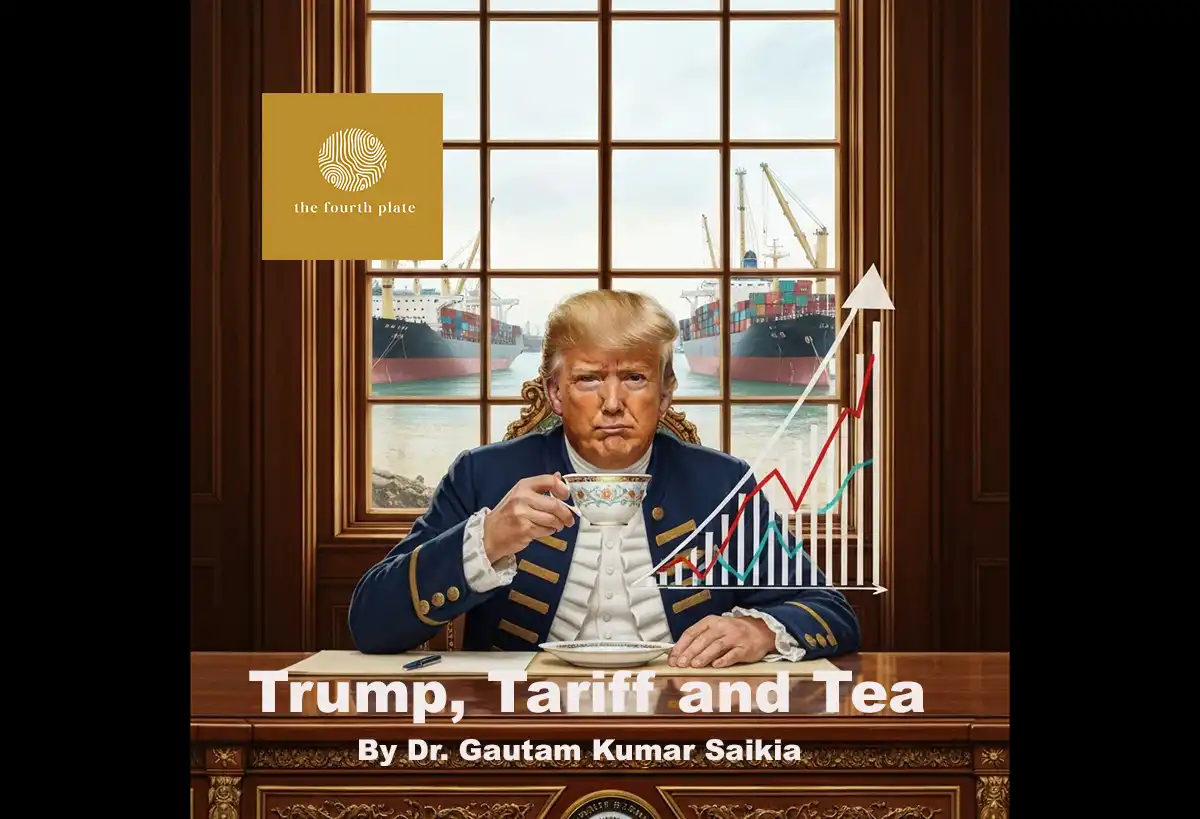
“Boston Harbour is a tea pot tonight. Hurrah for Griffin’s Wharf!”
After US President Donald Trump’s unprecedented tariff increases in 2025 – including 50% on steel and aluminum, 25% on imported cars, and a universal 10% on all imports – perhaps it’s time to reflect on the night of December 16, 1773, when Boston Harbor became a ‘Tea Pot’ and Americans refused to pay tax on tea to the British Government.
That night, members of the Sons of Liberty, disguised in Native American garb, boarded ships at Griffin’s Wharf in Boston, Massachusetts, and threw 342 chests of tea into the water. This “Boston Tea Party” became the first major act of defiance to British rule, demonstrating that Americans would not tolerate taxation without representation.

History Repeats…
When in 1773, a mere three pence tax per pound of tea sparked the American Revolution, it’s striking to note that by August 2025, America’s average tariff rate has reached 18.6%, the highest in over a century. These new tariffs are expected to generate $3.3 trillion in revenue over the next decade, yet they echo the very economic policies that once sparked American resistance to British rule.
Tea Trade and Colonial America
Tea first arrived in North America with Dutch traders in the 17th century, and regular shipments to the colonies began in the 1720s. While colonists were legally required to purchase British tea, Dutch, French, and other teas were widely smuggled. By 2024, the USA had become a major buyer of Indian tea, importing tea worth 66.20 million USD and contributing 10.30% of India’s total tea export revenue.
Background of the Boston Tea Party
The British Government monopolized the international tea trade through legislation, requiring colonists to import tea only from Great Britain. In the 1760s, facing heavy debt, British Parliament imposed a series of taxes on American colonists, including the Stamp Act of 1765 and Townshend Acts of 1767. While Britain considered these taxes fair compensation for wars fought on colonists’ behalf, Americans were furious at being taxed without representation in Parliament.
The Tea Act of 1773 granted the East India Company the right to export tea directly to the colonies and force colonists to pay a three-pence tax on every pound. Seven ships carrying over 2,000 chests of tea were sent to the colonies, with four bound for Boston.
The Sons of Liberty
The Sons of Liberty, founded to protest the Stamp Act, included prominent patriots such as Benedict Arnold, Patrick Henry, Paul Revere, Samuel Adams, and John Hancock. They organized resistance through boycotts, protests, and direct action. In every colony except Massachusetts, they successfully forced tea consignees to resign or return tea to England.
The Night of Protest
When the tea ship Dartmouth arrived in Boston Harbor, Whig leader Samuel Adams organized a mass meeting. Governor Hutchinson refused to let the ships leave without paying import duties, and two more ships, Eleanor and Beaver, joined Dartmouth in the harbor. On December 16, the last day of Dartmouth’s deadline, thousands gathered at the Old South Meeting House.
That evening, 30 to 130 men, some disguised as Mohawk warriors, boarded the three vessels and dumped all 342 chests of tea into the water. The destruction amounted to 92,000 pounds of tea, worth £9,659 (roughly $1,700,000 in today’s money). Notably, the protesters took great care to avoid damaging the ships or personal property—only the tea was destroyed. The destroyed tea could have brewed 18,523,000 cups.

Consequences
In retaliation, the British Parliament passed the Coercive Acts (later known as the Intolerable Acts), which closed Boston Harbor, ended Massachusetts’ self-governance, moved judicial authority to Britain, required colonists to quarter British troops, and extended religious freedoms to Catholics—angering Protestant colonists.
Most participants in the Tea Party were under 40, with 16 being teenagers. Even after American independence, many refused to reveal their identities, fearing legal consequences and social condemnation for destroying private property. Only one participant, Francis Akeley, was ever arrested and imprisoned.
Tea drinking became viewed as unpatriotic, leading to increased consumption of alternatives like coffee and herbal teas. However, after the revolution, tea gradually returned to American tables—even George Washington regularly enjoyed tea for breakfast and dinner.
Modern Implications
Today’s global economy bears little resemblance to the colonial mercantile system that sparked the Boston Tea Party. Yet the fundamental questions of economic fairness, representation, and sovereignty remain relevant. As the United States implements aggressive tariff policies, trading partners face choices similar to those confronted by American colonists: whether to accept, negotiate, or resist economic pressure from a powerful trade partner.
The lessons of 1773 resonate in 2025: economic policies perceived as unjust can have far-reaching and unexpected consequences. As George Washington’s post-revolution embrace of tea demonstrates, however, trade relationships often survive and evolve beyond political conflicts. The challenge for modern policymakers lies in balancing domestic economic interests with the complex realities of global trade interdependence.
ENDS

Dr Gautam Kumar Saikia is a Professor, at the Department of Tea Husbandry & Technology , Assam Agricultural University, Jorhat, Assam. India. Email: gksaikia68@yahoo.com; gautam.saikia@aau.ac.in