
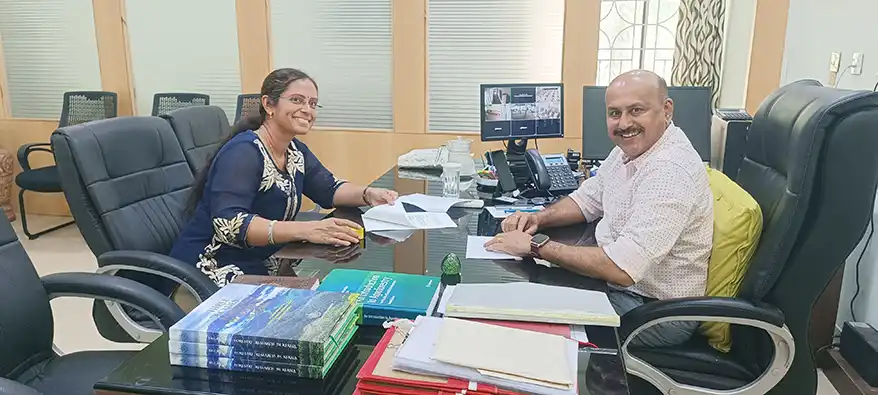
India’s agricultural and forestry landscape is entering a new era where traditional practices are rapidly integrating with artificial intelligence and omics-enabled technologies. A striking example of this transformation is the recent initiative by Kerala Agricultural University (KAU), which has submitted a proposal to the Kerala State Forest Department to develop an AI-powered tool for forest biometrics—an innovation poised to reshape ecosystem management and agricultural innovation in the region.
AI in Forest Biometrics: The Next Frontier
Forest biometrics—the science of measuring forest characteristics such as tree growth, density, and health—has long been reliant on labor-intensive, manual methods. KAU’s proposal aims to harness advances in artificial intelligence, genomics, and remote sensing to automate and enhance these measurements, enabling precision monitoring of Kerala’s diverse forest ecosystems.
This project is the product of a strategic collaboration under a Memorandum of Understanding (MoU) between KAU and HelixOmics Analytics LLP, a rapidly growing startup specializing in molecular breeding, omics data analysis, and predictive AI models. HelixOmics’ expertise in AI modeling and big-data analytics complements KAU’s strong research foundation, creating a synergy that bridges academic rigor with technological agility.

at Kerala Agricultural University
Catalyzing an Agricultural Innovation Ecosystem
The AI-powered biometrics tool proposal marks a pivotal shift in Kerala’s agricultural and forestry innovation ecosystem. By creating a robust platform for data-driven forest assessment, it lays the groundwork for a suite of related innovations—ranging from precision crop breeding and climate-smart forestry to real-time decision support systems for farmers and forest managers.
KAU and HelixOmics’ partnership also includes a structured capacity-building program with a modular bioinformatics curriculum designed to equip students, researchers, and professionals with cutting-edge skills in AI and omics technologies. This will help retain local talent with expertise in data science, biotechnology, and forestry, addressing Kerala’s historic challenge of skilled workforce migration.

From Research to Real-World Impact
Leveraging Kerala’s high digital literacy and strong public infrastructure, the project aims to pilot AI-powered forest monitoring systems that can be scaled to tropical ecosystems nationally. The initiative’s outcomes could improve forest resource management, enhance carbon stock assessments critical for climate resilience, and aid biodiversity conservation.
Moreover, the collaboration is expected to generate new intellectual property and lead to commercial products, with HelixOmics assisting in translating research discoveries into market-ready AI tools and decision aids. This aligns with national policies, such as the National Mission on Sustainable Agriculture, and international frameworks, including the UN Sustainable Development Goals, which emphasize sustainable resource use and climate adaptation.
A Model for Future Agri-Tech Collaborations
The KAU-HelixOmics partnership exemplifies how academia-industry alliances can accelerate innovation cycles in agriculture and forestry. The MoU not only facilitates resource sharing and joint research but also fosters entrepreneurship and startup incubation, positioning Kerala as a regional leader in agri-tech innovation.
Dr. Gopakumar S., Dean of Faculty of Forestry at Kerala Agricultural University, Thrissur, notes: “Our AI biometrics tool is a game-changer for forest management and agricultural research. By fusing advanced technologies with local expertise, we are creating a replicable model that integrates sustainability, innovation, and economic growth.”
Looking Forward
As KAU’s proposal advances, the anticipated ripple effects include expanded AI applications across crop improvement, pest management, and precision farming, further strengthening Kerala’s agricultural value chains. The project also holds promise for extensive farmer training programs, climate-smart practices, and evidence-based policy development—helping Kerala become a “living lab” for smart farming in tropical regions.
This initiative underscores the transformative potential when scientific institutions collaborate closely with innovative startups, combining complementary strengths to address complex ecological and agricultural challenges through technology-driven solutions.

Dr. Gopakumar S is the Dean of Faculty of Forestry at Kerala Agricultural University. His research and teaching have centered around forest and individual plant ecology, while his broader interests include the social dimensions of tropical forest management and the value addition of Black Dammar and its biomolecules. He is also passionate about using technology as a tool for ecological problem-solving. Follow him on LinkedIn