
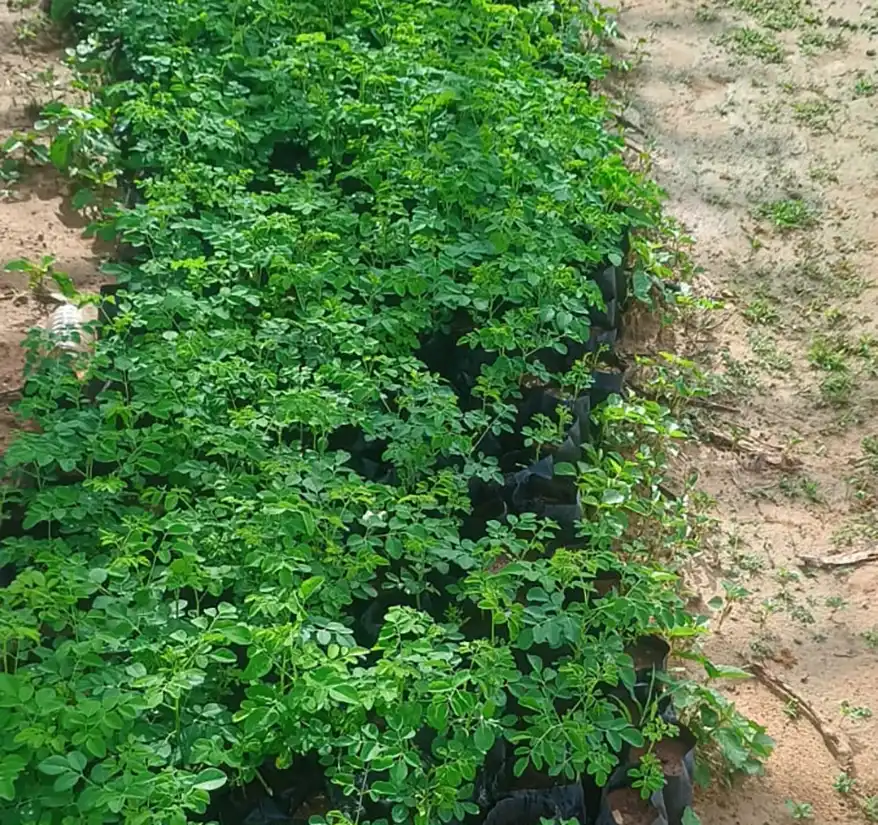
India’s agricultural sector depends on a small but mighty element: the seed. It is the fulcrum on which food security balances, the blueprint promising harvests that feed over a billion people.
Yet, despite India’s stature as the world’s second-largest cultivator of arable land and the sixth-largest seed market globally, its farmers, particularly the 90% who are smallholders, face a crisis that threatens this foundation.
Substandard, counterfeit seeds, fragmented regulation, and financial barriers are eroding trust and stifling productivity, with consequences that ripple far beyond fields into national food security and global trade.
At the heart of India’s seed procurement woes lie several critical deficits. First, a quality deficit, rooted in an unchecked counterfeit market that some estimates place at 25% to 50% of all seeds sold in parts of the country. False labeling and unregulated supply chains let spurious, low-germination, and chemically hazardous seeds flood markets, leading to devastating crop failures.
Second, an access deficit, driven by prohibitive input costs, crippling debt cycles, and geographic isolation, forces farmers to choose between expensive certified seeds and cheaper, dangerous fakes.
Seeds are an investment in livelihoods
For millions of small-scale farmers, an investment in seeds is a gamble with their livelihoods. Crop failures triggered by counterfeit inputs deepen debt burdens and push families toward poverty and despair.
The erosion of trust in formal supply chains drives farmers further into the informal, opaque markets where these risks compound. Beyond the individual, this undermines national food production reliability and threatens India’s exports, especially prized varieties like Basmati rice, whose global standing depends on strict purity and quality standards.
India’s formal seed industry, valued at $7.8 billion in 2024 and poised for rapid expansion, is split between public institutions and private corporations.
While private companies dominate the high-margin hybrid seed market, public bodies like the Indian Council of Agricultural Research remain indispensable for staple crops and early-stage research. Yet, regulatory frameworks lag behind this complex ecosystem.
Exposing farmers and farming to risk
The Seeds Act of 1966, which still underpins seed certification, allows “truthful labeling” without compulsory independent verification, creating a loophole exploited by counterfeiters. Enforcement is inconsistent, and multiple laws overlap without cohesive integration.
This exposes farmers to risk and disincentivizes investment in quality controls. Meanwhile, private sector dominance driven by intellectual property rights can restrict farmers’ traditional rights to save and exchange seeds. This dual tension raises seed prices and narrows the genetic diversity necessary to adapt to India’s rapidly changing climate.

A three-pronged strategy
To pivot from crisis to resilience, India must pursue a three-pronged strategy. First, a regulatory overhaul is essential: integrating existing laws into a unified Seed Bill mandating compulsory certification and universal digital traceability, leveraging platforms like the government’s SATHI portal.
Digital provenance via QR codes and blockchain technology would make counterfeit seeds scientifically traceable and economically unviable, rebuilding trust across the supply chain.
Second, financial accessibility and farmer protections must improve. Many smallholders are trapped in debt cycles perpetuated by costly inputs and opaque compensation systems. Streamlined, decentralized tribunals to address seed failure claims under the Protection of Plant Varieties and Farmers’ Rights Act would ensure swift justice and deter malpractice. Additionally, national-level price controls for non-registered commercial hybrids would stabilize markets and avoid the current fragmented state-by-state patchwork.

Promoting the indigenous seed heritage
Third, India must embrace its indigenous seed heritage as a cornerstone of climate resilience. Community Seed Banks (CSBs) conserve genetic diversity proven to withstand droughts, floods, and pests where commercial hybrids falter. But CSBs face underfunding, legal invisibility, and limited scalability. Formal recognition as legal entities coupled with sustained public investment would empower these farmer-led institutions, ensuring the survival and growth of climate-adapted, locally specific varieties that underpin food sovereignty.
The urgency of this approach is not academic. Historical evidence from events like the 2009 Himalayan drought and Odisha’s 2013 floods shows traditional varieties preserved by community seed banks outperforming hybrids in survival and yield, underscoring the vital role of genetic diversity over monoculture. Balancing high-yield commercial seeds with indigenous varieties is key to ensuring both immediate productivity and long-term resilience.
Digital technology offers India an opportunity to bridge gaps. The SATHI portal aims to digitally track every seed lot from production through sale, creating a transparent, accountable market.
Coupled with advisory services and online marketplaces, digital platforms empower farmers by reducing information asymmetry and improving access to quality inputs. Farmer Producer Organizations utilizing these tools can become hubs for quality-assured seed distribution, circumventing traditional market inefficiencies.
Raising awareness about quality seeds
However, technology and policy are only as effective as the farmers they serve. A large-scale, targeted education campaign is needed to raise awareness of seed quality standards, farmers’ legal rights, and the use of new traceability tools. Without this, reform risks remaining a top-down exercise disconnected from on-the-ground realities.
India’s agricultural future depends on securing its seed supply. This means investing in the genetic diversity that has sustained Indian agriculture for centuries. The road ahead demands coordinated government action, private sector accountability, and the empowerment of farmers as custodians of both tradition and innovation.
Only then can India’s farmers plant not just seeds, but the promise of nutritional security, climate resilience, and economic stability for generations to come.

S Umesh Rao is a moringa cultivator, and leaves and seeds supplier, also specializing in sustainable velvet bean and Kaunch Beej farming. He is an expert in regenerative agriculture, herbal and medicinal crops, and farm development consulting. He is also an experienced agro-entrepreneur with a focus on contract farming and innovative farm solutions.
For more information about his organic moringa products and vacant land development consultancy, as well as high quality indigenous moringa, basil and other seeds, contact:
S. Umesh Rao; Call/WhatsApp –
0091 8310 457 215;
Email: umeshraomoringa
@gmail.com
This article was prepared by The Fourth Plate team based on an interview with S. Umesh Rao