
In a flood-prone corner of Kuttanad, where the rising tide often dictates daily life, a young student named Susan Vinodh is not waiting for a government policy to save her neighborhood. Instead, she has designed a floating house.
Her “Terra Aqua Homes” concept uses hydraulic lift pistons and boat-hull styles to create structures that rise and fall with the water levels. It is a pragmatic response to the climate crisis, born not in a high-tech corporate lab, but in a neighborhood collective in rural Kerala.
Susan is one of more than 4.3 lakh children involved in massive shift in how the Global South approaches development. This is the world of the Kudumbashree Balasabha, and their flagship initiative, LIORA, is proving that the most effective solutions to systemic poverty and environmental degradation often come from those who live on the front lines.

To understand the magnitude of this achievement, one must first understand Kudumbashree. Established as the State Poverty Eradication Mission of Kerala, Kudumbashree is one of the largest women’s empowerment projects in the world. It operates through a vast network of neighborhood groups, focusing on social and economic upliftment.
Balasabha is the mission’s dedicated platform for children aged 5 to 18. It was built on a simple but profound realization: enhancing the capabilities of children from vulnerable families is the most effective way to prevent the intergenerational transmission of poverty.
Through LIORA, which translates to “My Light,” these children are being trained to move beyond the traditional roles society often prescribes for them. The program encourages self-evaluation, inquiry, and the transformation of lived experience into innovation.

This journey is supported by the Udhyam Learning Foundation, which has provided technical mentorship and helped develop the core curriculum to turn raw ideas into viable prototypes and entrepreneurial ventures.
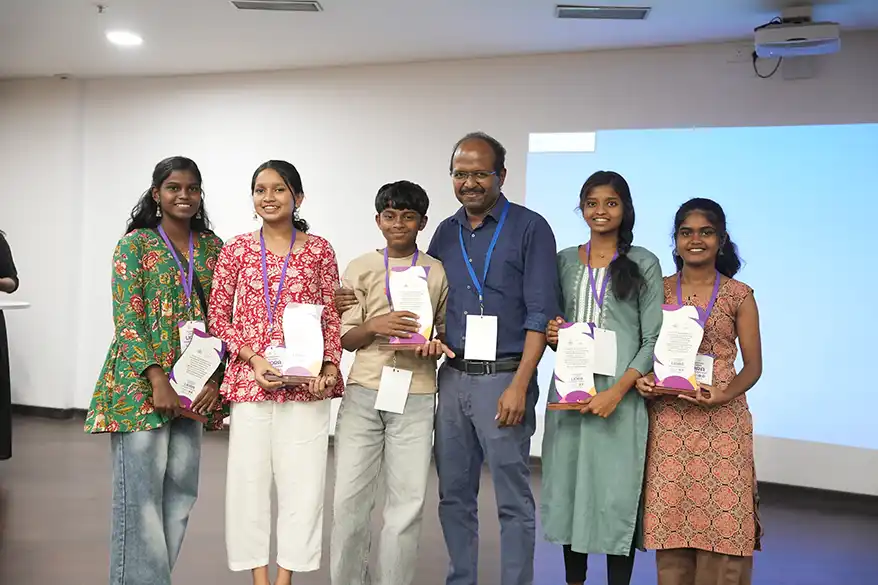
At the recent LIORA Innovation Conclave 2026, held at the Kerala Startup Mission in Kalamassery, the results of this mentorship were on full display. The projects presented were were innovative responses to real-world challenges in agriculture, waste management, and social inclusion.
Solving the Labour of the Land
Agriculture remains the backbone of the rural economy, yet it is fraught with physical strain and efficiency gaps. Sanjay Kumar, a Balasabha member, identified a bottleneck in his own community: the grueling task of coconut de-husking. Traditional methods are slow and carry a high risk of injury. Sanjay’s solution is a mechanical Coconut De-Husking Machine. Constructed from iron rods and levers, it allows an operator to shell up to four coconuts per minute using both hand and foot controls. It is a tool designed for safety and ease, making a difficult task accessible to women and even older children, thereby strengthening the local labor pool.

Similarly, Alaidha G. S. recognized that small-scale farmers often struggle with crop loss because they lack data. Her AI-Based Smart Banana Farming Assistant App uses machine learning to guide farmers in selecting the right banana varieties for their specific soil and climate. The app features an AI leaf scanner for early disease detection and provides real-time weather alerts in Malayalam. By reducing dependency on distant experts, the app lowers the financial risk for families whose entire livelihood depends on a single harvest.
Waste as a Resource
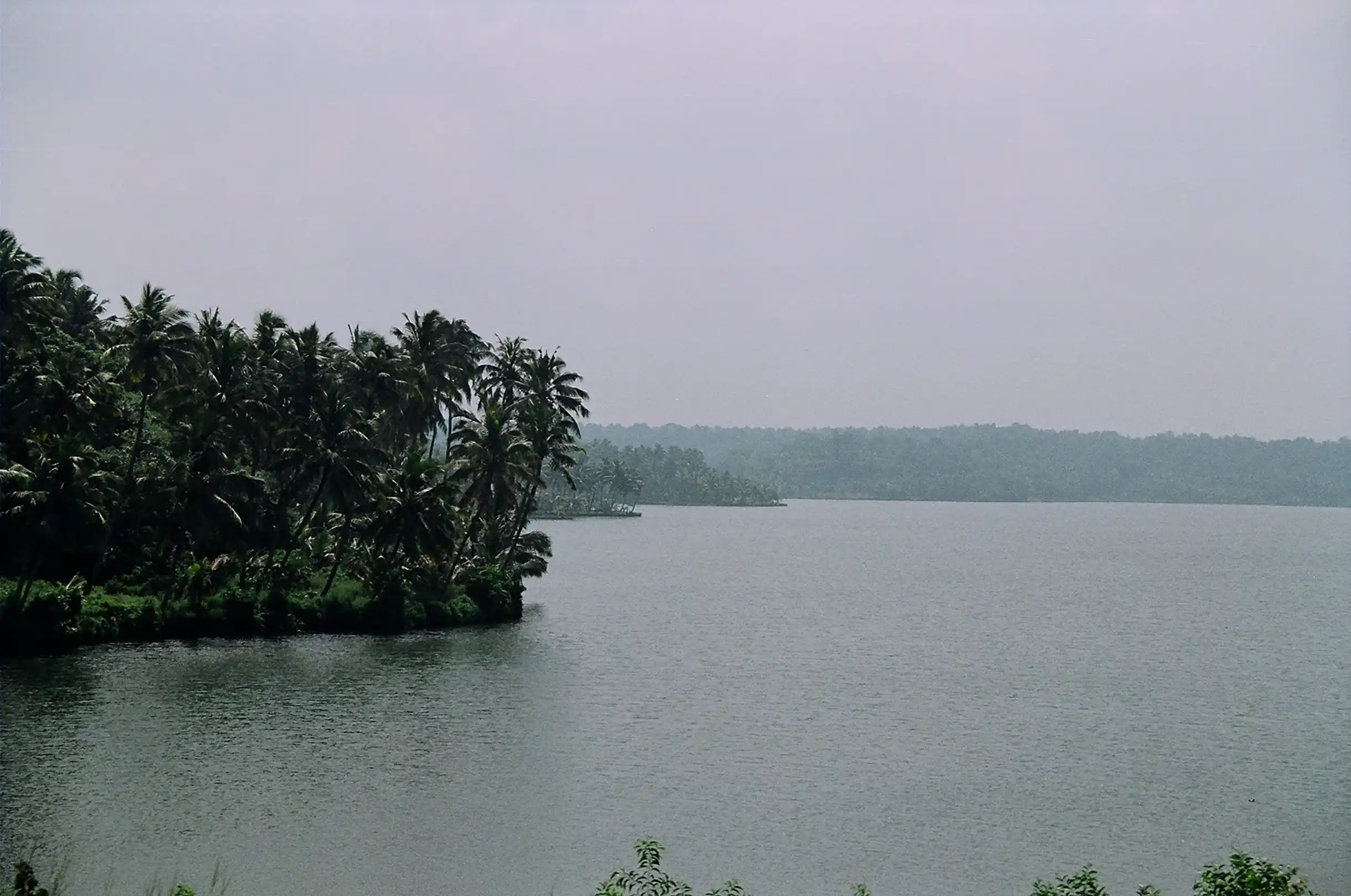
Sustainability requires a circular approach to waste. Nandhu K., from the Alappuzha district, looked at the invasive water hyacinth choking the Vembanad Lake and saw a business opportunity. While the government spends millions trying to clear this “blue orchid” that destroys aquatic life, Nandhu developed a process to powdered the dried weed and mix it with maize flour and wheat bran to create high-quality cattle feed pellets. This “Water Hyacinth to Prosperity” project cleans the waterways while providing dairy farmers with an affordable, nutrient-rich alternative to expensive commercial feeds.

In the realm of energy, Cyra Maria’s “Green Charcoal” project tackles the problem of organic and medicinal waste. Using a controlled thermal process, she converts agricultural residue into biochar and captures the resulting gases to reuse as energy within the system. It is a low-cost, eco-friendly model that addresses both waste management and the need for sustainable fuel in rural households.

Technology for the Common Good
The digital divide often leaves rural communities behind, but the LIORA innovators are building their own bridges. Alves Renjith’s “Smart Village Connect” is a digital platform that integrates local governance, agriculture, and healthcare into a single system. Using IoT sensors to monitor water resources and energy, the app provides a model for a truly connected community where information flows freely between villagers and authorities. It is a design that prioritizes social inclusion, ensuring that essential services are not a privilege of the urban elite.

Even the democratic process has received a technical upgrade. Sivanandh developed a “Smart Electronic Voting Machine” (SEVM) using a Raspberry Pi. By utilizing smart card-based verification, the system ensures that only authorized voters can participate and automatically marks them as “already voted” to prevent fraud. It is a transparent, secure response to the need for integrity in local elections.
Finally, Adhinan Thahir E. addressed the invisible crisis of air pollution with his “Solar Air Purifier Tree.” This multi-utility structure uses solar energy to power HEPA filters and a UV ionizer to clean the atmosphere. Designed for public spaces, it also includes a water purifier and phone charging ports. It serves as a reminder that technology can be both high-functioning and deeply rooted in the needs of the public square.
A New Model for Development
The value of the LIORA initiative extends far beyond the individual prototypes. It marks a transformational shift in development. By nurturing scientific temper and entrepreneurship at the neighborhood level, the state is creating a generation of problem-solvers who do not see themselves as victims of their circumstances.

The Udhyam Learning Foundation‘s role in this process has been vital, especially in helping these young innovators understand that an idea is only the beginning. Their mentorship focused on the “how” of entrepreneurship: how to conduct a survey, how to refine a technical report, and how to build a website to market their products. This technical support ensures that the brilliance of the Balasabha children is not lost to a lack of resources. The event was supported by the TinkerHub Foundation team, providing technical mentoring and support to students along with Udhyam.
The LIORA Conclave is a testament to the fact that when children are given the tools to participate in decision-making and innovation, they don’t just dream of a better world; they build it. These projects are a beacon of hope for the Global South, proving that sustainable development is not a top-down mandate but a grassroots movement powered by the youngest, brightest lights of the community.
As these children return to their wards and villages, they carry with them the confidence that their ideas have the power to illuminate the path toward a more resilient and equitable future.
The Fourth Plate will chronicle the innovative ideas by these young people – with the hope that they resonate with entrepreneurs and think-tanks to help scale and deliver impact.





Leave a Reply