
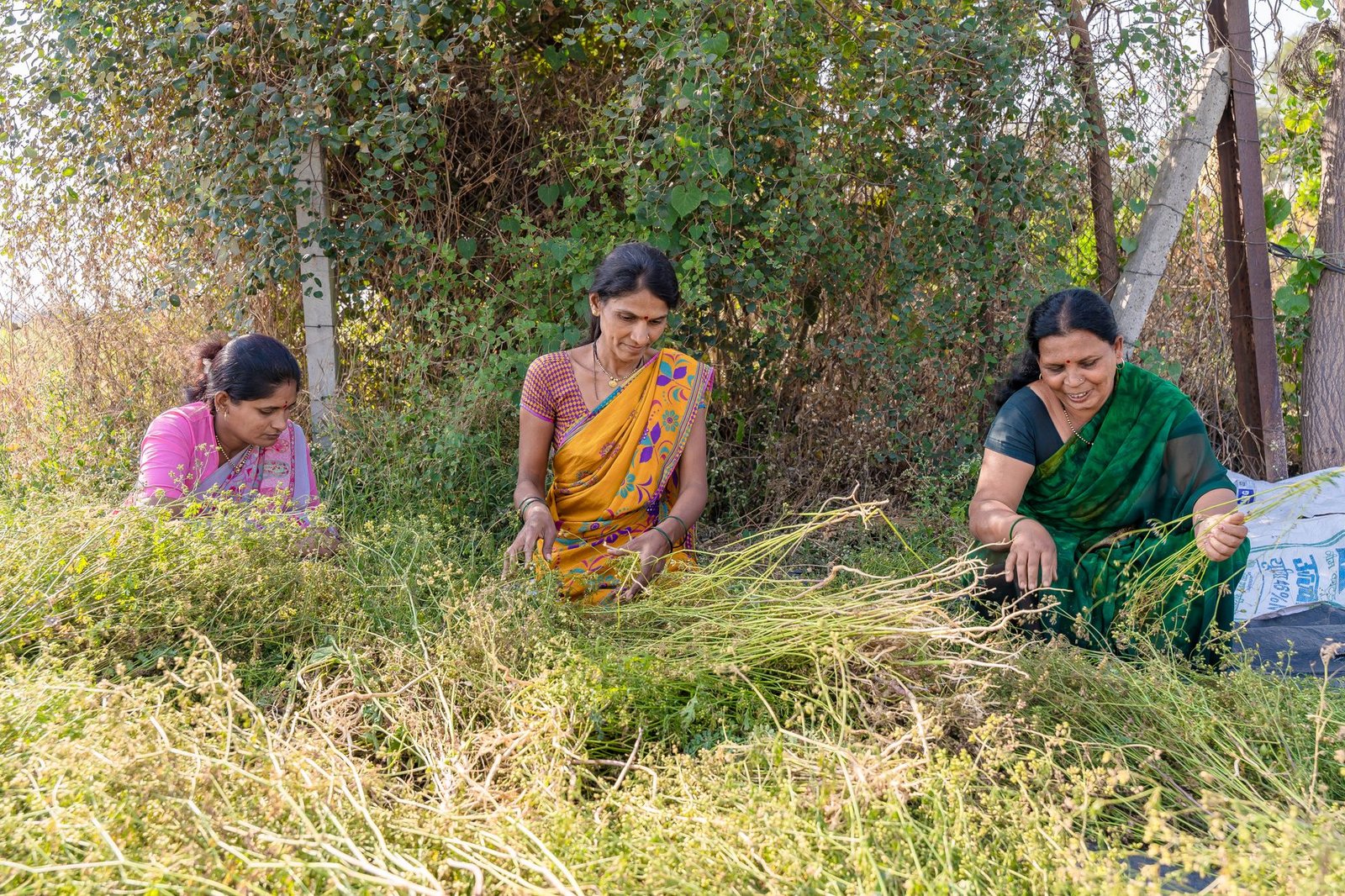
Seed banks in India work at two scales. The national genebank in New Delhi held 0.47 million seed samples on 15 January 2025, the ICAR-National Bureau of Plant Genetic Resources (NBPGR) said. A survey published in April 2026 estimated that farmers run more than 1,000 community seed banks across the country.
Individual farmers keep seed between those two levels. In Kerala the best known was Cheruvayal Raman, the Kurichiya farmer from Wayanad who kept dozens of traditional rice varieties and died on 14 October 2026. This explainer sets out how each kind of seed bank works and what Indian law gives the farmers who save seed. It also traces Kerala’s traditional rice, the draft Seeds Bill and the lessons for Gulf and Global South readers.

Key facts
- India’s national genebank at ICAR-NBPGR held 0.47 million accessions on 15 January 2025 (ICAR-NBPGR, via Down To Earth, February 2025)
- The Union Budget 2025-26 announced a second national gene bank with room for 1 million germplasm lines (Budget speech, 1 February 2025)
- Researchers surveyed 475 community seed banks and estimate that India has more than 1,000 (Fridtjof Nansen Institute and MSSRF, April 2026)
- Farmers’ varieties made up 4,845 of the 9,210 plant variety certificates issued by 30 June 2025, or 52.6% (International Journal of Advanced Research, July 2025)
- The three Plant Genome Saviour awards can pay out at most Rs 85 lakh (about $89,600) a year across 35 winners (Fourth Plate calculation from PPV&FR Authority rules, 2026)
- Kerala has six traditional rice varieties with geographical indication tags, registered between 2007 and 2014 (Geographical Indications Registry; GKToday)
- Cheruvayal Raman conserved between 45 and 64 rice varieties in Wayanad, by different counts (Deccan Chronicle, 2016; Down To Earth, October 2026)

What seed banks in India are and how they differ
India keeps crop seed in cold genebanks, in village seed banks and in the fields of farmers who resow their own harvest. Each store serves a different user, and seed moves between them only when someone carries it.
A genebank stores seed samples, called accessions, for the long term. Breeders and scientists draw on it to develop new varieties. A community seed bank is a village store that lends seed to farmers for the coming season. At the Chizami seed bank in Nagaland, farmers borrow seed and return double the quantity after harvest, The Fourth Plate reported in September 2026.
Some groups work without a building. A women’s network in Banswara, Rajasthan, keeps seed in earthen pots and passes it between households, as our report on the Rajasthan seed saver Kankudevi Damor described. A borrower returns one of her own varieties, or twice the seed she took.
The Fourth Plate compiled the table below to show the scale of each kind of collection. The figures come from different years and count different things, so they show order of size.
| Collection | Contents | Date of figure | Source |
|---|---|---|---|
| National genebank, ICAR-NBPGR, New Delhi | 0.47 million accessions of all crops | 15 January 2025 | ICAR-NBPGR via Down To Earth |
| Second national gene bank (announced) | Capacity for 1 million germplasm lines | 1 February 2025 | Union Budget 2025-26 |
| Svalbard Global Seed Vault, Norway (global backup) | More than 1.3 million samples | 22 October 2025 | Svalbard Global Seed Vault |
| Community seed banks surveyed in India | 475 seed banks | April 2026 | Fridtjof Nansen Institute and MSSRF |
| Panavally Rice Diversity Block, Wayanad | 219 rice varieties, 164 native to Kerala | December 2016 | The News Minute |
| Chizami seed bank, Nagaland | 156 crop varieties, more than 40 of them rice | September 2026 | The Fourth Plate |
| Cheruvayal Raman’s farm, Wayanad | 45 to 64 rice varieties | 2016 to 2026 | Deccan Chronicle; The News Minute; Down To Earth |
The planned second gene bank would hold more than twice the 0.47 million samples in the first. Community collections are far smaller and sit in villages and on farms.
How the national genebank at ICAR-NBPGR works
The national genebank stores seed for breeders and scientists over the long term. ICAR-NBPGR set it up in 1996, and it held 0.47 million accessions on 15 January 2025, Down To Earth reported from bureau data.
Cereals make up 0.17 million of those accessions. Millets account for more than 60,600, legumes over 69,200, oilseeds more than 63,500 and vegetables nearly 30,000. Sarath Babu Balijepalli, a former head of ICAR-NBPGR in Hyderabad, gave that breakdown in Down To Earth in February 2025.
Finance Minister Nirmala Sitharaman announced a second national gene bank in the Budget on 1 February 2025. It would be “set up for future food and nutritional security”, she said. The bank is planned to hold 1 million germplasm lines. “The native conservators must be made part of this second national gene bank initiative,” Balijepalli said. He also wrote that community seed banks lack the technical expertise for proper storage.
Indian collections also have copies abroad. The International Crops Research Institute for the Semi-Arid Tropics (ICRISAT), based in Hyderabad, sent 2,201 accessions to the Svalbard Global Seed Vault in October 2025. They covered 25 species, including sorghum, pearl millet, pigeonpea and groundnut.
How many community seed banks India has
India has more than 1,000 community seed banks, researchers estimate. Their April 2026 policy brief, from Norway’s Fridtjof Nansen Institute (FNI) and the M S Swaminathan Research Foundation (MSSRF), surveyed 475 of them.
The brief found that the number of community seed banks has grown quickly since 2020. Women run many of them. The authors grouped the banks into six types by how they are managed, and said government support needs more coherent policy to last.
An earlier count was far smaller. The Revitalising Rainfed Agriculture Network and WASSAN mapped 97 seed banks in 2020, from 250 organisations contacted and a 38% response rate. Those banks held about 779 varieties of 10 crop species, and 69% were landraces. Paddy had the most varieties, at 208. Andhra Pradesh and Telangana reported 20 banks each. No respondent reported a seed bank in Kerala.
The rise from 97 to 475 reflects wider survey reach as well as growth, because the two studies used different methods. In Kerala, the evidence in this explainer points to individual farmers, NGO rice blocks and research projects as the main seed keepers.
The structure of these banks has changed, MSSRF scientists Rengalakshmi Raj, Prajeesh Parameswaran and C M Pratheepa wrote in Down To Earth in June 2025. Early banks were central buildings serving 50 to 100 farmers. Newer ones work as networks of smaller groups of about 10 farmers. They counted 300 to 400 organisations promoting seed banks across India.
Which traditional rice varieties Kerala still grows
Kerala protects six traditional rice varieties with geographical indication (GI) tags. In Wayanad, tribal farmers grow most of the traditional varieties that remain. A GI tag ties a product’s name to the place that gives it its qualities, so only growers from that area can use the name.
Wayanad’s rice varieties
Wayanad once grew an estimated 160 indigenous rice varieties, Down To Earth reported in October 2026. An MSSRF-led study in 2011 found more than 75 traditional varieties in the district, and another study counted 60, the foundation’s case study for the Satoyama Initiative says. Most are grown by tribal farmers.
Farmers in MSSRF’s seed programme now conserve 20 traditional varieties on-farm. That is 12.5% of the 160 historical estimate and 26.7% of the 75 found in 2011. The counts use different methods and dates, so they show scale; they give no exact rate of loss.
The programme began in 2011 with five villages and covered 30 by 2021. Land under traditional rice in its villages rose from 248 acres to 309.25 acres, or from about 100 to 125 hectares, a gain of 24.7%. Aromatic varieties such as Gandhakasala and Jeerakasala sold for Rs 70 to Rs 110 a kg (about $0.74 to $1.16), the case study says. Seed festivals, called Vittutsavam, have run every year since 2014.
Thanal, a Thiruvananthapuram voluntary group, runs a rice diversity block at Panavally in Wayanad. It held 219 indigenous varieties, 164 of them native to Kerala, in December 2016, when The News Minute called it the state’s largest live paddy collection. Kerala had 13 such rice diversity blocks at the time.
Kerala’s GI-tagged rice
The Fourth Plate compiled the table below from the Geographical Indications Registry. The months taken to register are our calculation from the filing and certificate dates.
| Rice | Applicant | Filed | Registered | Months to register | Valid until |
|---|---|---|---|---|---|
| Navara | Navara Rice Farmers Society, Palakkad | 25 Nov 2004 | 23 Nov 2007 | 35.9 | 24 Nov 2034 |
| Palakkadan Matta | Palakkadan Matta Farmers Producer Company | 18 Apr 2005 | 24 Sep 2007 | 29.2 | 17 Apr 2035 |
| Pokkali | Kerala Agricultural University | 29 Jan 2007 | 9 Sep 2008 | 19.3 | 28 Jan 2027 |
| Wayanad Jeerakasala | Kerala Agricultural University with Wayanad paddy farmers’ samithi | n/a | 2010 | n/a | n/a |
| Wayanad Gandhakasala | Kerala Agricultural University with Wayanad paddy farmers’ samithi | n/a | 2010 | n/a | n/a |
| Kaipad | Malabar Kaipad Farmers’ Society, Kannur | 8 Sep 2011 | 3 Mar 2014 | 29.8 | 7 Sep 2031 |
Registration took between 19 and 36 months for the four varieties with full records. Pokkali, the saltwater-field rice of Alappuzha, Ernakulam and Thrissur, comes up for renewal on 28 January 2027.
A GI tag has given farmers uneven returns. A.M. Radhika and Rajesh K. Raju found gaps between intended and actual outcomes for Kerala’s rice GIs in the Journal of Intellectual Property Rights in 2021. Benefits depended on organised supply chains and promotion, they wrote. They said “revival of the producer society is essential.”
Who Cheruvayal Raman was and why his seeds matter
Cheruvayal Raman was a Kurichiya tribal farmer from Kammana, near Mananthavady in Wayanad, who conserved traditional rice for six decades. He died on 14 October 2026, aged 74, The News Minute and Down To Earth reported.
Accounts of his collection differ. The Deccan Chronicle put it at more than 45 varieties in 2016, and he donated 30 of them to the plant variety authority that year. The News Minute said more than 55 in 2026. Down To Earth counted 50 varieties native to Wayanad and 14 from elsewhere in Kerala, or 64 in all. They included Chennelu, Thondi, Chembakam, Veliyan, Gandhakasala, Kayama and Njavara.
The Protection of Plant Varieties and Farmers’ Rights Authority gave him a Plant Genome Saviour award in 2016, the Deccan Chronicle reported. He received the Padma Shri in 2023. Maintaining the collection cost him about Rs 70,000 a year (about $740), Down To Earth reported.
“Seeds cannot wait for speeches,” he said. On 30 October, The Fourth Plate reported that Kerala’s agriculture department had given no public plan for who would keep his varieties. His farm shows how much of Kerala’s rice diversity rests with single families. A collection kept by one farmer has no backup unless its seed reaches a genebank or a community store.
What rights Indian law gives farmers who save seed
Indian law lets farmers save, use, sow, resow, exchange and sell their farm produce, including seed. The right comes from the Protection of Plant Varieties and Farmers’ Rights (PPV&FR) Act, 2001. The one limit is that a farmer may not sell seed of a protected variety as branded seed.
That right sits in Section 39(1)(iv) of the Act, which the Supreme Court cited in August 2026. The Act also lets farmers register their own varieties. Farmers’ varieties made up 4,845 of the 9,210 certificates issued by 30 June 2025, or 52.6%, a July 2025 review in the International Journal of Advanced Research found. The same paper gives 4,847 in another passage. Registrar General Dineshkumar Agarwal said about 60% of nearly 20,000 applications since 2005 were farmers’ varieties, the Deccan Herald reported.
The PepsiCo potato case
PepsiCo India sued at least nine Gujarat potato farmers in 2018 and 2019 over its FL 2027 variety, used for Lay’s crisps. It sought more than Rs 1 crore (about $105,000) from each, then withdrew the suits in May 2019, Down To Earth reported.
The plant variety authority revoked PepsiCo’s registration in December 2021. A single judge of the Delhi High Court upheld that in 2023. Two judges of the same court set it aside on appeal in January 2024. The Supreme Court declined to interfere on 5 August 2026, LiveLaw reported. It said individual farmers who are sued can still invoke Section 39(1)(iv). Kavitha Kuruganti, who sought the revocation, called the judgment “deeply disappointing”.
The international rule leaves the detail to each country. Article 9 of the International Treaty on Plant Genetic Resources for Food and Agriculture places responsibility for farmers’ rights on national governments, the FAO treaty text says. It protects the right to save, use, exchange and sell farm-saved seed “subject to national law”.
How much the government pays seed savers
The PPV&FR Authority rewards seed savers through three Plant Genome Saviour awards. At full strength the awards pay out Rs 85 lakh (about $89,600) a year, a Fourth Plate calculation from the authority’s own rules shows.
| Award | Who can win | Maximum a year | Cash each | Maximum payout |
|---|---|---|---|---|
| Plant Genome Saviour Community Award | Farming communities and groups | 5 | Rs 10 lakh ($10,540) | Rs 50 lakh |
| Plant Genome Saviour Farmer Reward | Individual farmers | 10 | Rs 1.5 lakh ($1,580) | Rs 15 lakh |
| Plant Genome Saviour Farmer Recognition | Individual farmers | 20 | Rs 1 lakh ($1,050) | Rs 20 lakh |
| Total | 35 | Rs 85 lakh ($89,600) |
Only the community award, with five places and Rs 50 lakh a year, is open to groups. Spread across the estimated 1,000 community seed banks, Rs 50 lakh comes to Rs 5,000 a bank (about $53). That is about 7% of the Rs 70,000 Raman reportedly spent each year on his own collection. At five awards a year, recognising each of 1,000 seed banks once would take 200 years.
What the draft Seeds Bill means for traditional seed
The draft Seeds Bill, 2025 would require every variety sold in India to be registered. Seed producers, processing units, dealers and nurseries would register too. The government says the Bill exempts farmers and farmers’ varieties, including traditional ones, the Press Information Bureau said on 16 December 2025.
The Bill is still a draft. The Centre received about 18,000 responses in its November-December 2025 consultation, Agriculture Minister Shivraj Singh Chouhan said on 10 September 2026, The Week reported. The draft proposes fines of up to Rs 30 lakh (about $31,600) and prison terms for serious offences. “There is a need for a new Seeds Act,” Chouhan said. He set no deadline.
Bharat Beej Swaraj Manch, a seed sovereignty platform, said in August 2026 that the Bill could weaken farmers’ seed rights, Business Standard reported. It said the uniformity test used for registration “treats natural genetic diversity as a defect”.
What India’s seed banks mean for the Gulf and the Global South
Seed banks matter most where war, drought or salt threaten crops. The clearest case for Gulf and Global South readers comes from the International Center for Agricultural Research in the Dry Areas (ICARDA).
The war in Syria cut ICARDA off from full use of its genebank in Aleppo. In September 2015 it made the first withdrawal from the Svalbard vault, taking about 38,000 samples of wheat, barley, lentil and chickpea, Phys.org reported. The seeds went to new ICARDA stations in Terbol, Lebanon, and Rabat, Morocco. A second withdrawal of 54,354 accessions followed in 2017, and ICARDA redeposited more than 20,000 regenerated samples, the Seed Vault said.
ICARDA’s breeding work now draws Gulf money. In October 2026 it signed a grant with a Kuwaiti development fund for faster breeding of drought-tolerant crops, The Fourth Plate reported.
Farmer seed saving is spreading across the Global South too. Villages on Vanuatu’s Espiritu Santo are reviving heirloom taro after cyclones, and Eastern Visayas farmers in the Philippines are replanting Kalimpos corn. For Kerala, the evidence points one way. The state’s rice diversity sits with a few farmers, NGO blocks and research villages, and its most famous collection lost its keeper in October. Copies held in a genebank or a community store would protect that diversity against the loss of any one farmer.
Frequently asked questions
What is a seed bank?
A seed bank is a store that keeps seed so it can be grown again. National genebanks such as ICAR-NBPGR in New Delhi store samples for breeders over the long term; it held 0.47 million in January 2025. Community seed banks lend seed to farmers each season. At Chizami in Nagaland, farmers return double the seed they borrow after harvest.
How many seed banks are there in India?
India has one national genebank, run by ICAR-NBPGR, and the Budget for 2025-26 announced a second with room for 1 million lines. Researchers at the Fridtjof Nansen Institute and MSSRF estimated in April 2026 that India has more than 1,000 community seed banks. They surveyed 475. A 2020 mapping by WASSAN had found 97.
Where is India’s national gene bank?
India’s national genebank sits with the ICAR-National Bureau of Plant Genetic Resources in New Delhi. It was set up in 1996 and held 0.47 million accessions on 15 January 2025, Down To Earth reported. Cereals made up 0.17 million of them. The Union Budget 2025-26 announced a second national gene bank with capacity for 1 million germplasm lines.
Can farmers in India save and sell their own seed?
Yes. Section 39(1)(iv) of the PPV&FR Act, 2001 lets farmers save, use, sow, resow, exchange and sell farm produce, including seed. They may not sell seed of a protected variety as branded seed. The Supreme Court said in August 2026 that farmers sued by PepsiCo could invoke this section.
What is the Plant Genome Saviour award?
The Plant Genome Saviour awards are cash prizes from India’s plant variety authority for conserving crop diversity. Up to five communities a year win Rs 10 lakh each, up to 10 farmers Rs 1.5 lakh and up to 20 farmers Rs 1 lakh. The maximum payout is Rs 85 lakh (about $89,600) a year. Cheruvayal Raman won a Plant Genome Saviour award in 2016.
Which Kerala rice varieties have a GI tag?
Six Kerala rice varieties hold GI tags: Navara, Palakkadan Matta, Pokkali, Wayanad Jeerakasala, Wayanad Gandhakasala and Kaipad. Navara and Palakkadan Matta were registered in 2007, Pokkali in 2008, the two Wayanad varieties in 2010 and Kaipad in 2014. Pokkali’s registration comes up for renewal on 28 January 2027, the GI Registry shows.
Fourth Plate coverage
- Kerala says goodbye to Cheruvayal Raman, its living paddy seed bank profiles the Wayanad farmer and asks who will keep his varieties
- Wayanad loses Cheruvayal Raman, the farmer who kept its rice alive reports his death and his decades of free seed sharing
- Nagaland’s Chizami seed bank preserves 156 crop varieties explains a women-run seed loan system in the Northeast
- Rajasthan seed saver fights to save tribal millet varieties follows a Bhil seed keeper and her earthen-pot network
- Paddy cultivation in Kerala has shrunk by four-fifths since 1970 sets out the loss of rice land that threatens traditional varieties
- Wayanad paddy farmers face monsoon failure as Pulpally runs dry reports drought pressure on Wayanad’s rice fields
- India unveils 109 climate-resilient seed varieties covers the formal breeding system’s latest releases
- NITI Aayog member calls for science to back tribal knowledge reports a call to support indigenous farm knowledge in the Northeast
- Indigenous food knowledge systems could ease nutrition crises reports a Nature Food review of indigenous food systems
- Vanuatu villages revive heirloom taro to blunt cyclone shocks shows Pacific farmers restoring near-lost varieties
- Philippines revives Kalimpos, a drought-hardy native corn reports a native corn revival in Eastern Visayas
- Kuwait and Icarda sign deal to modernise Arab crop breeding covers ICARDA’s new Gulf-funded breeding work
The Fourth Plate reviews this explainer and updates its figures when ICAR-NBPGR, the PPV&FR Authority and the Geographical Indications Registry publish new data.
Sources: Down To Earth, India to set up second national gene bank, Budget 2025-26, 1 February 2025; Sarath Babu Balijepalli, India’s new national gene bank, Down To Earth, 26 February 2025; Vásquez, Andersen, Pratheepa, Parameswaran, Rengalakshmi, King and Behera, community seed banks in India, FNI Policy Brief 2/2026, April 2026; Nagubandi, Siripurapu and Laxmi, Mapping of the Community-based Seed Banks in India, RRA Network and WASSAN, February 2021; Raj, Parameswaran and Pratheepa, community seed bank structure in India, Down To Earth, 12 June 2025; Svalbard Global Seed Vault, October 2025 deposit, 22 October 2025; Svalbard Global Seed Vault, ICARDA seeds safe back in Lebanon and Morocco, 27 October 2017; Phys.org, Syrian seeds withdrawn from Arctic vault, 19 October 2015; Bhatt, Anil Kumar, Dhanya and Vipindas, MSSRF case study SITR8-7, Satoyama Initiative, 2024; Leneesh K and Sridhar R, traditional paddy varieties revived in Kerala, The News Minute, 17 December 2016; Geographical Indications Registry, Navara Rice, application 17; Geographical Indications Registry, Palakkadan Matta Rice, application 36; Geographical Indications Registry, Pokkali Rice, application 81; Geographical Indications Registry, Kaipad Rice, application 242; Wayanad Gandhakasala rice, Wikipedia, citing The Hindu, 7 November 2010; GKToday, GI protected rice varieties of India; A.M. Radhika and Rajesh K. Raju, Rice GIs of Kerala, Journal of Intellectual Property Rights, 2021; Down To Earth, Cheruvayal Raman dies at 74, October 2026; The News Minute, Cheruvayal Raman dies at 74, October 2026; ThePrint, Cheruvayal Raman dies at 74, October 2026; Deccan Chronicle, rice genome saviour from Wayanad bags national recognition, 31 August 2016; Protection of Plant Varieties and Farmers’ Rights Act, 2001, Wikipedia; Significance of the PPV&FR Act in Indian agriculture, International Journal of Advanced Research, July 2025; Deccan Herald, Desi Beejotsava and farmers’ variety registration; Down To Earth, Supreme Court upholds PepsiCo potato variety registration, 11 August 2026; LiveLaw, Supreme Court upholds Delhi High Court order on PepsiCo potato variety, 7 August 2026; FAO, International Treaty on Plant Genetic Resources for Food and Agriculture, Article 9; PPV&FR Authority, Plant Genome Saviour Community Award; PPV&FR Authority, Plant Genome Saviour Farmer Reward; PPV&FR Authority, Plant Genome Saviour Farmer Recognition; Press Information Bureau, Seeds Bill, 2025 safeguards farmers’ rights, 16 December 2025; The Week, Centre mulls tougher Seeds Bill, 10 September 2026; Business Standard, Seeds Bill could undermine sovereign rights of farmers, 6 August 2026; RBI reference rate archive (Rs 94.8606 to the US dollar on 3 November 2026), used for all dollar conversions; Bank of England USD/INR spot rates, 2026 (cross-check: Rs 94.8378 on 22 October 2026).
Last updated: 9 November 2026.


