
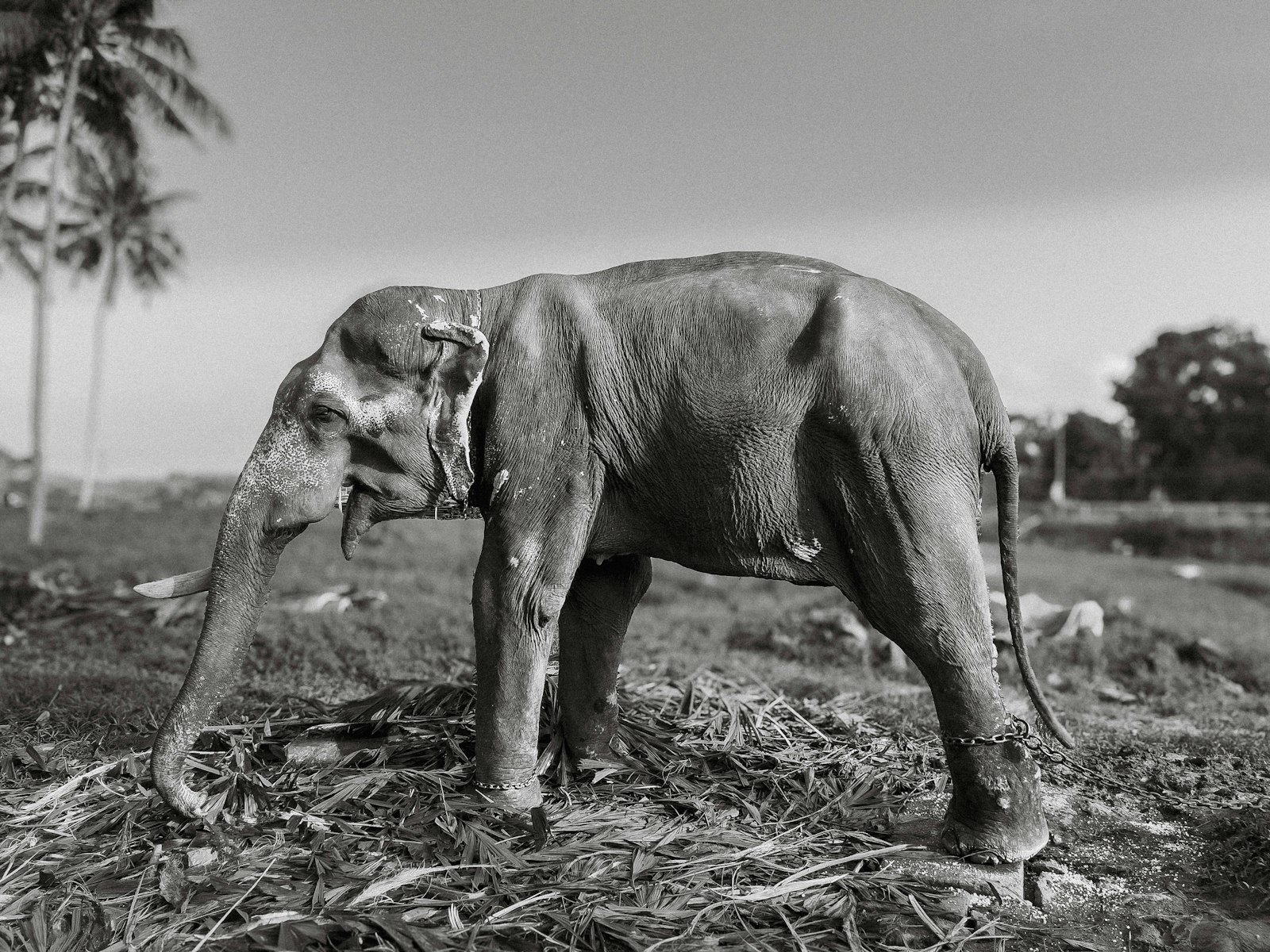
Human-wildlife conflict in Kerala killed 67 people in 2024-25, and snakebite caused 34 of those deaths, a Kerala Forest and Wildlife Department report shows. Elephants killed 19 people that year, while injuries from wild animals rose to 1,705, the state’s Forest Minister told the Legislative Assembly.
Kerala declared human-wildlife conflict a state-specific disaster in March 2024. This explainer on human-wildlife conflict in Kerala sets out who dies and where, which animals damage crops, what the state pays in compensation, and what the law lets it do. It also compares Kerala with the rest of India, Sri Lanka and Africa.
Key facts
- Kerala recorded 67 deaths from human-wildlife conflict in 2024-25, down from 145 in 2016-17 (Kerala Forest Department report, via Onmanorama and The South First, February 2026)
- Snakebite caused 34 of the 67 deaths in 2024-25, and elephants caused 19 (Kerala Forest Department, 2026)
- Injuries from wild animals rose from 758 in 2021-22 to 1,705 in 2024-25 (Forest Minister’s reply in the Assembly, September 2025)
- Kerala pays Rs 10 lakh (about $10,800) when a wild animal kills a person, Rs 4 lakh of it from the State Disaster Response Fund (state guidelines, May 2025)
- Kerala had an estimated 2,785 wild elephants in 2021-25, 12.4% of India’s 22,446 (Wildlife Institute of India census, October 2025; Fourth Plate calculation)
- Kerala had 213 tigers in 2022, up from 190 in 2018 (Status of Tigers 2022; Lok Sabha reply, December 2024)
- Forest covered 56.78% of Kerala’s area in 2023 (India State of Forest Report 2023)

How many people die in human-wildlife conflict in Kerala
Human-wildlife conflict in Kerala killed 67 people in 2024-25, the lowest total in the four years from 2021-22. Deaths have fallen since 2021-22, while injuries have more than doubled.
Forest Minister A K Saseendran gave the year-wise figures in a reply to the Kerala Legislative Assembly, Onmanorama reported in September 2025. The 2024-25 death total of 67 matches a later Forest Department report, and the 2021-22 injury figure of 758 matches department data The Federal reported in February 2024. The Fourth Plate compiled the table below and calculated the changes.
| Year | Deaths | Injuries | Death compensation (Rs crore) | Injury compensation (Rs crore) | Total compensation (Rs crore) |
|---|---|---|---|---|---|
| 2021-22 | 113 | 758 | 4.44 | 2.54 | 6.98 |
| 2022-23 | 89 | 1,275 | 3.37 | 2.45 | 5.82 |
| 2023-24 | 76 | 1,603 | 7.09 | 6.03 | 13.12 |
| 2024-25 | 67 | 1,705 | 7.97 | 5.78 | 13.75 |
| Change, 2021-22 to 2024-25 | -46 (-40.7%) | +947 (+124.9%) | +3.53 | +3.24 | +6.77 (+97.0%) |
Over the four years, deaths fell by 46, or 40.7%, from 113 to 67. Injuries rose by 947, or 124.9%, from 758 to 1,705. Total compensation paid almost doubled, from Rs 6.98 crore to Rs 13.75 crore (about $1.48 million), a rise of 97%. Payments in one year can settle claims from earlier years, so the compensation column shows the money spent in each year.
The longer series shows the same fall in deaths. Kerala recorded 145 deaths in 2016-17, Onmanorama and The South First reported from the Forest Department report. The two outlets differ on the peak year, 2018-19, at 146 and 147 deaths.
The minister’s reply gave a total of 390 deaths between 2021 and 31 July 2025. The year-wise rows in the same reply add up to 366, including 21 deaths in the first four months of 2025-26. The Fourth Plate uses the year-wise figures.
Which animals cause the most deaths and crop losses in Kerala
Snakes cause most deaths counted as human-wildlife conflict in Kerala, and elephants cause most deaths among large animals. Wild pigs raid crops most often, a field study in Thrissur found.
Of the 67 deaths in 2024-25, snakebite caused 34, elephants 19, a wild pig one and a tiger one, the Forest Department report shows. The remaining 12 deaths involved gaur and other animals, a Fourth Plate calculation from the report’s total. Snakebite accounted for 50.7% of deaths that year and elephants for 28.4%. Since 2011, snakebite caused 1,158 of 1,549 recorded deaths, about 75%, the same report found.
The Union government gives a similar split. Kerala lost 344 people to wild animals between 2021 and 2025, Union Environment Minister Bhupender Yadav told the Rajya Sabha in March 2025, ThePrint and Deccan Herald reported. Snakebite caused 180 of those deaths, elephants 103, wild pigs 35 and tigers four.
Elephant deaths have fallen in the state’s own data. Elephants killed 35 people in 2021-22, 27 in 2022-23 and 17 in 2023-24, The Federal reported from Forest Department figures. The department’s report gives 19 for 2024-25.
Crop losses follow a different pattern. Researchers studied 210 forest-fringe households in Thrissur from 2009 to 2014. Wild pigs accounted for 57.1% of crop-raiding incidents and elephants for 12.9%, Govind and Jayson of the Kerala Forest Research Institute (KFRI) found in 2021. Porcupines, peafowl and bonnet macaques made up much of the rest. Farmers lost about 36% of their annual income to crop raiding, the study found. Tubers such as tapioca were the most vulnerable crops. An earlier KFRI study in the same district found that elephants caused the highest loss by value, about Rs 17.4 lakh a year across the study area.
What drives conflict at Kerala’s forest edge
Conflict concentrates where farms meet forest. Forest covered 22,059 sq km, or 56.78% of Kerala’s area, in 2023, the India State of Forest Report 2023 shows. More than half of that cover, 12,134 sq km, lies outside recorded forest areas, much of it in farms, plantations and homesteads.
The Forest Department has mapped 12 conflict zones from Kannur to Thiruvananthapuram, its report says. The Union Environment Ministry told Parliament in December 2025 that Kerala had flagged 271 panchayats and municipalities, of which 30 were hotspots, Onmanorama reported. Wayanad had 12 of the 30, Ernakulam six and Kannur four.
Researchers point to several causes. A 2013 KFRI study in Thrissur named crops planted at forest edges, plantain grown between young rubber trees and fragmented habitat among the causes, E A Jayson wrote. In Wayanad, the invasive tree Senna spectabilis has spread through elephant habitat. A 2021 study funded by the Rufford Foundation found it covered 23% of Wayanad Wildlife Sanctuary. A Forest Department estimate put it at 800 hectares, Down To Earth reported in September 2025. The two estimates are far apart, and the published reports give no way to reconcile them.
Animal numbers matter too. Kerala had an estimated 2,785 elephants in the DNA-based all-India estimate for 2021-25, released on 15 October 2025, Down To Earth reported. The method changed, so the figure cannot be compared with earlier counts. Kerala had 213 tigers in 2022, up from 190 in 2018, a Lok Sabha reply of December 2024 shows.
Single incidents have shaped public anger. On 10 February 2024 a radio-collared elephant known as Belur Makhna killed Ajeesh, 42, at Chaligadda near Mananthavady in Wayanad, Onmanorama and Kerala Kaumudi reported. Karnataka had captured, collared and released the elephant near the border. On 24 January 2025 a tiger killed Radha, 48, a tribal woman, in a coffee estate at Pancharakolli, The News Minute and Onmanorama reported. Both deaths led to protests in Wayanad.
How much compensation Kerala pays for wildlife attacks
Kerala pays Rs 10 lakh (about $10,800) to the family of a person killed by a wild animal. The State Disaster Response Fund (SDRF) pays Rs 4 lakh of it and the Forest Department Rs 6 lakh. The rule comes from guidelines ratified in May 2025, Onmanorama and The South First reported.
A death from snakebite or a bee or wasp sting brings Rs 4 lakh (about $4,320), paid from the SDRF alone. The guidelines apply from 7 March 2024, when the disaster declaration took effect. Kerala’s cabinet declared human-animal conflict a state-specific disaster on 6 March 2024, Deccan Herald and Onmanorama reported. The declaration brought in the State Disaster Management Authority and let disaster funds pay part of the compensation.
| Loss | Payment | Paid by | Source |
|---|---|---|---|
| Death in a wild animal attack | Rs 10 lakh (about $10,800) | Rs 4 lakh SDRF, Rs 6 lakh Forest Department | Kerala guidelines, May 2025 |
| Death from snakebite, bee or wasp sting | Rs 4 lakh (about $4,320) | SDRF | Kerala guidelines, May 2025 |
| Permanent disability of 40% to 60% | Rs 2 lakh | State | Kerala guidelines, May 2025 |
| Permanent disability above 60% | Rs 2.5 lakh | State | Kerala guidelines, May 2025 |
| Injury needing hospital care | Rs 5,400 to Rs 1 lakh, by actual cost | State | Kerala guidelines, May 2025 |
| Crop loss, May 2025 rates | Rs 8,500 a hectare rainfed, Rs 17,000 irrigated, Rs 22,500 perennial, up to Rs 1 lakh a farmer | State | Kerala guidelines, May 2025 |
| Crop loss, October 2026 order | Doubled, 100% of assessed loss, no cap; Rs 15 a coconut | Forest Department | Onmanorama, 23 October 2026 |
| Central ex gratia for a death (benchmark) | Rs 10 lakh, raised from Rs 5 lakh | Centrally sponsored schemes | Union Environment Ministry, July 2024 |
The rates have been under review. Forest Minister Shibu Baby John said on 29 September 2026 that the government would double compensation for deaths and crop losses, ThePrint and Deccan Chronicle reported, citing PTI. Neither report gave a new amount for a death.
A Forest and Wildlife Department order then doubled crop-loss compensation for the first time since 2015, Onmanorama reported on 23 October 2026. It covers 100% of the assessed loss and removes the cap on claims. Coconut and cocoa now qualify, at Rs 15 a coconut and Rs 30 for cocoa, which Onmanorama gives per kilogram and PTI per plant.
Payments lag. Compensation was pending on 51 death claims and 738 injury claims on 7 July 2025, the Forest Minister’s Assembly reply showed.
What the law allows Kerala to do about wild boar and dangerous animals
Under the Wild Life (Protection) Act, 1972, the state’s Chief Wildlife Warden decides whether a dangerous animal may be killed. Only the Union government can declare a species vermin, which allows it to be hunted freely.
Section 11 of the Act covers Schedule I animals such as elephants and tigers. The Chief Wildlife Warden may order one killed if it has become dangerous to human life. For other scheduled animals the warden or an authorised officer may act when the animal endangers life or property, including standing crops. Wild boar sits in Schedule II after the 2022 amendment to the Act, Down To Earth reported in February 2026.
Kerala has asked the Centre several times to declare wild boar vermin. The Union Environment Ministry refused again in June 2025, The News Minute and Onmanorama reported. The ministry said Section 11 already gave the state enough power.
Kerala has used that power. In May 2022 it made panchayat presidents, municipal chairpersons and mayors honorary wildlife wardens who could order wild boar shot, Onmanorama reported. The order bans poison, explosives and electrocution, and the state has extended it several times. About 250 shooters were empanelled by February 2026, Down To Earth reported.
The Kerala Legislative Assembly passed the Wild Life Protection (Kerala Amendment) Bill on 8 October 2025, Onmanorama and Bar and Bench reported. The bill as passed lets the Chief Wildlife Warden order a dangerous animal killed, tranquillised, captured or moved on a report from a District Collector or Chief Conservator of Forests. It also lets the state declare an animal vermin in any area for up to six months after an expert study. Because the bill amends a central law, it needs the President’s assent. Governor Rajendra Arlekar agreed in February 2026 to forward it, The Tribune and The Pioneer reported, citing PTI. The Fourth Plate found no report of presidential assent by 23 November 2026.
What Kerala is doing to prevent wildlife attacks
Kerala combines fences, rapid response teams and early-warning technology, and its latest budget gives the work Rs 192.20 crore (about $20.8 million). The revised 2026-27 budget presented by Chief Minister V D Satheesan in June 2026 allocated that sum to human-wildlife conflict mitigation, Outlook and ThePrint reported, citing PTI.
Barriers are the oldest tool. Kerala spent Rs 74.83 crore (about $8.1 million) on fences over about eight years and ran 28 rapid response teams. The figures come from Forest Department data obtained under the Right to Information Act, Onmanorama reported in March 2025. A 100-day plan announced in June 2026 provides for 100 km of new solar fencing and repairs to nearly 2,000 km of existing fences, Onmanorama reported.
Fences work only when maintained. Elephants in Nilambur breached electric fences mainly because the fences were poorly maintained, a 2015-16 study found. Rohini and colleagues published it in the Journal of Threatened Taxa. KFRI found that solar fences deter most herbivores when kept in repair, and that they fail against wild pigs.
In February 2025 the Forest Department announced ten missions, covering real-time monitoring, food, fodder and water inside forests, wild pig control, snakebite and solar fencing, Onmanorama reported. The new government’s plan rests on containment, mitigation and compensation, with 55 priority panchayats chosen for layered defences, ThePrint reported in September 2026. The Fourth Plate reported that the plan pairs AI-based monitoring with grassland restoration inside forests. In Idukki, officials have begun removing illegal cardamom fences that blocked elephant corridors.
The national courts have also acted. India’s Supreme Court in September 2026 ordered a fresh survey of elephant corridors and banned fireballs used to drive elephants off farmland, The Fourth Plate reported.
How Kerala compares with India, Sri Lanka and Africa
Kerala has about one in eight of India’s wild elephants and accounts for under 4% of the country’s deaths from elephant attacks, a Fourth Plate calculation from official data shows.
| Measure | Kerala | India | Kerala share |
|---|---|---|---|
| Wild elephants, 2021-25 DNA-based estimate | 2,785 | 22,446 | 12.4% |
| Deaths from elephant attacks, 2023-24 (Kerala Forest Department; Union ministry statement) | 17 | 606 | 2.8% |
| Deaths from elephant attacks, 2023-24 (Rajya Sabha reply, July 2025) | 23 | 629 | 3.7% |
India recorded 606 deaths from elephant attacks in 2023-24, the Union Environment Ministry said in a July 2024 statement. A Rajya Sabha reply in July 2025 gave 629 for the same year, with 23 in Kerala, Onmanorama reported. Kerala’s own Forest Department counted 17. On either count, Kerala’s share of deaths, 2.8% to 3.7%, is far below its 12.4% share of elephants.
Sri Lanka faces a heavier toll. Wild elephants killed 1,195 people there between 2015 and 2024, the environment minister told Parliament, AFP reported. That is about 120 a year, against an average of 24.5 a year in Kerala from 2021-22 to 2024-25, a Fourth Plate calculation shows. Sri Lanka also lost 488 elephants in 2023, about 388 in 2024 and 455 in 2025, Department of Wildlife Conservation figures show, Mongabay reported. The Fourth Plate covered the death of the tusker Kavantissa in October 2026.
Delayed payment is a shared problem. Kenya owed about KSh 3.5 billion on more than 20,000 wildlife compensation claims, some dating from 2014. Kenya’s wildlife principal secretary gave the figures to Parliament in 2025, the Eastleigh Voice and Kenyan Wall Street reported. In the Gulf, Oman compensates farmers whose livestock wild animals kill, a 2025 study in the Open Veterinary Journal found.
Global targets now name the problem. Target 4 of the Kunming-Montreal Global Biodiversity Framework asks countries to manage human-wildlife interactions to minimise conflict, the Convention on Biological Diversity says. For Kerala, the evidence points to two priorities. Snakebite causes half the deaths, which makes antivenom and fast treatment the biggest single lever on the toll. Elephants and crop raids cause the losses that drive protest in Wayanad and Idukki, and the studies above tie those to fence upkeep and prompt payment.
Frequently asked questions
How many people die in wildlife attacks in Kerala every year?
Kerala recorded 67 deaths from human-wildlife conflict in 2024-25, down from 113 in 2021-22 and 145 in 2016-17, Forest Department figures show. About half of the 2024-25 deaths were from snakebite, which the state counts as wildlife conflict. Elephants killed 19 people that year, and injuries rose to 1,705.
Which animal kills the most people in Kerala?
Snakes kill the most people in Kerala’s wildlife conflict figures, with 34 of 67 deaths in 2024-25 and 1,158 of 1,549 since 2011, the Forest Department reported. Among large animals, elephants kill the most: 103 people between 2021 and 2025, the Union Environment Minister told the Rajya Sabha in March 2025.
What compensation does Kerala give for death by wild animal attack?
Kerala pays Rs 10 lakh (about $10,800) when a wild animal kills a person, under guidelines ratified in May 2025. The State Disaster Response Fund pays Rs 4 lakh and the Forest Department Rs 6 lakh. Snakebite deaths bring Rs 4 lakh from the disaster fund. The government said in September 2026 that it would double compensation.
Why did Kerala declare human-wildlife conflict a state disaster?
Kerala’s cabinet declared human-animal conflict a state-specific disaster on 6 March 2024, Deccan Herald and Onmanorama reported. The declaration brought the State Disaster Management Authority into the response and set up a state committee chaired by the Chief Minister. The State Disaster Response Fund now pays Rs 4 lakh of each Rs 10 lakh death payment.
Can farmers in Kerala kill wild boar?
Farmers in Kerala cannot shoot wild boar on their own. Since May 2022, panchayat presidents and municipal heads acting as honorary wildlife wardens can order empanelled shooters to kill wild boar that threaten people or crops, Onmanorama reported. Poison, explosives and electrocution are banned. The Centre refused again in June 2025 to declare wild boar vermin.
Which district in Kerala has the most human-wildlife conflict?
Wayanad has the most hotspots. Of 30 conflict hotspots Kerala flagged in 2024, 12 are in Wayanad, six in Ernakulam and four in Kannur, the Union Environment Ministry told Parliament in December 2025. Two of the best-known recent deaths, a man killed by an elephant in February 2024 and a woman killed by a tiger in January 2025, occurred near Mananthavady.
Fourth Plate coverage
- Kerala rolls out AI-based wildlife defence policy for farms explains the containment, mitigation and compensation plan
- Idukki clears cardamom fences to reopen elephant corridors reports the removal of illegal fences after elephant deaths
- Supreme Court orders nationwide elephant corridors survey in India covers the court’s corridor survey and fireball ban
- Kerala’s Killing Fields: How India’s Green Paradise is Failing Its Wild Elephants examines elephant deaths in Kerala’s forests
- Kerala’s forestry and agriculture conflict, foster mother and child looks at the tension between farming and forests
- Western Ghats ESA deadline looms for Kerala’s hill farmers covers the eco-sensitive area rules facing hill farmers
- Kerala asks to drop 30 villages from Western Ghats eco-sensitive zone reports the state’s request to the Centre
- How Kerala agriculture works, from rubber and coconut to paddy explains the farms that border Kerala’s forests
- Top tusker Kavantissa’s death reignites Sri Lanka elephant conflict reports Sri Lanka’s elephant conflict
- Maharashtra sterilises two leopards in conflict-hit Junnar covers a leopard sterilisation trial in Pune district
- Tanzania’s Kilombero corridor rebuilds elephant routes by consent shows farmers giving land for an elephant corridor
- Living Planet Report 2026 ties 73% wildlife fall to farming, finance reports the global decline in wildlife populations
The Fourth Plate reviews this explainer and updates its figures when the Kerala Forest and Wildlife Department, the Union Environment Ministry and the Wildlife Institute of India publish new data. Dollar conversions use Rs 92.62 to the US dollar, the closing rate on 20 November 2026.
Sources: Onmanorama, Kerala Forest Department report on human-wildlife conflict, 9 February 2026; The South First, Kerala human-wildlife conflict deaths, 15 February 2026; Onmanorama, Forest Minister’s Assembly reply on deaths, injuries and compensation, 18 September 2025; The Federal (PTI), human-animal conflict data for Kerala, 25 February 2024; ThePrint (PTI), 344 deaths in Kerala 2021-2025, Rajya Sabha reply, 27 March 2025; Deccan Herald, 344 deaths in Kerala 2021-2025, 27 March 2025; Govind and Jayson, human-wildlife interactions in central Kerala, Animal Biodiversity and Conservation 44.2, 2021; E A Jayson, KFRI Research Report 491, 2013; Forest Survey of India, India State of Forest Report 2023, Volume II; Onmanorama, Union Environment Ministry reply on Kerala’s 30 hotspots, 31 December 2025; Down To Earth, Senna spectabilis invasion, 1 September 2025; Down To Earth, India has 22,446 elephants, 15 October 2025; Mongabay India, DNA-based elephant census, 24 October 2025; Lok Sabha Unstarred Question 953 on tiger numbers, 2 December 2024; NTCA and WII, Status of Tigers 2022; Onmanorama, elephant kills man at Chaligadda, 10 February 2024; Onmanorama, tiger kills woman in Wayanad, 24 January 2025; The News Minute, tiger that killed woman in Wayanad found dead, January 2025; Onmanorama, revised compensation guidelines, 13 May 2025; The South First, Kerala’s new compensation norms, 20 May 2025; Deccan Herald, Kerala declares human-animal conflict a state-specific disaster, 6 March 2024; Onmanorama, state-specific disaster declaration, 6 March 2024; ThePrint (PTI), Kerala to double compensation, 29 September 2026; Deccan Chronicle, Kerala to double compensation, September 2026; Onmanorama, Kerala doubles crop-loss compensation, 23 October 2026; Press Information Bureau, human-animal conflict and ex gratia relief, 22 July 2024; Press Information Bureau, ex gratia relief, 5 February 2024; Down To Earth, Kerala’s wild boar culling policy, 18 February 2026; The News Minute, Centre rejects wild boar vermin demand, 10 June 2025; Onmanorama, Kerala culling request rejected, 19 June 2025; Onmanorama, local body heads empowered to cull wild boar, 30 May 2022; Onmanorama, Assembly passes wildlife and forest amendment bills, 9 October 2025; Bar and Bench, Kerala wildlife amendment bill, 10 October 2025; Kerala Legislative Assembly, Wild Life Protection (Kerala Amendment) Bill 2025, as passed; The Tribune (PTI), Governor to forward bill for presidential assent, 4 February 2026; Wild Life (Protection) Act, 1972, Section 11; Outlook (PTI), Rs 192.20 crore for human-wildlife conflict in Kerala budget, 19 June 2026; Onmanorama, RTI data on deaths and fence spending, 19 March 2025; Onmanorama, 100-day action plan, 17 June 2026; Rohini and colleagues, elephant barriers in Nilambur, Journal of Threatened Taxa 9(12), 26 December 2017; Onmanorama, Forest Department’s ten missions, 13 February 2025; Onmanorama, Rajya Sabha reply on elephant-attack deaths, 25 July 2025; Khaleej Times (AFP), Sri Lanka human-elephant conflict tolls, 27 February 2025; ThePrint (Reuters), Sri Lanka human-elephant conflict, 15 October 2026; Mongabay, Sri Lanka elephant deaths, 24 October 2026; Thuppahi’s Blog, Department of Wildlife Conservation figures tabled in Parliament, 3 November 2026; Eastleigh Voice, Kenya wildlife compensation claims, 2025; Kenyan Wall Street, Kenya wildlife compensation backlog, 2025; Giangaspero and colleagues, Open Veterinary Journal, 31 January 2025; Convention on Biological Diversity, Kunming-Montreal Global Biodiversity Framework, Target 4; ThePrint (PTI), rupee closes at 92.62 to the dollar, 20 November 2026; Business Standard (PTI), rupee opens from a previous close of 92.62, 23 November 2026.
Last updated: 23 November 2026.